

Table of Contents
- What to Eat Before a Piercing (And What to Skip)
- How to Talk to Your Piercer About Anxiety
- Breathing Exercises for Needle Anxiety
- What Happens After: The Adrenaline Crash and Aftercare
- Frequently Asked Questions
Last Updated: September 30, 2026
What to Eat Before a Piercing (And What to Skip)
First time piercing anxiety tips usually skip what your body runs on: food and water.
Blood sugar and hydration decide how well you handle the stress response. Walk in on an empty stomach and you may feel lightheaded, sweaty, or shaky.
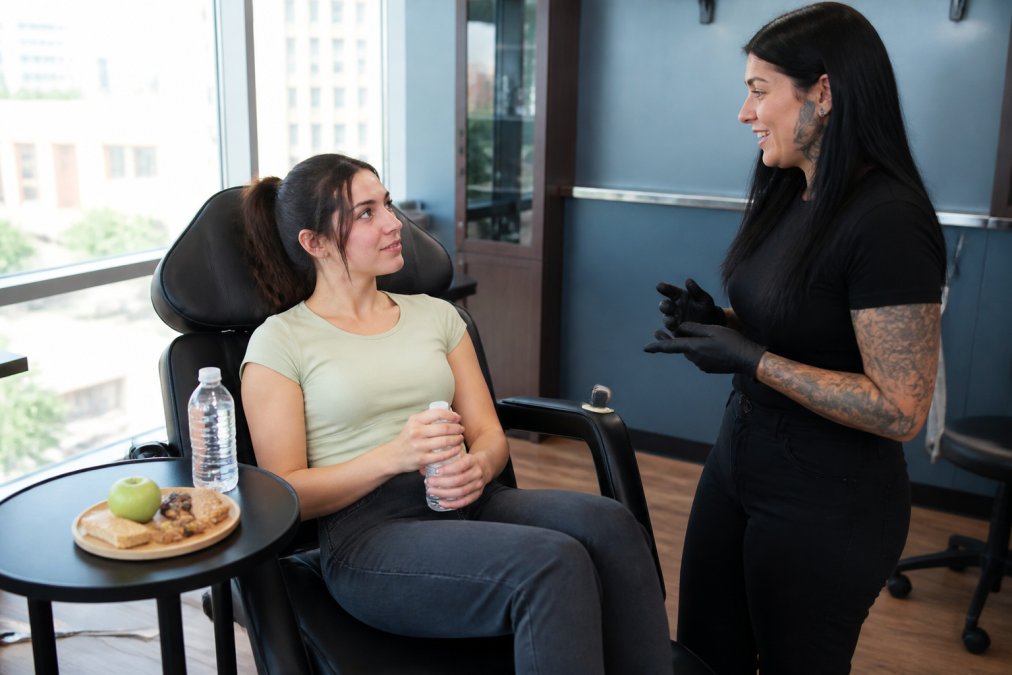
So what should you eat before a piercing? A balanced meal one to two hours ahead: protein (eggs, yogurt), complex carbs (oatmeal, toast), and a little fat (peanut butter).
Skip caffeine for a few hours before, it raises your heart rate. Alcohol is a hard no; it thins blood and raises bleeding. Heavy, greasy food can leave you queasy.
Drink water through the day, but don’t chug a gallon right before. If you’re prone to fainting, pack a snack for after.
Eat like you’re heading to a workout, not a doctor’s visit. A normal meal, water, and no caffeine keeps your blood sugar steady. That’s the whole trick.
How to Talk to Your Piercer About Anxiety
Say it out loud. That’s the single best move for piercing anxiety: tell your piercer you’re nervous before they pick up a needle.
Try: “I’m a first-timer and I get anxious with needles. Can you walk me through each step?” That hands control back to you.
A professional piercer will explain the process, show you the jewelry, and won’t rush. If someone brushes off your nerves, walk out.
Vet for bedside manner: Do they answer questions without sighing? Explain aftercare first? Use single-use, sterile needles from sealed packaging?
Implant-grade titanium is a safe pick; cheap mystery metal causes irritation and bumps.
Bringing a support person helps, a friend can hold your hand and drive if you feel woozy. Going alone is fine too.
Never let anyone pierce you with a piercing gun. Guns force blunt jewelry through tissue and can’t be fully sterilized. Insist on a hollow needle from a sealed, sterile package.
Once you’ve had the talk, the needle itself is quick, a sharp pinch, then pressure. Most people say the anticipation was worse.
Breathing Exercises for Needle Anxiety
Your breath is the fastest lever you have over piercing anxiety. Slow breathing tells your brain the threat is small.
Box breathing: in for four, hold four, out for four, hold four. 4-7-8: in for four, hold seven, out for eight. Grounding: name five things you see, four you hear, three you feel.
The timing trick matters most: ask your piercer to count you down, breathe in, then exhale as the needle goes through. Exhaling on the poke dulls the sensation.
A lobe piercing feels like a quick sharp pinch, then warmth. Cartilage is more intense and heals slower.
The piercing takes seconds. The anxiety can last weeks. Practice your breathing before the appointment, and ask your piercer to count you down. Exhale as the needle goes in.
What Happens After: The Adrenaline Crash and Aftercare
The piercing is done, and then it hits. Some people feel shaky or tearful ten minutes later, the adrenaline crash. It’s normal, and it passes.
Sit for a few minutes, eat your snack, drink water, and don’t drive if you feel lightheaded. Most crashes fade within fifteen to thirty minutes.
Then comes what decides how your piercing heals: aftercare. Clean with sterile saline twice a day, don’t touch or rotate the jewelry, skip alcohol/hydrogen peroxide/antibiotic ointment, and keep dirty hands and hair away.
Can you sleep on a new ear piercing? Not on that side. Sleeping on it presses jewelry into tissue, causing irritation, swelling, and bumps. Sleep on your other side or use a travel pillow with your ear in the hole.
How long does it take to heal? A lobe piercing usually heals in six to eight weeks; cartilage takes several months.
Watch for real warning signs: spreading redness, heat, pus, or swelling that gets worse. A little crust and tenderness is normal; a piercing getting angrier is not. Call a professional.
CDC guidance on preventing infections is a solid reference for keeping any wound clean. And Association of Professional Piercers aftercare standards covers what proper healing should look like.
If you’re in Pacific Beach and want a calm, unhurried first piercing, Sandiegopiercingshops has been piercing since 2002 and takes walk-ins.
Frequently Asked Questions
How long does the actual piercing process take?
The piercing itself takes seconds. The needle passes through in a fraction of a second, and jewelry insertion follows immediately. The full appointment, including consultation, aftercare instructions, and setup, usually runs 15 to 30 minutes. Most of that time is conversation, not the piercing. Knowing this helps reduce piercing anxiety because you realize the sharp pinch is over before you can count to three.
What should I eat before getting a piercing to prevent fainting?
Eat a normal meal with protein and complex carbs about an hour or two before your appointment. Good options include eggs and toast, a turkey sandwich, or yogurt with granola. This keeps blood sugar levels steady and lowers your risk of a vasovagal response, which is the sudden drop in heart rate and blood pressure that causes fainting. Avoid skipping meals, and drink water beforehand to stay hydrated.
Is it normal to feel anxious before a body piercing?
Yes. Piercing anxiety is common, especially for a first-time piercing. Your body releases adrenaline as part of the fight or flight response, which can make your heart race or hands shake. That reaction is normal and temporary. Breathing exercises for needle anxiety, like slow box breathing, can calm your nervous system. Telling your piercer you are nervous also helps because they can adjust their pace and walk you through each step.
Nerves before a first piercing are normal, and they’re manageable with a good meal, a few honest words with your piercer, and some slow breathing. The studio you choose matters just as much as the preparation. Sandiegopiercingshops offers a welcoming space focused on anatomy, comfort, and long-term healing, with implant-grade jewelry options and clear aftercare guidance. Call or text (858) 222-0071 to book your appointment or ask a question before you come in.