Professional conch piercing in Pacific Beach, San Diego. Implant grade titanium jewelry, expert placement, clear aftercare.
Conch Piercing
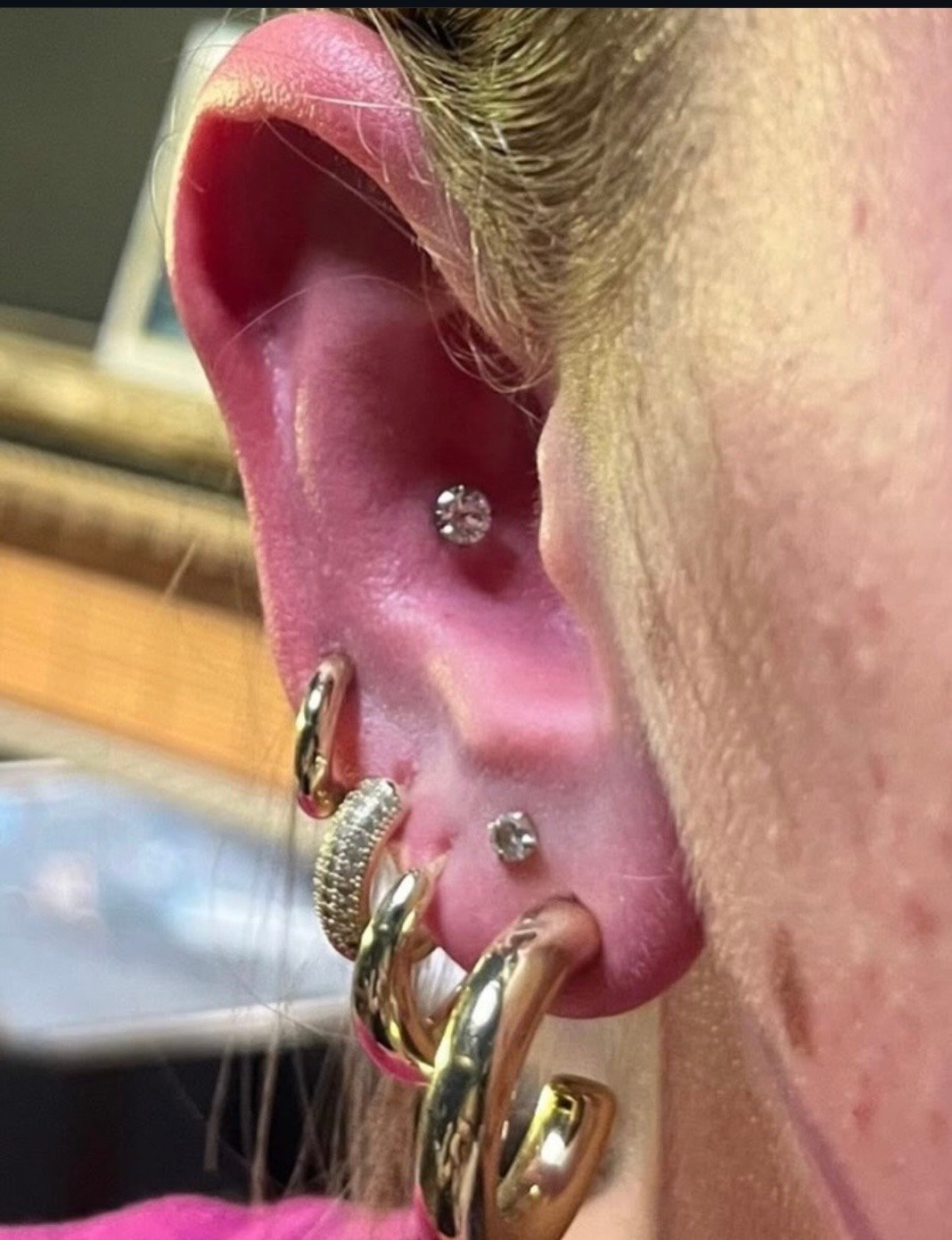
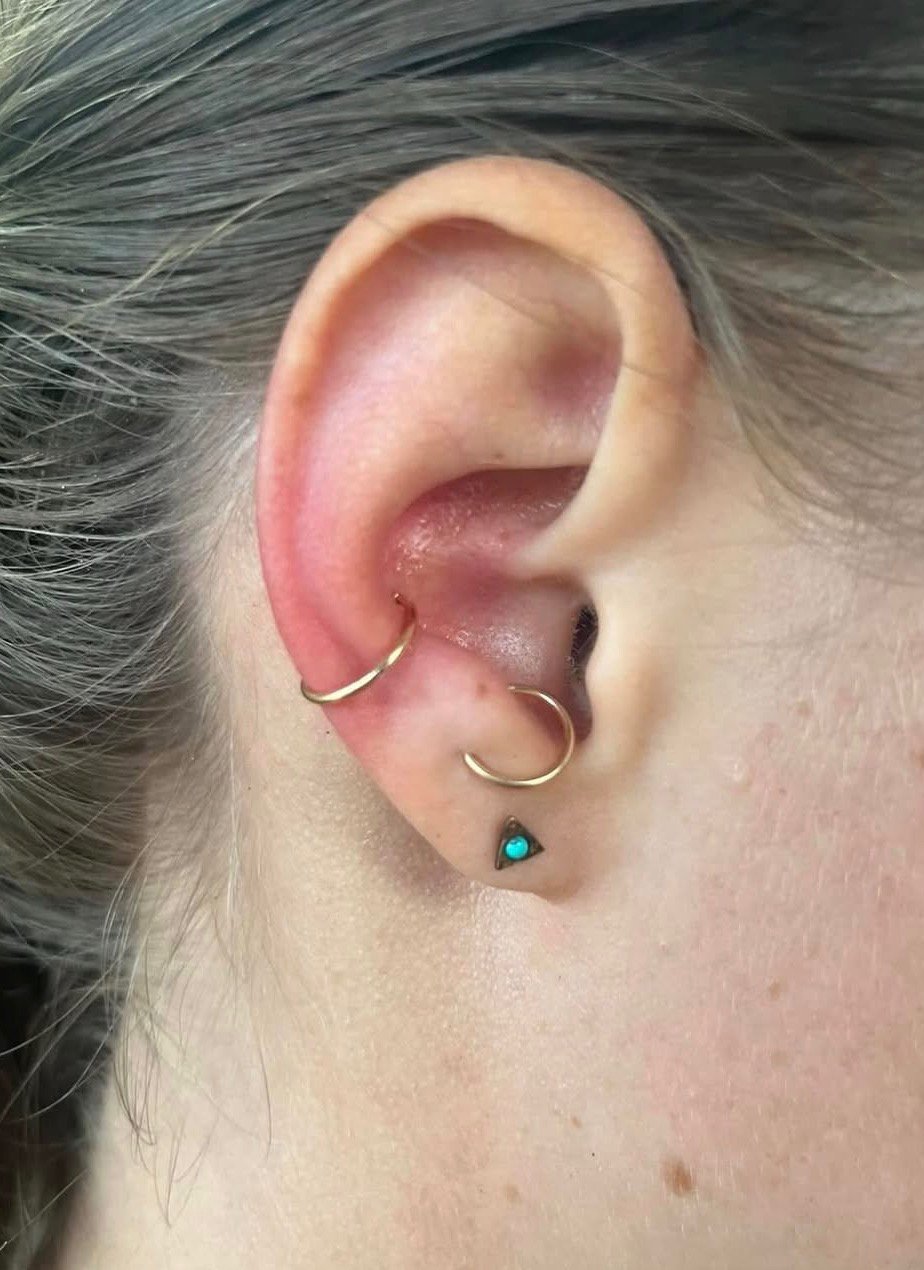
A conch piercing is a stylish and versatile ear piercing placed through the cartilage in the central part of the ear.
Named after the conch shell because of the ear’s curved shape, this piercing can be positioned in either the inner conch or outer conch area, depending on your anatomy and the look you want to create.
Whether you are getting your first cartilage piercing or adding another piece to an existing ear-curation collection, a conch piercing can be an excellent way to create a distinctive and personalized style.
Our professional piercing service focuses on careful placement, quality jewelry, proper technique, and aftercare education so you can feel confident throughout the entire experience.
What Is a Conch Piercing?
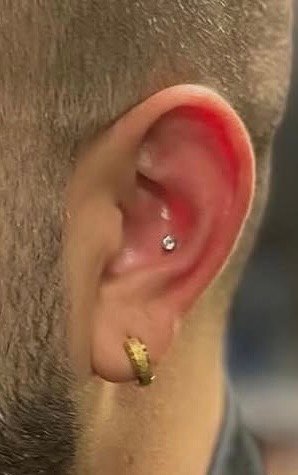
The conch is the broad, curved area of cartilage located in the middle portion of the outer ear. A conch piercing passes through this cartilage and is commonly fitted with a flat-back labret stud.
Some people choose an inner conch piercing, positioned closer to the ear canal, while others prefer an outer conch piercing, placed nearer to the outer edge of the ear.
The best placement depends on your individual ear anatomy, the jewelry you prefer, and whether you may want to wear a hoop in the future. Your piercer will assess the shape and thickness of your ear before recommending the most suitable placement.
A professionally placed conch piercing can look beautiful on its own or become part of a curated ear arrangement. It can complement lobe, helix, tragus, daith, rook, forward helix, and other cartilage piercings.
What Should I Expect During a Conch Piercing?
Your appointment begins with a consultation and anatomy assessment. Before the piercing is performed, your piercer can discuss placement, jewelry options, expected healing time, aftercare, and any questions you may have. Once the placement is selected, the area is prepared using appropriate hygiene and sterilization procedures.
A professional piercer uses a sterile, single-use piercing needle rather than a piercing gun for cartilage piercings.
The piercing procedure itself is generally quick. You may feel pressure followed by a brief pinch as the needle passes through the cartilage. Everyone experiences piercing sensations differently, but the actual procedure is usually completed within moments.
After the piercing, your piercer will check that the jewelry is positioned correctly and provide instructions for caring for your new conch piercing during the healing process.
Inner and Outer Conch Piercings
There are two common styles of conch piercing: the inner conch and the outer conch.
An inner conch piercing is placed in the deeper, central bowl of the ear, closer to the ear canal. This placement is often paired with a small flat-back stud or decorative gemstone.
An outer conch piercing is positioned closer to the outer rim of the ear. Depending on your anatomy and the placement, this style may be suitable for a larger stud or, after complete healing, a hoop.
Not every ear is suited to every placement or jewelry style. Your piercer can evaluate your anatomy and help you choose an option that is both comfortable and visually balanced.
Conch Piercing Jewelry
Choosing appropriate jewelry is an important part of a successful conch piercing. A high-quality flat-back labret is a common choice for initial jewelry because its smooth backing can be comfortable and less likely to catch on hair or clothing. Jewelry may be available in different metals, finishes, sizes, and decorative designs.
Implant-grade titanium is a popular option for initial piercings because it is lightweight, durable, and suitable for many people with metal sensitivities.
Once the piercing has healed sufficiently, you may be able to explore additional jewelry styles, including gemstones, opals, decorative ends, and hoops.
A hoop should only be fitted when the piercing is fully healed and your piercer confirms that the jewelry is appropriate for your anatomy. Your piercer can help you select jewelry that provides enough room for initial swelling while complementing your personal style.
How Much Does a Conch Piercing Hurt?
Pain is subjective, so each person’s experience will be different. Because the conch is made of cartilage, the sensation may be more intense than a standard earlobe piercing. Most people describe the actual piercing as a quick pinch, pressure, or brief sharp sensation. Some tenderness, swelling, warmth, or sensitivity afterward can be normal as the body begins healing.
A calm environment, professional technique, suitable jewelry, and following your aftercare instructions can all help make the experience more comfortable.
What’s the Healing Time for a Conch Piercing?
Cartilage piercings generally take longer to heal than earlobe piercings. A conch piercing may take several months to heal fully, and individual healing times can vary depending on anatomy, lifestyle, jewelry, aftercare, and whether the piercing experiences pressure or irritation.
A piercing may look healed on the outside before the inside has completely healed. For this reason, it is important to continue following your piercer’s aftercare instructions throughout the recommended healing period.
Avoid touching, twisting, rotating, or removing the jewelry unnecessarily while the piercing is healing.
Changing to a hoop too soon can create additional movement and irritation, so always consult your piercer before changing jewelry.
What are the Aftercare Instructions for a Conch Piercing?
Proper aftercare is an important part of the healing process. Your piercer will provide specific instructions, but general care typically includes keeping the area clean and avoiding unnecessary contact or pressure.
Helpful practices include:
● Wash your hands before touching the piercing.
● Clean the piercing according to your professional piercer’s instructions.
● Avoid twisting or rotating the jewelry.
● Do not pick at crust or buildup around the piercing.
● Be careful with headphones, earbuds, hats, helmets, hair, masks, and other items that may catch or press against the jewelry.
● Try not to sleep directly on the newly pierced ear.
● Avoid changing the jewelry prematurely.
● Follow your piercer’s recommendations regarding downsizing and future jewelry changes.
● Keep pillowcases, phones, and other items that contact your ear clean.
If you experience unusual or worsening swelling, significant pain, excessive warmth, spreading redness, discharge, or other concerning symptoms, seek advice from a qualified healthcare professional.
Can You Wear Headphones With a Conch Piercing?
Because the conch is located in the central area of the ear, headphones and earbuds may place pressure on a fresh piercing. Over-ear headphones can also press against the outer ear, depending on their shape and fit. Your piercer can discuss your normal headphone use and help you determine what may be appropriate during healing. Avoid putting pressure or friction on a new conch piercing whenever possible, and stop using any device that causes discomfort or irritation.
Can You Get a Hoop in a Conch Piercing?
Many people choose a hoop for a healed conch piercing, but the suitability of a hoop depends on your anatomy, piercing placement, jewelry size, and healing progress. Hoops move more than flat-back studs and may create additional pressure or irritation if introduced too early. For this reason, a flat-back stud is often recommended for initial healing.
Once the piercing is fully healed, your piercer can assess it and help you select a properly fitted hoop or other jewelry style. Never change to a hoop simply because the piercing looks healed on the outside. Professional guidance can help reduce the risk of irritation and delayed healing.
Why Choose a Professional Conch Piercing?
Conch piercings require careful placement, appropriate jewelry selection, and an understanding of individual ear anatomy. Working with an experienced professional allows your ear to be assessed before piercing and gives you the opportunity to discuss your preferred jewelry and long-term style.
Professional piercing should involve appropriate hygiene practices, sterile single-use equipment, properly sterilized reusable equipment where applicable, and quality body jewelry suitable for a fresh piercing.
A good piercing experience does not end when the jewelry is inserted. Follow-up guidance, aftercare education, and advice about downsizing or changing jewelry are also important parts of caring for a new conch piercing.
Conch Piercing Near You
If you are searching for a professional conch piercing, cartilage piercing, or ear piercing service, we are here to help you create a look that suits your individual style and anatomy. Whether you are interested in a simple titanium stud, a gemstone design, an inner conch piercing, or a future hoop, our goal is to provide a professional, comfortable, and personalized piercing experience.
Contact us to ask about conch piercing availability, jewelry options, pricing, age requirements, appointment information, and aftercare.
If you are unsure whether your anatomy is suitable for an inner or outer conch piercing, we can assess your ear and discuss the available options with you.