
Helix Piercing in Pacific Beach, San Diego
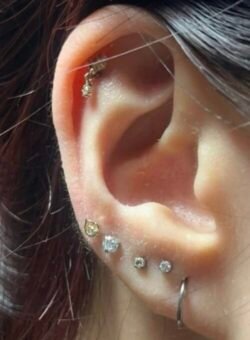
A helix piercing is one of the most popular cartilage piercings and a great choice for anyone looking to add something unique to their ear. Located along the outer upper rim of the ear, a helix piercing can be simple and subtle or become part of a completely customized ear-curation design.
At San Diego Piercing Company, we specialize in professional ear piercings in San Diego and Pacific Beach, including helix piercings, curated ears, multiple cartilage placements, and a wide variety of jewelry options. Whether you are getting your first cartilage piercing or building an entire ear stack, our goal is to help you choose a placement and jewelry combination that fits your anatomy, style, and long-term goals.
What Is a Helix Piercing?
A helix piercing is a cartilage piercing placed through the outer upper edge of the ear. Because everyone’s ear anatomy is different, the exact placement can vary. Your piercer can evaluate your ear and help determine the most suitable location for your desired look and jewelry.
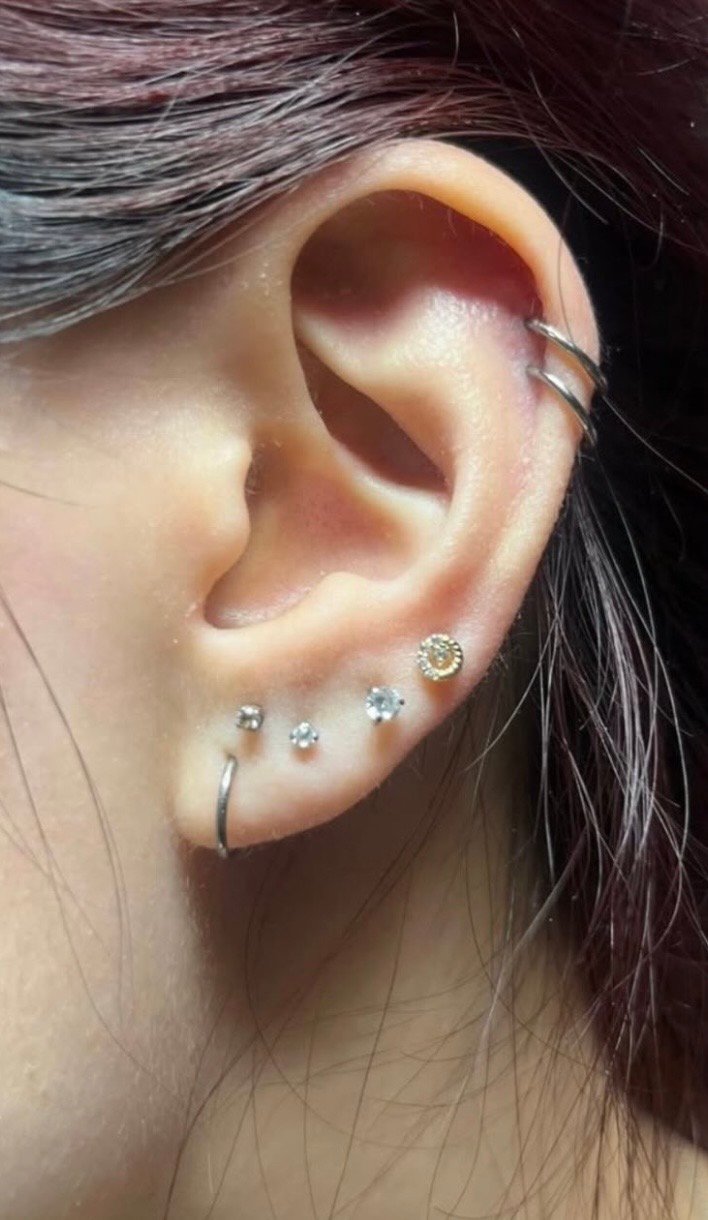
There are several styles of helix placement. A traditional helix is generally positioned toward the upper outer rim, while a lower helix may sit farther down the ear. Multiple helix piercings can also be arranged vertically or at different angles to create a curated appearance.
Helix piercings are especially popular because they can be customized. You might choose a tiny, understated stud for a minimalist look, a gemstone for some sparkle, or coordinate several pieces to create a cohesive ear curation.
Helix Piercing Jewelry
Choosing the right jewelry is an important part of getting a successful helix piercing. At San Diego Piercing Company, we use titanium (Ti) and gold jewelry options, allowing clients to select a style that works with their aesthetic while keeping the initial piercing appropriate for healing.
For a fresh helix piercing, jewelry needs to accommodate normal swelling during the early stages of healing. Your piercer will select an appropriate length and style based on your individual anatomy.
Common helix jewelry options include:
- Titanium flat-back labret studs
- Gold flat-back labret studs
- Simple beads
- Gemstone ends
- Opals
- Decorative tops
- Minimalist designs
- Multiple coordinated studs
- Jewelry selected specifically for curated ears
Flat-back labrets are a particularly popular choice for cartilage piercings because the smooth back sits comfortably against the ear and can be less likely to catch on hair, clothing, or bedding compared with some traditional jewelry styles.
The most important consideration isn’t simply how the jewelry looks. Proper sizing, quality, material, placement, and professional installation all matter when beginning the healing process.
Titanium and Gold Helix Jewelry
Titanium is one of the most commonly selected materials for fresh piercings because it is lightweight and can be an excellent option for people who want a high-quality, body-compatible material.
Gold can also be a beautiful option for a helix piercing when the jewelry is appropriate for a fresh piercing and made to suitable quality standards. Gold gives you the opportunity to create a warmer, more luxurious look while still keeping your ear curation elegant and personalized.
Whether you prefer the clean look of titanium or the classic appearance of gold, your jewelry can become part of the overall design of your ear.
How Much Does a Helix Piercing Hurt?
Pain is different for everyone, so there is no universal answer. A helix piercing passes through cartilage rather than the soft tissue of the earlobe, so you may experience more pressure and sensitivity than you would with a standard lobe piercing.
Most clients describe the actual piercing sensation as very quick. The area may feel warm, tender, or sensitive afterward, particularly during the first few days.
Your experience can depend on factors such as individual sensitivity, anatomy, stress level, and how well you care for the piercing afterward.
How Long Does a Helix Piercing Take to Heal?
Cartilage generally takes considerably longer to heal than an earlobe piercing. A helix piercing can take many months to fully heal, and some piercings may require longer depending on anatomy, jewelry, lifestyle, accidental irritation, and aftercare.
One of the biggest mistakes people make is assuming a piercing is completely healed simply because it looks good from the outside.
Cartilage healing happens gradually. A piercing may appear comfortable while the inside is still healing. Continuing appropriate aftercare and avoiding unnecessary movement or pressure is therefore important even after the initial tenderness has disappeared.
Helix Piercing Aftercare
Good aftercare is one of the most important parts of the healing process.
Follow the aftercare instructions provided by your professional piercer. In general, a healing helix piercing should be treated gently and kept free from unnecessary irritation.
Helpful habits include:
- Wash your hands before touching the area.
- Clean the piercing according to your piercer’s recommended routine.
- Avoid twisting or rotating the jewelry.
- Do not pick at crust or buildup.
- Avoid unnecessary pressure on the piercing.
- Be careful when brushing or styling your hair.
- Keep hair products away from the healing piercing.
- Avoid snagging the jewelry on clothing or towels.
- Keep pillowcases clean.
- Avoid sleeping directly on the piercing whenever possible.
- Do not remove the jewelry prematurely.
A sterile saline solution is commonly recommended for piercing aftercare. Avoid harsh products such as alcohol, hydrogen peroxide, and other irritating chemicals unless specifically directed by an appropriate healthcare professional.
Sleeping With a Helix Piercing
Sleeping on a fresh helix piercing can create repeated pressure and irritation. Because the helix sits on the outer edge of the ear, it is particularly easy to accidentally put pressure on it while sleeping.
If you normally sleep on your side, consider using strategies that keep direct pressure away from the piercing. A travel pillow or specially designed piercing pillow can sometimes make sleeping more comfortable.
Repeated pressure can contribute to prolonged irritation and swelling, so protecting the piercing while you sleep can make a significant difference during healing.
Can You Wear Headphones With a Helix Piercing?
Depending on the placement of your helix piercing, certain headphones may put pressure against the jewelry.
Over-ear headphones can sometimes press against the upper ear, while other styles may contact the piercing directly. During healing, pay attention to whether your headphones cause pressure, rubbing, or discomfort.
If a particular pair repeatedly irritates the piercing, give the area a break or choose an alternative that does not contact the healing site.
Can You Change a Helix Piercing?
It is generally best not to change a fresh helix piercing on your own. Cartilage piercings can take a long time to fully heal, and changing jewelry too early can cause unnecessary irritation.
Once the initial swelling has gone down, your piercer may recommend a professional jewelry check or downsize if the original jewelry has extra room.
A downsize is not necessarily the same thing as changing jewelry for cosmetic reasons. It can involve replacing the initial longer post with a more appropriate length once swelling has subsided.
Always have a professional assess a healing cartilage piercing before making jewelry changes.
Helix Piercing Bumps
Small bumps around cartilage piercings can occur for a variety of reasons. Irritation, pressure, accidental trauma, jewelry issues, and other factors can contribute to swelling or bumps.
If you notice a persistent bump, excessive swelling, unusual drainage, significant pain, or other concerning symptoms, don’t assume the problem is simply a normal piercing bump.
A professional piercer can evaluate the jewelry and placement, while a healthcare professional should evaluate symptoms that may indicate an infection or another medical concern.
Avoid squeezing, popping, cutting, or aggressively treating a piercing bump.
Helix Piercing and Ear Curation
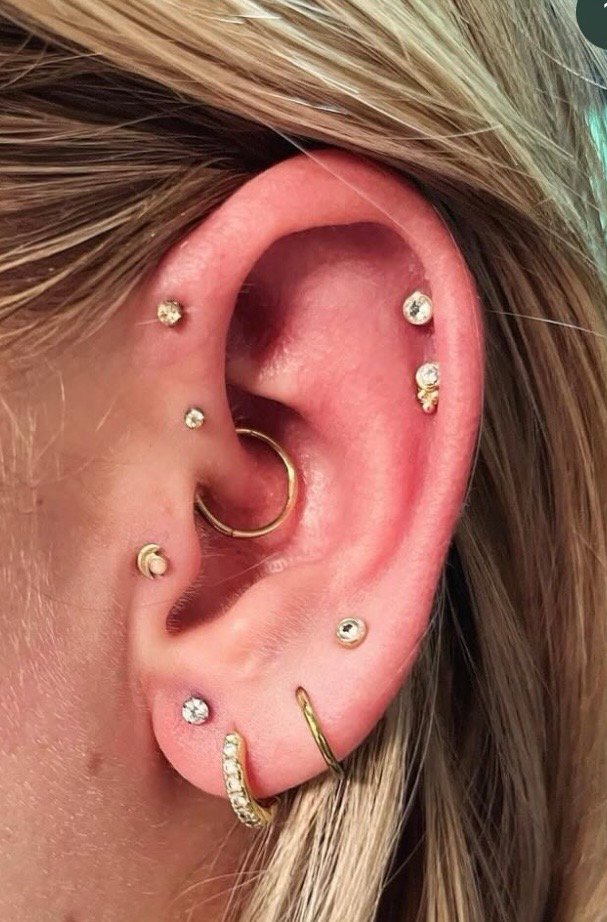
A helix piercing is one of the most versatile additions to a curated ear.
Your helix can be designed around existing lobe piercings, a conch, tragus, flat, rook, forward helix, or other ear placements. Instead of choosing each piercing independently, an ear curation considers the overall appearance of your ear.
Your piercer can look at your anatomy and existing jewelry and help create a balanced combination of placements and styles.
For example, a curated ear might combine:
- First and second lobe piercings
- A helix
- A conch
- A flat piercing
- A tragus
- A rook
- A forward helix
- Coordinated titanium jewelry
- Gold accents
- Gemstone or decorative ends
Not every ear can accommodate every piercing, which is why anatomy is an important part of professional piercing consultation.
Single Helix vs. Double Helix
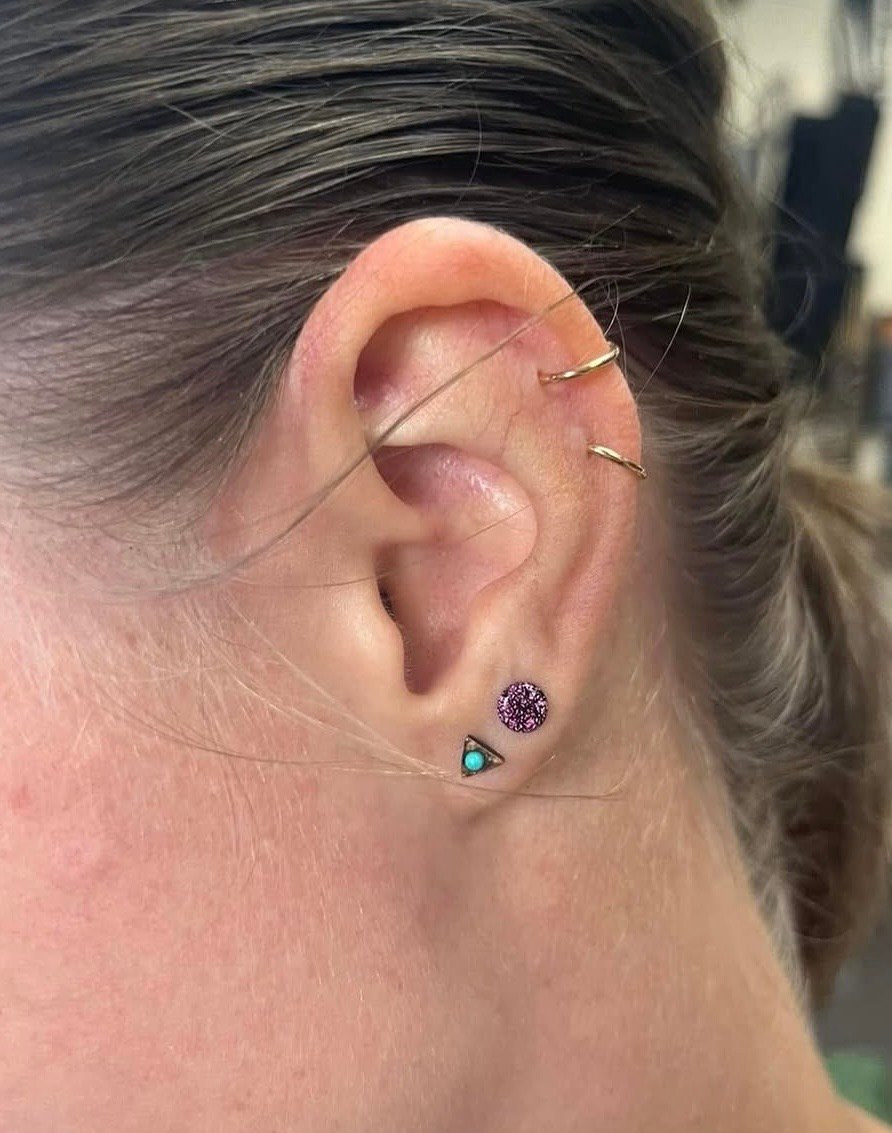
A single helix is one piercing along the outer cartilage of the ear. A double helix involves two piercings placed along the helix area.
Double helix piercings can create a beautiful stacked appearance, especially when the jewelry is intentionally coordinated.
However, adding multiple cartilage piercings at once can create additional swelling and require more attention during healing. Your piercer can discuss whether your desired combination is appropriate for your anatomy and current healing situation.
Is a Helix Piercing Right for You?
A helix can be a great choice if you want a cartilage piercing that is visible, customizable, and easy to incorporate into different jewelry styles.
Before getting pierced, consider your lifestyle. If you regularly wear helmets, headphones, sports equipment, or anything else that contacts the upper ear, discuss this with your piercer.
Your sleeping habits, work environment, hair length, and existing piercings can also affect your experience.
Professional piercing isn’t simply about putting jewelry through the ear. Proper placement and jewelry selection should take your individual anatomy and lifestyle into consideration.
Professional Helix Piercing in Pacific Beach, San Diego
If you’re searching for a helix piercing in San Diego, Pacific Beach helix piercing, or a professional ear piercing in Pacific Beach, San Diego Piercing Company offers personalized piercing services and jewelry options designed around each client’s individual ear.
Our team can help you choose a placement that complements your anatomy and personal style, whether you’re looking for a subtle single helix or planning a complete curated ear.
We offer a variety of professional piercing options throughout the ear, along with titanium and gold jewelry choices for creating everything from minimalist looks to detailed ear curations.
Frequently Asked Questions About Helix Piercings
How long does a helix piercing take to heal?
Helix piercings generally require several months to heal and can sometimes take longer. Healing time varies from person to person.
Can I sleep on my helix piercing?
It is best to avoid direct pressure on a healing helix piercing. Sleeping on it can cause irritation and prolong the healing process.
Can I swim after getting a helix piercing?
Your piercer can provide specific guidance based on your piercing and circumstances. In general, freshly pierced areas should be protected from exposure to potentially contaminated water during the early healing period.
Can I get two helix piercings at once?
Multiple piercings may be possible depending on your anatomy and overall healing situation. A professional piercer can determine whether the placement and combination are appropriate.
What jewelry is best for a helix piercing?
Appropriate-quality titanium or gold jewelry can be used depending on the piercing and individual circumstances. Proper sizing and professional fitting are just as important as the material.
Can I get a helix piercing with a hoop?
A hoop may be part of a future helix jewelry setup, but initial jewelry selection should prioritize appropriate fit and healing. Your piercer can advise when and whether a hoop is suitable for your specific piercing.
Does a helix piercing hurt more than a lobe piercing?
A helix passes through cartilage, so the sensation can be different from a lobe piercing. Everyone experiences piercing differently.
When should I downsize my helix jewelry?
Downsizing should be determined by a professional piercer after the initial swelling has decreased. The timing varies from person to person.
Your San Diego Helix Piercing Experience
A great helix piercing starts with thoughtful placement, appropriate jewelry, and professional technique. From choosing the exact location on your ear to selecting titanium or gold jewelry, every detail can contribute to the final result.
Whether you’re visiting us for your first cartilage piercing, adding a helix to an existing ear stack, or creating a complete curated ear, San Diego Piercing Company in Pacific Beach can help you design a look that works with your individual anatomy and personal style.
For professional helix piercing in San Diego and Pacific Beach, visit San Diego Piercing Company to explore placement options, jewelry styles, and curated ear possibilities.