
Last Updated: October 23, 2026
Quick Summary
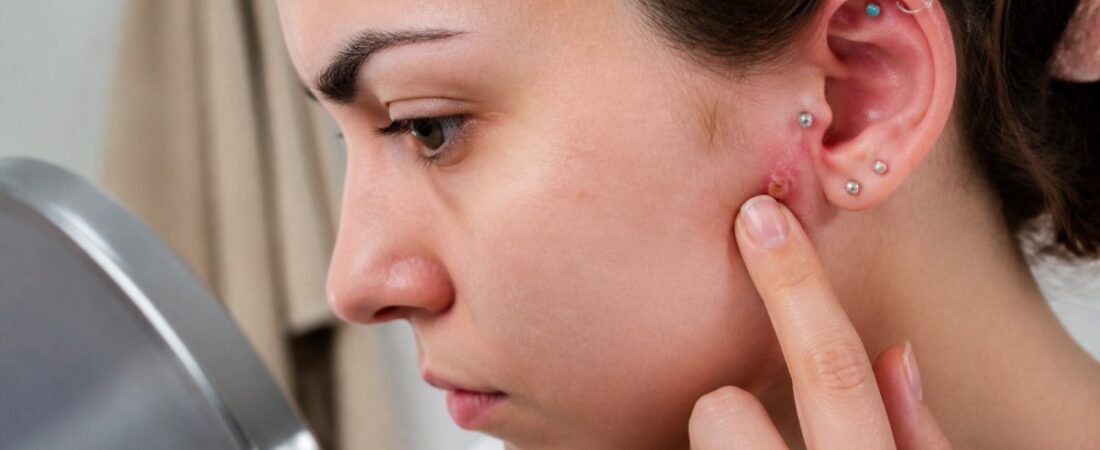
Signs of infected body piercing include spreading redness, yellow or green discharge, increasing pain after day 3, warmth around the site, and fever. Normal healing improves daily, while infections worsen or stay the same.
- Swelling peaks around day 2-3 and improves over the first week during normal healing.
- Thick, discolored, or foul-smelling discharge signals infection, not clear fluid.
- Fever above 100.4°F alongside piercing symptoms requires professional help.
- Call the studio that pierced you first to assess potential infection.
- Avoid swimming, hot tubs, and hydrogen peroxide while healing.
Table of Contents
- Signs of Infected Body Piercing
- Infected Piercing vs Normal Healing
- How to Clean an Infected Piercing and When to Seek Help
- Frequently Asked Questions
Signs of Infected Body Piercing
An infected piercing develops when bacteria enter the wound, usually in the first few weeks. At Sandiegopiercingshops, we help clients tell normal healing from a real problem. Most infections caught early heal well with proper care.
What Normal Healing Looks Like
Expect redness, swelling, tenderness, clear or pale discharge, and crusting for the first few days. Swelling peaks around day 2-3, then improves over the first week.
Red Flags That Signal Infection
Watch for these signs of infected body piercing:
Spreading redness. The red area grows instead of shrinking.
Swelling that doesn’t improve. It worsens after day 3 or returns after improving.
Warmth around the site. The area feels warmer than surrounding skin.
Pain that increases. Sharp or throbbing pain that worsens. Tenderness is normal; persistent pain is not.
Discharge changes. Yellow, green, or thick pus instead of clear fluid. Foul-smelling discharge is a major warning sign.
Fever or chills. Temperature above 100.4°F alongside piercing symptoms.
Swollen lymph nodes. Lumps in your neck, jaw, or behind your ears.
These mean your body is fighting an infection and needs help. Learn the specific signs that indicate when to see a doctor.
Infected Piercing vs Normal Healing
The key difference is timeline and severity: normal healing improves daily, while an infection worsens or stays the same. Normal healing: swelling and redness on days 1-2, steady improvement days 3-7, minimal symptoms by week 2. Signs of infection: symptoms worsen after day 3, pain increases, discharge turns thick or discolored, warmth or fever develops.
How to Clean an Infected Piercing and When to Seek Help
If you think your piercing is infected, start basic care while arranging professional help. Safe immediate steps: wash your hands; clean gently with warm saline; don’t remove jewelry unless a doctor says so; avoid sleeping on it; skip swimming, hot tubs, saunas, alcohol, hydrogen peroxide, and essential oils.
CDC guidelines on wound care and infection prevention
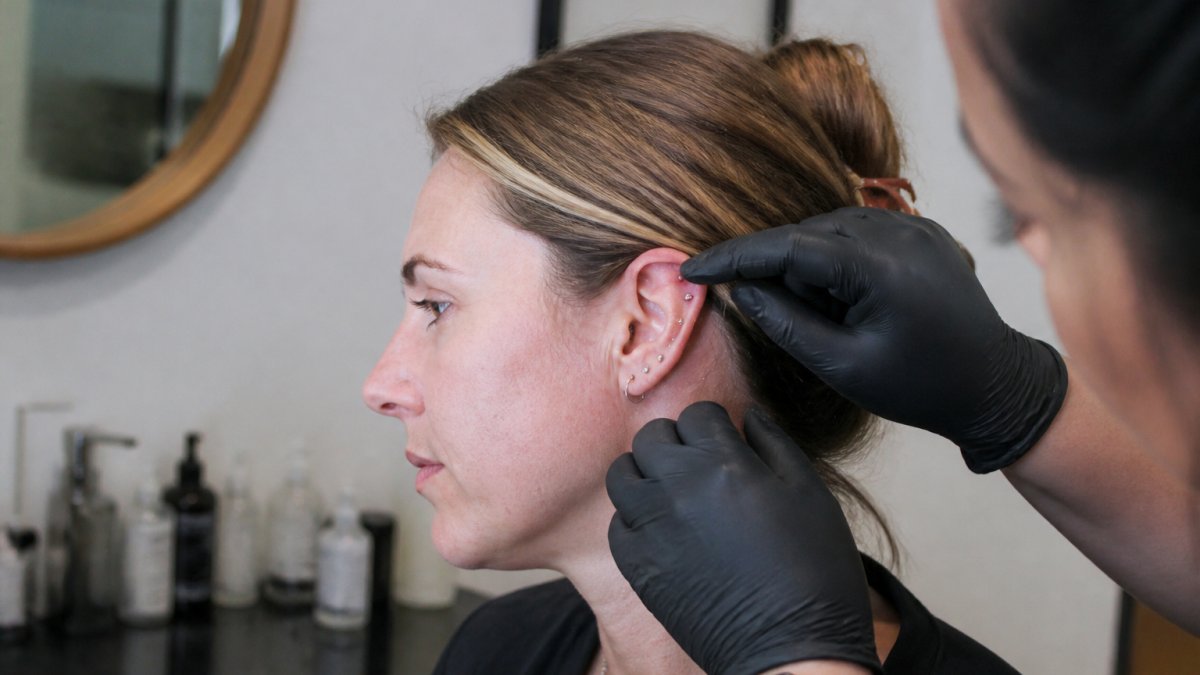
Professional help at your piercing studio: call the studio that pierced you first, they can assess it and recommend next steps. Reach out to our team if you need guidance.
For step-by-step cleaning, check our complete aftercare guide.
Frequently Asked Questions
How can I tell the difference between normal healing and an infected piercing?
Normal healing involves mild redness, light crusting, and slight swelling that decreases over time. An infected piercing shows spreading redness, increasing pain, warmth to the touch, and discharge that is yellow, green, or pus-like. A professional piercer can help you distinguish between the two during a follow-up visit.
Should I remove jewelry from an infected piercing?
Do not remove the jewelry yourself unless directed by a doctor. Removing it may trap bacteria inside and cause an abscess. If you must remove it for medical treatment, a healthcare provider should do so. Keep the piercing clean with saline solution while you await professional guidance. Your piercer or doctor can advise whether the jewelry needs to stay in place during healing.
When should I see a doctor about a piercing infection?
Seek medical care if you experience fever, chills, or upset stomach alongside local symptoms like spreading redness or pus discharge. Also see a doctor if pain and swelling worsen after three days, or if you notice signs of a systemic infection.
The bottom line: Normal healing is uncomfortable but improving. Infection is uncomfortable and worsening. Trust your instincts. If something feels wrong, it probably is. Early treatment prevents serious complications and gets you back to enjoying your piercing faster.
