
Table of Contents
- Key Infected Piercing Signs You Shouldn’t Ignore
- Infected vs Irritated Piercing: How to Tell the Difference
- When to See a Doctor for a Piercing Infection
- Should You Remove an Infected Piercing?
- Safe Aftercare While You Wait for Medical Advice
- How Long Does a Piercing Infection Take to Heal?
- Preventing Infection From the Start
- Frequently Asked Questions
Last Updated: October 20, 2026
Key Infected Piercing Signs You Shouldn’t Ignore
An infected piercing is one where bacteria have moved past normal healing irritation into a real immune response. At Sandiegopiercingshops, we’ve been providing expert body piercing services since 2002, and the question we hear most is simple: is this normal, or should I worry?
Normal healing is tender, a little red, and crusty. An infection is different in kind, not just degree.
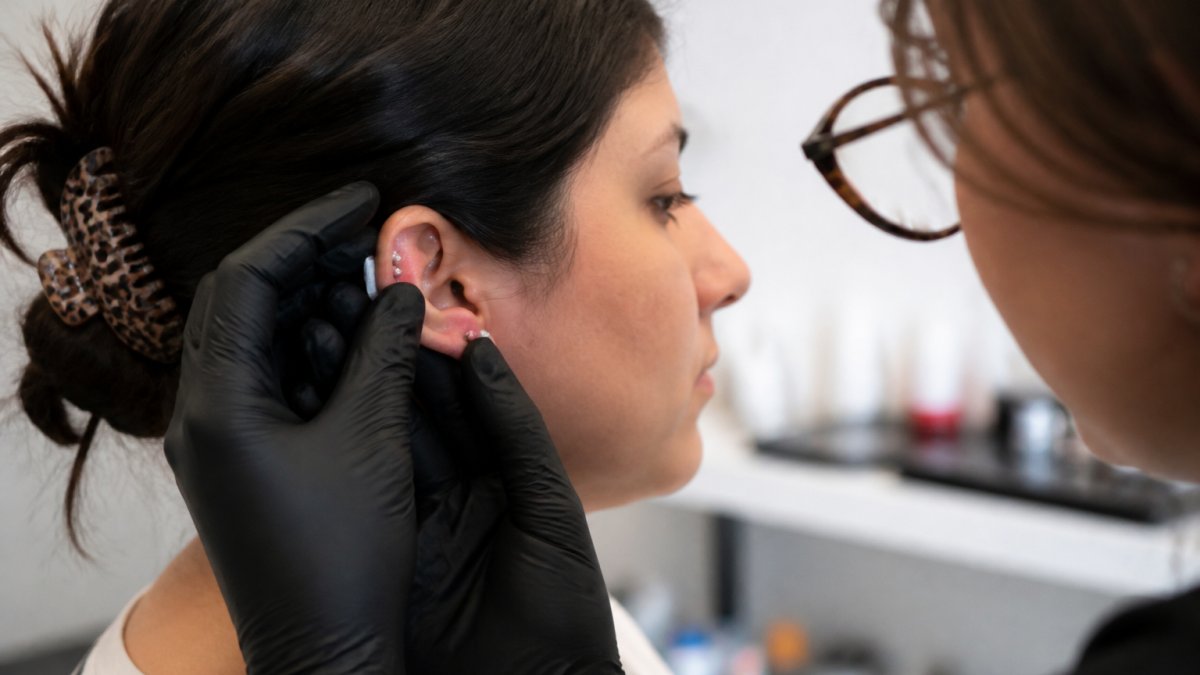
Watch for these signs of an infected piercing:
- Throbbing pain that worsens after the first few days
- Spreading redness past the jewelry
- Warmth around the site
- Yellow or green, foul-smelling discharge
- Firm swelling that doesn’t ease with cleaning
- Fever or chills
- An embedded earring sinking into swollen tissue
Crusting alone isn’t a red flag, healing piercings produce a pale, dry crust. Colored, wet, smelly discharge is the signal that matters.
If your jewelry has sunk into the skin and the clasp is no longer visible, do not keep twisting it. Leave it alone and get medical care the same day. Embedded jewelry traps bacteria and makes the infection harder to treat.
Infected vs Irritated Piercing: How to Tell the Difference
An infected piercing and an irritated one can look alike for the first day or two. The difference shows up in the pattern, not a single glance.
An irritated piercing flares after a specific trigger, sleeping on it, snagging it, or swapping jewelry too soon, then settles within days once you remove the trigger.
An infected piercing climbs: symptoms worsen daily, discharge changes color, and the site feels hot. That upward trend is your clearest clue.
| Feature | Irritation | Infection |
|---|---|---|
| Pain pattern | Sore, improves with care | Throbbing, worsens daily |
| Redness | Stays near the jewelry | Spreads outward |
| Discharge | Clear or pale | Yellow, green, foul-smelling |
| Skin warmth | Mild | Noticeably hot |
| Swelling | Soft, eases | Firm, tight, increasing |
| Whole-body signs | None | Fever, chills, feeling unwell |
A nickel allergy looks like redness, itching, and crusting on both ears, but doesn’t produce pus. Switch to implant-grade titanium and it typically calms.
When to See a Doctor for a Piercing Infection
Call a doctor when signs of infection last more than two days, get worse, or come with fever or chills. Spreading redness, a hot swollen earlobe, or pus that returns after cleaning all warrant medical care.
Go to urgent care the same day for fever or chills, red streaks spreading from the piercing, severe pain pain relievers don’t touch, an abscess (a hard, painful lump), or jewelry embedded so deeply it can’t be seen.
Cartilage piercings carry more risk than earlobe piercings. Cartilage has less blood flow, so it heals slower and fights bacteria less effectively, and an ignored infection can damage the shape of the ear. Treat it with more urgency.
Don’t remove the jewelry on your own before a doctor sees it. Taking out the earring can trap infection under closed skin and turn a treatable problem into an abscess. Let a clinician decide whether the jewelry stays or goes.
Should You Remove an Infected Piercing?
Most of the time, no. Removing jewelry from an infected piercing can seal bacteria inside, and the hole may close over the infection, one of the most common at-home mistakes we see.
A doctor or piercer may remove or loosen it if swelling is cutting off circulation or the earring is embedded, a decision for someone who can see the tissue in person.
Safe Aftercare While You Wait for Medical Advice
Clean gently with sterile saline and stop touching the piercing with your fingers. Skip alcohol, hydrogen peroxide, and antibiotic ointment unless a clinician tells you to, they dry out healing tissue.
Skip pools, hot tubs, and lakes until cleared. Don’t sleep on that side or twist the jewelry.
Don’t over-clean, twice a day is plenty. More irritates the skin and makes it harder to judge whether symptoms are improving.
How Long Does a Piercing Infection Take to Heal?
With treatment, many piercing infections start improving within a few days, but full healing depends on the site and how quickly care started. Earlobes heal faster; cartilage can take months to settle even after the infection clears.
If symptoms aren’t improving after a few days of proper care, get checked rather than wait longer.
Preventing Infection From the Start
Choose a studio that uses sterile, single-use needles and implant-grade jewelry. Clean with saline twice daily, keep hair and makeup away, and don’t rush a jewelry change. If you’re planning a new piercing and want it done right from day one, professional body piercing at a studio that follows strict hygiene standards gives you the best start, and a piercer who can answer questions like how to sleep on a new piercing or how long healing should take.
Frequently Asked Questions
Can a piercing infection go away by itself?
A mild infection sometimes clears with consistent cleaning, but it can worsen quickly. Watch for spreading redness, increasing pain, or fever. If symptoms don’t improve within 48 hours or get worse, see a doctor. Don’t rely on home care alone for signs like pus, chills, or throbbing pain. A professional piercer can also check your jewelry fit and aftercare routine to support healing.
How can I tell if my piercing is infected or just irritated?
Irritation usually causes redness and mild swelling without pus or fever, and it often improves when you stop touching the jewelry or change cleaning products. An infected piercing typically brings yellow or green discharge, warmth, throbbing pain, and sometimes fever. If you’re unsure, a piercer or doctor can assess the piercing site and recommend the right next step.
How long does a piercing infection take to heal?
With proper treatment, many piercing infections start improving within a few days, but full healing can take one to three weeks depending on the piercing type and your health. Ear cartilage piercings often heal more slowly than earlobe piercings. Follow your doctor’s instructions and keep the area clean. If symptoms persist beyond a week or worsen, follow up with your healthcare provider.
A new piercing that turns hot, painful, and smelly is a medical question, not a styling one, and getting it looked at early keeps healing on track. If you want your piercing done right the first time, with sterile technique, implant-grade jewelry, and aftercare guidance built around your anatomy, Sandiegopiercingshops has served clients since 2002 with walk-ins welcome and a focus on comfort at every step. Call or text (858) 222-0071 to plan your visit.