
Last Updated: October 23, 2026
Quick Summary
The best titanium jewelry for piercings is implant-grade titanium (ASTM F136), which is certified, tightly toleranced and mirror polished, making it our default for fresh piercings and sensitive skin. G23 shares the same alloy family but lacks implant certification, so we reserve it for healed piercings and budget buys.
- Ask any shop for the mill certificate, since reputable sellers keep them on file.
- Flat-back studs sit flush against the skin, so they don’t snag on hair or headphones.
- Lobes typically heal in 6 to 8 weeks, while cartilage takes 6 to 12 months.
- Keep pressure off a new piercing for the first few weeks and clean it with sterile saline.
- A U-shaped travel pillow lets your ear rest in the gap instead of taking pressure.
Table of Contents
- G23 Titanium vs Implant-Grade Titanium: What’s the Difference?
- Titanium Flat-Back Earrings: The Everyday Choice
- How Long Do Ear Piercings Take to Heal?
- Frequently Asked Questions
G23 Titanium vs Implant-Grade Titanium: What’s the Difference?
Implant-grade titanium (often ASTM F136, Ti-6Al-4V ELI) is the standard we choose for fresh titanium jewelry. G23 shares the same alloy family but isn’t held to the implant standard.
At Sandiegopiercingshops, we’ve fitted jewelry since 2002, and this is the question we answer most at the counter. The difference isn’t the metal itself. It’s the certification and finish.
| Label | What it means | Best for |
|---|---|---|
| Implant-grade (ASTM F136) | Certified alloy, tighter tolerances, mirror polish | Fresh piercings, sensitive skin |
| G23 | Same alloy family, no implant certification | Healed piercings, budget buys |
Ask any shop for the mill certificate. A reputable seller keeps them on file. The FDA’s guidance on metals in body jewelry is a useful starting point on nickel exposure and skin reactions.
A “titanium” label with no grade or certificate is a gamble. Uncertified metal may contain nickel that shows up as irritation weeks later.
Titanium Flat-Back Earrings: The Everyday Choice
Flat-back studs win for daily wear because the disc sits flush against the skin. No post poking your neck, no snagging on hair or headphones, and far less pressure when you sleep on your side.
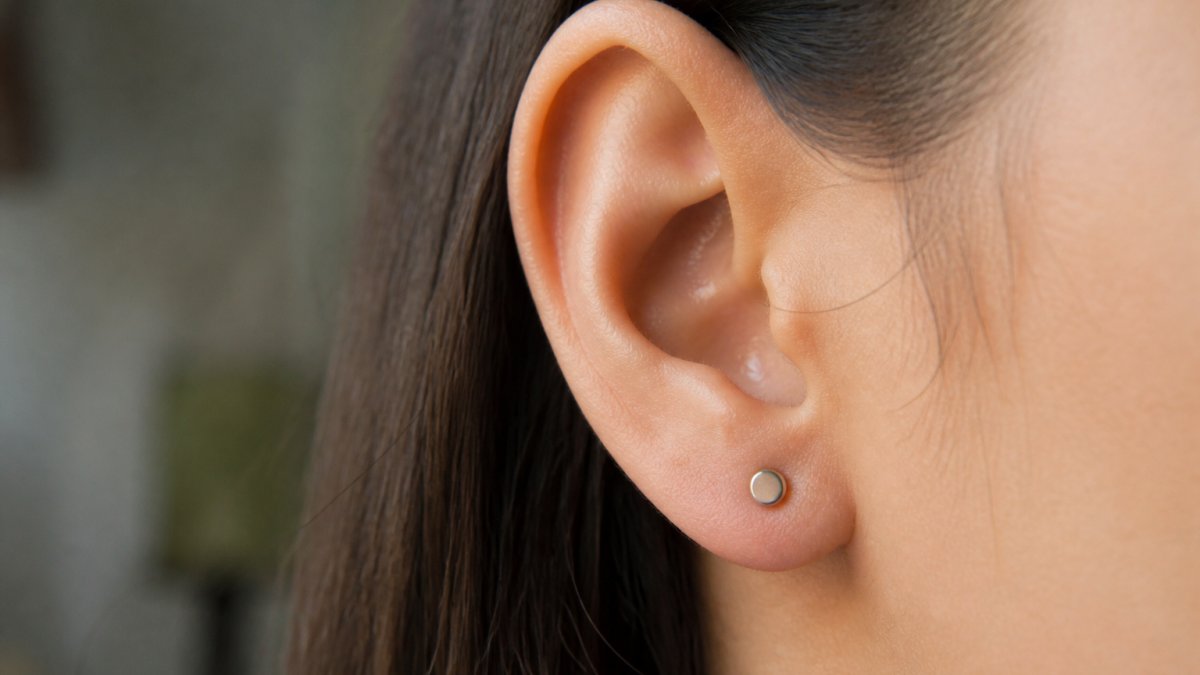
For cartilage and lobe work, flat-backs in implant-grade titanium jewelry are our default recommendation, lightweight, hypoallergenic, and nickel-free. Browse in-studio or call (858) 222-0071 to ask what’s in stock.
How Long Do Ear Piercings Take to Heal?
Lobes typically heal in 6 to 8 weeks; cartilage takes 6 to 12 months because blood flow there is lower. Your body sets the real timeline.
And yes, you can sleep on a new ear piercing, but not comfortably or safely at first. Keep pressure off it for the first few weeks, use a travel pillow with your ear in the hole, and clean it with sterile saline as directed. Skip cotton swabs, alcohol, and harsh soaps.
A U-shaped travel pillow is the cheapest sleep fix there is. Rest your ear in the gap and the pillow takes the pressure instead of the piercing.
Frequently Asked Questions
Is titanium good for piercings?
Yes. Titanium jewelry is lightweight, resistant to wear, and hypoallergenic, which makes it a common choice for people with sensitive skin or metal allergies. It also holds up well over time, so it works for both fresh and healed piercings. When you shop, ask whether the piece is implant-grade titanium, since that tells you more about the material standard than a generic label.
Can I sleep on a new ear piercing?
Try to avoid sleeping directly on a new ear piercing while it heals. Pressure and friction can irritate the area and slow the healing process. A travel pillow with your ear in the opening, or sleeping on the opposite side, helps reduce contact. If you roll onto it in your sleep, don’t panic, just keep the area clean and avoid repeated pressure.
How long does a cartilage piercing take to heal?
Cartilage piercings generally take longer to heal than earlobe piercings, often several months. Healing time depends on your body, placement, and aftercare. Keep the area clean, avoid touching the jewelry, and don’t change it before your piercer says it’s ready. If you have questions about your specific piercing, ask your studio for guidance.
Choosing jewelry is a decision about metal quality, fit, and aftercare, not just looks. If you want implant-grade titanium fitted by piercers who plan placement around your anatomy, Sandiegopiercingshops offers walk-ins, curated ear designs, and clear aftercare guidance. Call or text (858) 222-0071 to get started.
