
Last Updated: November 18, 2026
Quick Summary
A piercing bump keloid is permanent and keeps growing past the original wound, while a normal bump stays small, feels soft or rubbery, and shrinks over weeks. Check the border, growth, texture, color and timeline: a keloid has a clear edge beyond the piercing site and keeps spreading for months.
- Measure the bump monthly, because a keloid keeps spreading while a bump shrinks.
- A keloid feels firm and dense, often looks darker than surrounding skin.
- Most raised scars at piercing sites are hypertrophic, not keloid.
- See a piercer first if the bump changes shape or size.
- Tell your piercer before piercing if keloids run in your family.
Table of Contents
- Piercing Bump vs Keloid: How to Tell the Difference
- Nose Piercing Bump vs Keloid: What Changes by Location
- How Long Does a Piercing Bump Last?
- Frequently Asked Questions
Piercing Bump vs Keloid: How to Tell the Difference
A piercing bump keloid question starts with the basics: a piercing bump is a small, temporary lump of fibrous tissue at the piercing site during healing. A keloid is a permanent scar that keeps growing past the original wound. Ask one question: is it shrinking or still spreading?
Most bumps are irritation, not scarring. A piercing bump stays close to the jewelry, feels soft or rubbery, and settles once the irritation stops. A keloid extends beyond the piercing site, feels firm, and keeps expanding for months.
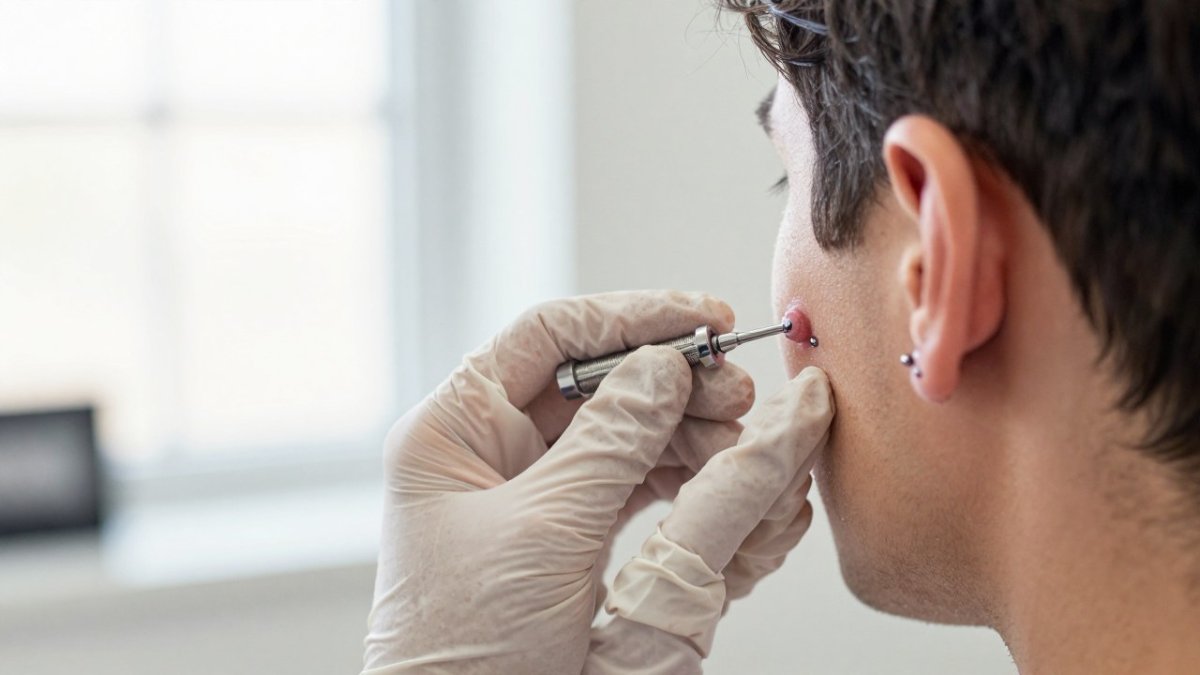
Key differences between piercing bumps and keloids
| Feature | Piercing Bump | Keloid |
|---|---|---|
| Size | Small, stays near jewelry | Grows beyond the wound |
| Texture | Soft or rubbery | Firm and dense |
| Growth | Shrinks over weeks | Keeps expanding |
How to identify a keloid in 5 steps
- Border: a keloid has a clear edge past the piercing site.
- Growth: measure monthly; a keloid keeps spreading.
- Texture: firm, rubbery tissue points toward a keloid.
- Color: keloids often look darker than surrounding skin.
- Timeline: bumps fade in weeks, keloids persist for months.
What causes a piercing bump?
Irritation drives most bumps: sleeping on the piercing, snagging jewelry, touching it with unwashed hands, or cheap nickel jewelry. Remove the trigger and the bump usually calms down.
Differentiating from hypertrophic scars
A hypertrophic scar stays inside the wound boundary but feels raised and firm. Unlike a keloid, it does not spread; unlike a simple bump, it can take months to flatten. Most raised scars at piercing sites are hypertrophic, not keloid.
When to see a professional or doctor
See a piercer first if the bump changes shape or size; they can check jewelry fit, angle, and material. See a doctor if growth keeps expanding after jewelry changes, or if you have a family history of keloids.
Nose Piercing Bump vs Keloid: What Changes by Location
Nose piercings can produce bumps because the site is harder to keep still. Cartilage heals slowly, and movement irritates it.
If you are considering a nostril piercing or want an existing one checked, our studio offers body piercing with anatomy-based placement and aftercare guidance. Switching to a hoop too early is one of the most common causes of a stubborn nose bump, let it heal with a stud first.
How Long Does a Piercing Bump Last?
Most piercing bumps fade within a few weeks to a few months once the irritation stops. A keloid does not follow this timeline; it keeps growing or stays put for a long time.
Healing times vary by piercing site. Browse our full range of piercings to learn more about each type.
Treatment options for piercing bumps
Leave it alone, avoid touching, twisting, or picking it, and ask your piercer about jewelry fit and material once swelling drops.
Psychological impact and aesthetic management
A visible bump can affect how you feel in photos and in public, and that reaction is normal. Our guide on high quality jewelry for piercings covers jewelry materials.
Piercing bump vs keloid: what most guides miss
If keloids run in your family, tell your piercer before your piercing; they can advise on placement and jewelry choice.
If a bump shows signs that worry you, our guide on infected piercing signs explains when to see a doctor.
A bump that will not settle is frustrating, and guessing whether it is a keloid only adds stress. Our piercers check jewelry fit, angle, and material, then walk you through a clear aftercare plan built around your anatomy. We have helped clients heal confidently since 2002, and we accept walk-ins. Call or text (858) 222-0071 to get your piercing checked by a professional.
Frequently Asked Questions
How can you tell the difference between a piercing bump and a keloid?
A piercing bump usually stays small, feels soft or slightly firm, and sits right at the piercing site. It often shrinks as irritation settles. A keloid is firmer, rubbery, and keeps expanding beyond the original wound boundary. If you are unsure, a dermatologist can confirm what you are seeing.
Can a piercing bump turn into a keloid?
A standard irritation bump does not become a keloid on its own. They are different problems: one is inflammation from friction, moisture, or jewelry, and the other is excess fibrous tissue from collagen production. If you have a family history of keloids or notice the bump growing past the piercing site, get it checked early.
How long does a piercing bump last, and when should I ask a dermatologist?
Most piercing bumps settle within a few weeks to a few months once the cause is removed, such as switching jewelry or stopping pressure on the site. Ask a dermatologist if the bump keeps growing, feels firm, or returns after treatment.
