

Last Updated: November 19, 2026
Quick Summary
A piercing infection is spreading redness, firm growing swelling, constant worsening pain, heat, yellow or green pus, or a foul odor, while irritation is a small red ring, mild swelling, and tenderness only when bumped. Irritation settles with hands-off care; a piercing infection gets worse and may bring fever, so see a doctor.
- Pink redness at the hole is normal, but redness creeping across the lobe is not.
- Mild puffiness in week one is expected; swelling that grows after day five needs a look.
- Clear fluid and white lymph crust are normal; yellow, green, or foul-smelling pus is not.
- Irritation bumps shrink with hands-off care, while a growing or leaking bump is a concern.
- Go to a doctor or urgent care for spreading redness, thick pus, fever, chills, or severe pain.
Table of Contents
- 7 Signs of Piercing Infection vs Irritation
- Signs of an Infected Piercing That Need Medical Care
- How to Treat an Infected Piercing Before Your Appointment
- Frequently Asked Questions
7 Signs of Piercing Infection vs Irritation
Most new piercings get red, crusty, and sore, that’s normal healing, not a piercing infection. The question people ask us most is whether it’s healing or something worse.
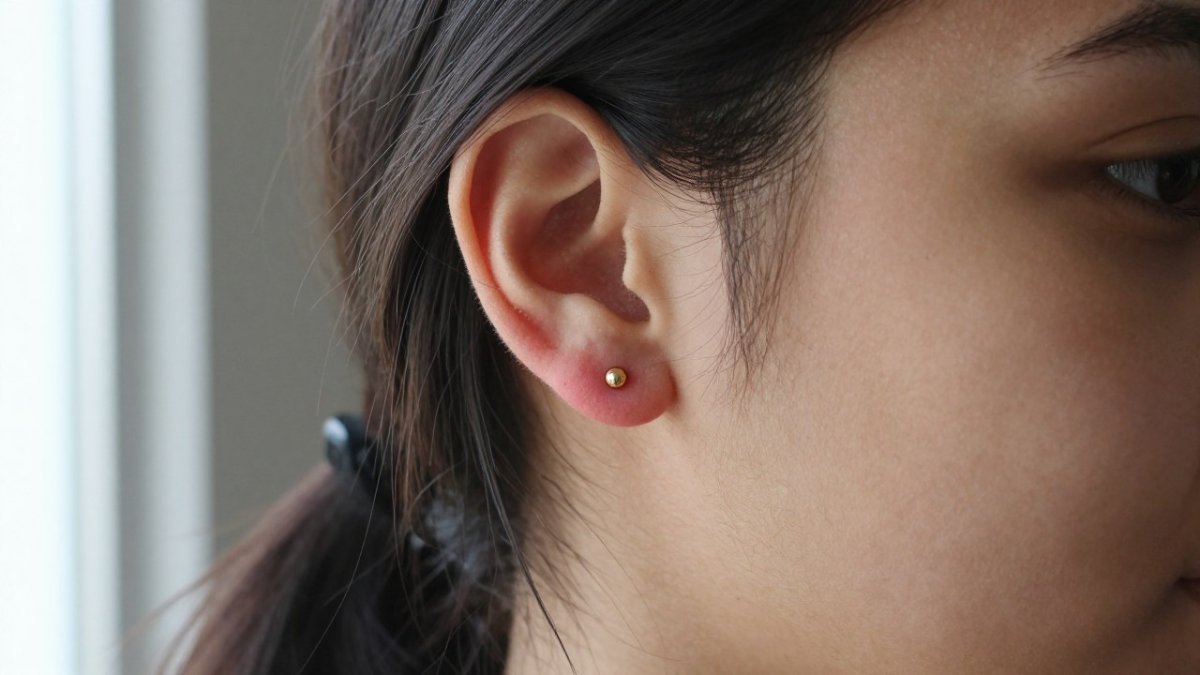
Piercing irritation is redness, mild swelling, or a small bump from friction, moisture, or touching. Piercing infection is spreading, worsening heat, pus, and pain. One settles down; the other gets worse.
| Sign | Irritation | Infection |
|---|---|---|
| Redness | Small ring at the site | Spreading outward |
| Swelling | Mild, comes and goes | Firm and growing |
| Pain | Tender when bumped | Constant and worse |
| Heat | Slight | Hot to the touch |
| Discharge | Clear or white fluid | Yellow or green pus |
| Smell | None | Foul odor |
| Fever | None | Possible |
1. Redness that spreads. Pink at the hole is normal; redness creeping across the lobe is not.
2. Swelling that grows. Mild puffiness in week one is expected; swelling that grows after day five needs a look.
3. Pain that worsens. Soreness that fades is healing; pain that sharpens daily is a warning sign.
4. Heat at the site. Your ear should feel normal to the touch. Localized heat means something is brewing.
5. Discharge that changes. Clear fluid and white lymph crust are normal; yellow, green, or foul-smelling pus is not.
6. A bump that will not settle. Irritation bumps shrink with hands-off care; a growing or leaking bump is a concern.
7. Fever or feeling unwell. Any fever with an angry piercing means call a doctor.
Comparing symptoms right now? Our guide to the signs of infected body piercing breaks each one down further. If it’s a bump rather than spreading redness, start with the hands-off guide to irritation bumps.
Signs of an Infected Piercing That Need Medical Care
Some signs mean stop guessing and get medical care. Go to a doctor or urgent care if you notice:
- Redness spreading well beyond the piercing
- Thick yellow or green pus
- A fever, chills, or feeling generally sick
- Severe pain that keeps getting worse
- Jewelry sinking into swollen skin
Weighing a professional visit? Our guide on booking an expert piercing appointment explains what to expect.
How to Treat an Infected Piercing Before Your Appointment
For the full routine, read our aftercare steps for faster healing and our guide on preventing piercing infections and irritation.
A red, crusty ear does not have to mean panic. It does mean paying attention, and knowing when to get a second set of eyes. At Sandiegopiercingshops, we focus on anatomy, comfort, and clear aftercare from day one, and we are glad to check a healing piercing and talk through your options. Call or text (858) 222-0071 to get started.
Frequently Asked Questions
How can I tell if my piercing is infected or just irritated?
Irritation usually stays local: mild redness, a small bump, and clear or white crusting that fades with better aftercare. A piercing infection tends to worsen over days, with spreading redness, increasing pain, heat at the site, and yellow or green discharge that smells. If symptoms intensify or spread rather than settle, that is your cue to stop guessing and get a professional assessment. A piercer can look at the site and tell you whether it needs medical care.
How long does a new piercing take to heal?
Earlobe piercings typically heal in 6 to 8 weeks, while cartilage piercings can take 6 to 12 months or longer. Healing time depends on location, jewelry fit, and how well you follow aftercare. During that window, some redness and crusting is normal. If a piercing is still angry and tender well past the expected timeline, that is worth a check-in with your piercer rather than assuming it is just slow healing.
Can I sleep on a new ear piercing?
Avoid sleeping directly on a new ear piercing for the first several weeks. Pressure on the jewelry causes irritation bumps, swelling, and delayed healing. Sleep on the opposite side, use a travel pillow with your ear in the hole, or prop your head so the piercing stays free. If you wake up on it, clean gently and leave it alone. Persistent pressure is one of the most common reasons a piercing stays irritated for months.
