

Last Updated: October 25, 2026
Quick Summary
Proper piercing aftercare means cleaning twice daily with sterile saline, avoiding touching or twisting the jewelry, and keeping the area dry between cleanings to prevent bacteria and speed healing.
- Clean your new piercing twice daily with sterile saline wound wash from a pharmacy.
- Never twist, move, or play with the jewelry as it introduces bacteria and irritates tissue.
- Avoid alcohol, hydrogen peroxide, tea tree oil, and homemade salt water as they damage healing cells.
- Sleep on a donut pillow and avoid pressure on new ear piercings for at least 2 to 4 weeks.
- Healing time ranges from 6 to 8 weeks for earlobes to 6 to 12 months for navel piercings.
Table of Contents
- How to Clean a New Piercing the Right Way
- Piercing Healing Time: What to Expect by Location
- Can You Sleep on a New Ear Piercing?
- Frequently Asked Questions
How to Clean a New Piercing the Right Way
Keeping your new piercing clean is the most important step for faster healing, it keeps bacteria out while tissue heals.
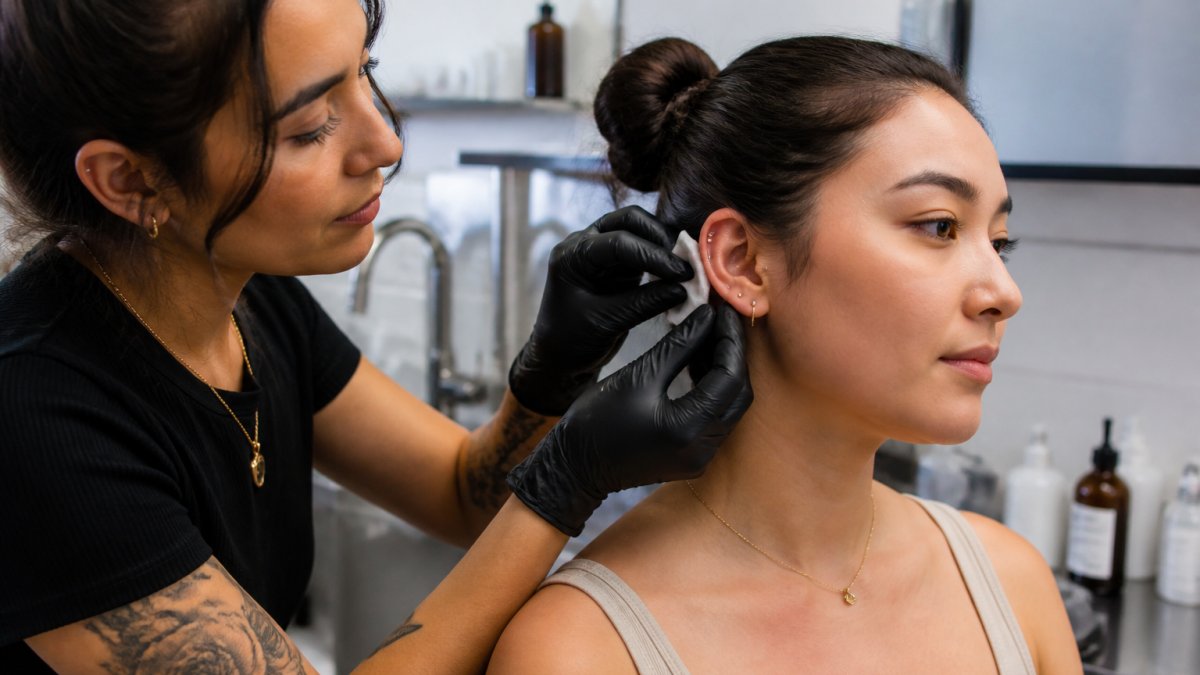
Wash and dry your hands with a paper towel (cloth towels harbor bacteria) before touching it.
Clean twice daily with sterile saline (wound wash or spray from any pharmacy): soak a clean paper towel or gauze, apply gently, let sit a minute, then pat dry. Learn how to clean a new piercing with detailed step-by-step instructions.
Don’t twist, move, or play with the jewelry, every touch introduces bacteria and irritates healing tissue. Leave it in for the whole healing period.
Skip alcohol, hydrogen peroxide, tea tree oil, and homemade salt water, they damage healthy cells and slow healing. Stick to sterile saline.
Keep the area dry between cleanings; pat dry with a clean paper towel after showers.
Piercing Healing Time: What to Expect by Location
Healing time depends on location, blood flow and tissue density vary.
Earlobe piercings heal in 6 to 8 weeks thanks to good blood flow and less irritation.
Cartilage piercings (helix, tragus, conch, rook, daith) take 3 to 6 months or longer, less blood flow, plus irritation from jaw movement, pillows, and headphones.
Septum piercings heal in 6 to 8 weeks, though they feel tender longer because they move when you talk, eat, and breathe.
Navel piercings take 6 to 12 months due to friction from clothing, sweat, and movement.
Expect some redness, tenderness, and crusting, crusting is just lymph fluid drying, a sign your body is healing. Rinse it away with saline.
Swelling is normal in the first few days and should ease after a week; if it worsens, contact a professional piercer. Find out how to reduce swelling during the healing process.
At Sandiegopiercingshops, we provide piercing aftercare guidance tailored to your piercing location, and a professional piercer can assess your healing and answer questions beyond standard care.
Healing time varies significantly depending on where you get pierced.
| Piercing Location | Healing Time | Key Factor |
|---|---|---|
| Earlobe | 6 to 8 weeks | Good blood flow, less irritation |
| Cartilage (helix, tragus, conch, rook, daith) | 3 to 6 months or longer | Less blood flow, irritation from jaw and headphones |
| Septum | 6 to 8 weeks | Moves when you talk, eat, breathe |
| Navel | 6 to 12 months | Friction from clothing, sweat, movement |
Can You Sleep on a New Ear Piercing?
Avoid sleeping on a new ear piercing for at least the first 2 to 4 weeks.
Pillow pressure irritates the piercing, slows healing, and raises the risk of a piercing bump, raised scar tissue from your body overreacting to irritation.
If you must sleep on that side, use a travel or donut pillow and rest your ear in the hole so the jewelry doesn’t touch the pillow.
After 4 weeks, light pressure won’t cause major problems, but avoid sleeping on it regularly until fully healed, the longer you protect it, the faster it heals.
Also avoid tight headphones, hats, and hoodies that press against the piercing, constant pressure slows healing and increases irritation.
American Academy of Dermatology guidelines on body piercing care
Frequently Asked Questions
How often should you clean a new piercing?
Clean your piercing twice a day with saline solution for piercings during the initial healing phase. After washing your hands thoroughly, apply saline spray or soak a clean cloth and gently cleanse around the jewelry. Consistency matters more than frequency, stick to twice daily rather than over-cleaning, which can irritate the area.
What should you avoid while a piercing is healing?
Avoid touching, twisting, or moving the jewelry unnecessarily. Skip swimming, hot tubs, and bodies of water until healing is complete. Don’t use harsh products like alcohol, hydrogen peroxide, or tea tree oil, these can damage healing tissue. Wear loose clothing around the piercing area to prevent friction, and be mindful when sleeping to avoid putting pressure on the site.
How long does a new piercing take to heal?
Earlobe piercings typically heal in 6-8 weeks, while cartilage piercings like the upper ear, rook, or daith take 3-6 months or longer. Healing time varies based on your body, aftercare consistency, and the specific location. Professional piercers can give you a more precise timeline based on your anatomy during your consultation.
Getting pierced is exciting, but healing requires patience and consistent care. The steps are straightforward: clean twice daily with sterile saline, keep your hands clean, leave the jewelry alone, and protect the area from pressure and moisture. Most piercings heal without problems when you follow these practices. If questions come up during your healing, book a follow-up consultation with our team for personalized guidance based on your specific piercing and anatomy.
