

Table of Contents
- Ear Anatomy for Piercings: Why Placement Starts With Your Shape
- Piercing Placement Consultation: What to Ask Before the Needle
- Ear Piercing Healing Time and Sleeping on a New Ear Piercing
- Frequently Asked Questions
Last Updated: October 19, 2026
Ear Anatomy for Piercings: Why Placement Starts With Your Shape
No two ears are built the same, and that is the first thing to understand about how to choose piercing placement. Your ear’s ridges, folds, and curves decide which spots hold jewelry safely and which reject it.
The lobe is forgiving; the upper rim is thin cartilage that heals slowly; the inner fold near the canal is delicate. A good piercer checks tissue thickness, cartilage curvature, and how much room your jewelry needs to sit without pressing.
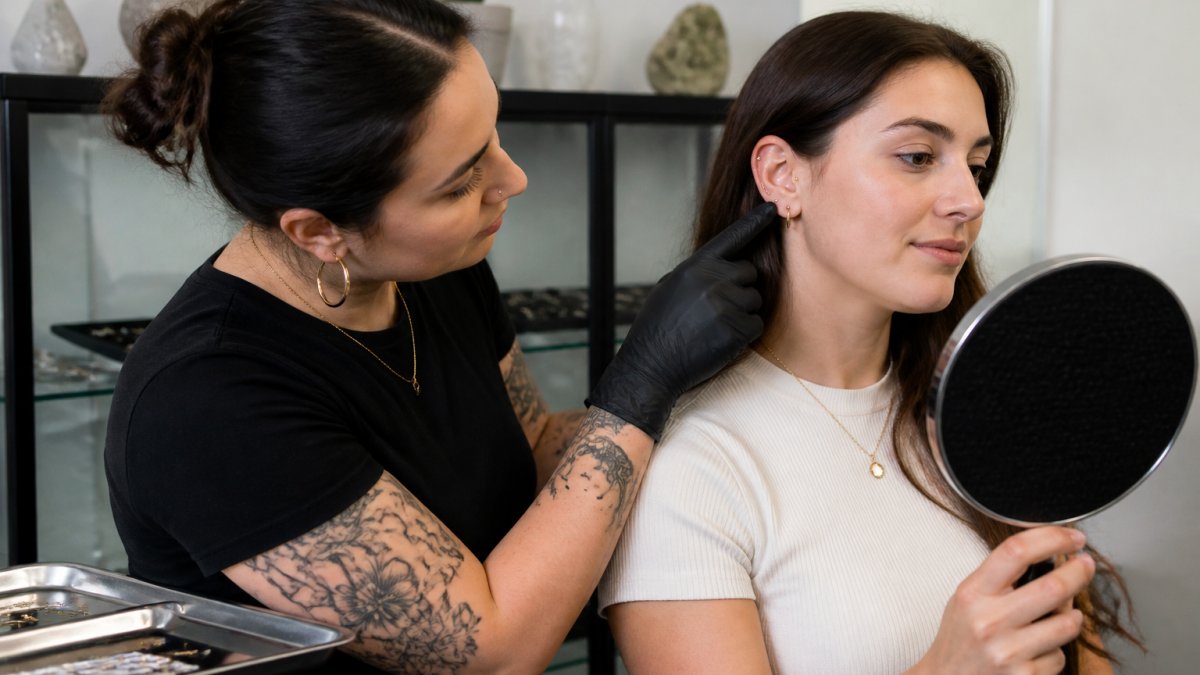
Most people get this wrong by picking a photo from social media and asking for that exact look. A stacked lobe design on a wide, flat lobe may not sit the same on a small, curved one. We mark placement in washable ink and hand you a mirror before the needle comes out, if a dot looks off when you turn your head, say so.
Piercing Placement Consultation: What to Ask Before the Needle
The consultation is where a piercing placement is actually decided, and a rushed one is your biggest warning sign. Ask out loud: which spots have enough tissue for the jewelry I want, what material is used, how everything is kept sterile, what aftercare looks like, and who to contact if something looks wrong at week three, healing problems rarely happen on day one.
For parents bringing a child, ask how the studio handles nervous first-timers. Planning a full curated ear? Ask for a staged plan, doing everything at once means every spot heals simultaneously and sleeping becomes miserable.
Never let anyone pierce you with a piercing gun on cartilage. Guns crush tissue instead of cutting it cleanly, delaying healing and causing lasting bumps.
Ear Piercing Healing Time and Sleeping on a New Ear Piercing
Ear piercing healing time depends on where the jewelry sits. Lobes settle fastest because they are soft tissue; cartilage takes patience, often several months before it feels truly normal, the surface may look fine long before the inside has finished rebuilding. That gap between “looks healed” and “is healed” is the trap, so let your piercer confirm readiness before you change jewelry.
Now the question almost every client asks first: can you sleep on a new ear piercing? Short answer, not comfortably, and not on that side, pillow pressure slows healing and can shift the jewelry’s angle. Sleep on the opposite side for the first several weeks, use a travel neck pillow with your ear in the hollow, keep hair pulled back, and skip tight headphones until soreness fades.
Clean hands, sterile saline, and no fiddling. That is the whole routine. When should you call a professional? Spreading redness, increasing pain after the first week, pus, or a growing bump, contact your piercer or a healthcare provider. If you would rather have placement and aftercare handled by someone who does this every day, professional body piercing takes the guesswork out of both.
Frequently Asked Questions
How do I choose the right piercing placement for my ear?
Start by looking at your ear’s natural folds, ridges, and cartilage thickness, because the same placement can sit differently on two people. A piercing placement consultation lets a professional piercer mark the spot with you, check that the jewelry will sit flat, and confirm the angle supports healing. Bring photos of looks you like, but treat them as inspiration rather than a template. Your anatomy decides what will heal well and look balanced.
Can I sleep on a new ear piercing?
Avoid sleeping on the fresh piercing for the first several weeks. Pressure restricts airflow, traps moisture, and can push the jewelry into an awkward angle, which slows healing and causes irritation bumps. Sleep on the opposite side or use a travel pillow with your ear in the hole. If you roll over in your sleep, a soft headband over the ear can help. Ask your piercer when your specific piercing is ready for normal pressure.
Does piercing placement affect healing time?
Yes. Earlobe piercings sit in soft tissue and typically heal faster than cartilage piercings, which have less blood flow. Placement near the edge of the cartilage or through thicker ridges can take longer and is more prone to irritation from glasses, masks, or headphones. A piercer who checks your ear anatomy for piercings before marking the spot can steer you toward a placement that suits both your look and your healing expectations.
Choosing piercing placement is really about matching jewelry to your body, and that takes an experienced hand and an honest conversation. If you want a studio that plans your ear around your anatomy instead of a photo, Sandiegopiercingshops offers walk-ins, curated ear designs, and a wide selection of quality body jewelry. We have been piercing since 2002, and we take the time to get the details right. Call or text (858) 222-0071 to book a consultation and start with a plan that fits your ear.