
Table of Contents
- Step 1: Map Your Ear Anatomy and Set a Piercing Roadmap
- Step 2: How to Choose Jewelry for Ear Stack and Balance the 40-60 Rule
- Step 3: Ear Piercing Healing Times and Sleeping With New Piercings
- Frequently Asked Questions
Last Updated: October 4, 2026
Step 1: Map Your Ear Anatomy and Set a Piercing Roadmap
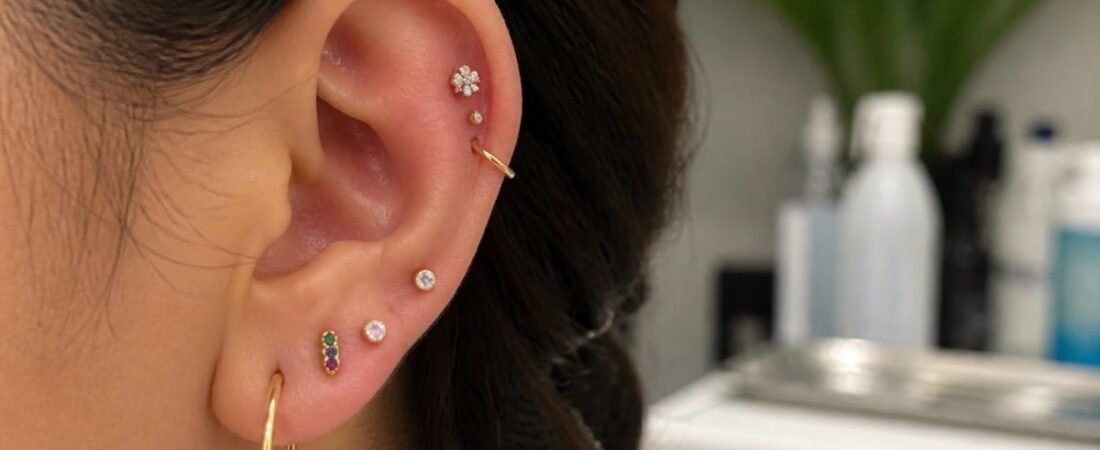
An ear stack is a curated group of piercings styled across the lobe and cartilage, and the best ones follow your anatomy, not a trend photo. At Sandiegopiercingshops, we’ve pierced ears in Pacific Beach since 2002 and check your ear shape first.
Our beginner roadmap: lobe first (softest, fastest-healing), then one cartilage piercing (helix, conch, rook, tragus, or flat) chosen around your fold lines, adding one piece at a time. Stacking three or four at once heals poorly, and jewelry must match anatomy, a rook needs a curved barbell, a flat needs a flat-back labret.
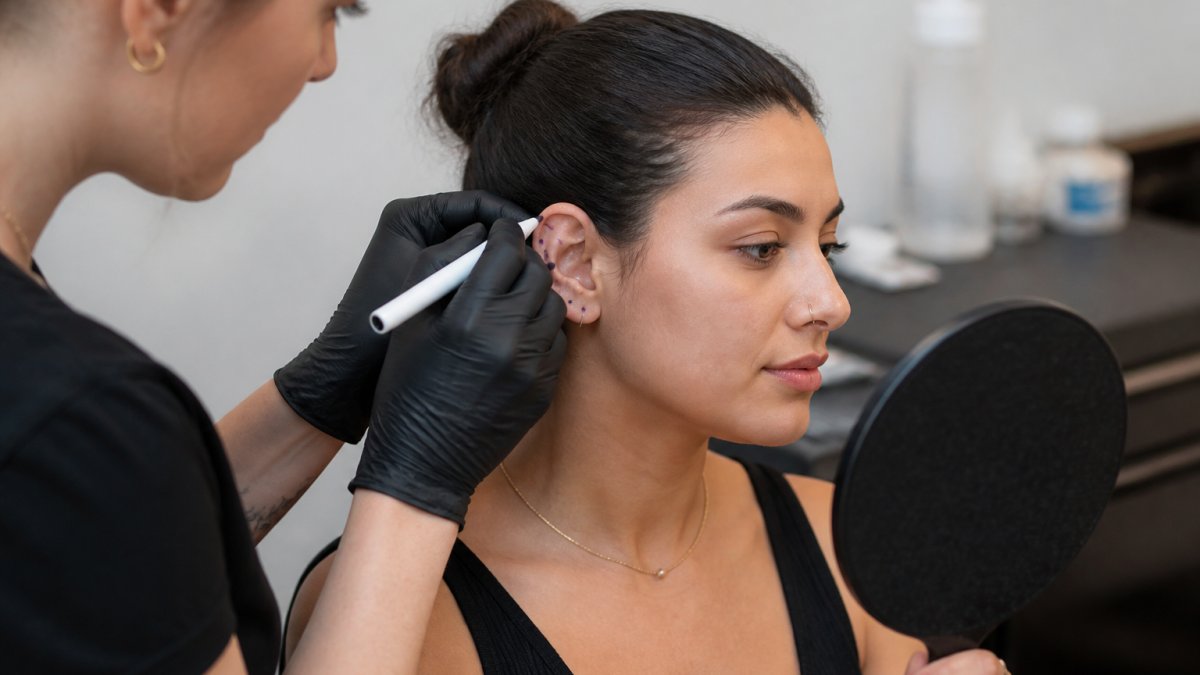
Anatomy limits are real: a shallow conch shelf cannot hold a large hoop, and some ears have no ridge for a rook. A piercer who dots placement with a marker lets you see the layout before committing. If you’d rather have a professional handle the placement and aftercare from the start, body piercing services can walk you through each step.
Step 2: How to Choose Jewelry for Ear Stack and Balance the 40-60 Rule
Knowing how to choose jewelry for an ear stack comes down to two rules: keep the look balanced, and start every fresh piercing with implant-grade metal. The 40-60 rule means roughly 40 percent of visual weight sits in the lobe and 60 percent in the upper ear, or the reverse.
That balance shapes your shopping list:
| Piece | Where It Goes | Why It Works |
|---|---|---|
| Small studs or huggies | Lobe and helix | Light visual weight, easy to layer |
| One anchor piece | Conch, rook, or flat | The focal point the stack is built around |
| Micro-piercings | Tragus, second and third lobe | Fill gaps without crowding |
Pick your anchor piece first, such as an ornate conch hoop, then keep everything else minimal.
Metal matters more than style for a healing piercing. Titanium and surgical steel are the common implant-grade options; gold-plated jewelry is fine for healed piercings but not fresh ones.
Step 3: Ear Piercing Healing Times and Sleeping With New Piercings
The two questions beginners ask most are how long healing takes and whether they can sleep on a new piercing. Lobe piercings typically heal in six to eight weeks; cartilage piercings such as helix, conch, rook, and tragus commonly take six months to a year.
Can you sleep on a new ear piercing? Not comfortably, and not without risk. Pressure causes irritation, swelling, and scar tissue that can shift the jewelry angle. If you must sleep on that side, use a travel pillow with your ear in the hole. Clean with sterile saline spray, don’t twist the jewelry, and leave it alone otherwise.
Sleeping on a fresh cartilage piercing is one of the most common causes of irritation bumps. The bump is not an infection; it is pressure damage, and it can take months to settle.
How long does an ear stack take to fully heal?
A complete beginner ear stack usually takes a year or more to heal fully, because each piercing needs its own healing window. Adding a second cartilage piercing before the first settles slows both down, so plan your stack across several months, not one appointment.
Frequently Asked Questions
Can I sleep on a new ear piercing while building my stack?
Not on the pierced side. Cartilage and lobe piercings need pressure kept off them during the healing cycle, so sleep on the opposite side or use a travel pillow with your ear in the hole. Sleeping with new piercings too soon is one of the most common causes of irritation bumps, delayed healing, and crooked angles. Wait until your piercer confirms the piercing is fully healed before rotating back onto that side.
How long does it take for different ear piercings to heal?
Ear piercing healing times vary by spot. Lobes usually take 6 to 8 weeks. Helix, flat, and tragus piercings typically need 6 to 12 months. Conch and rook piercings often run 9 to 12 months or longer. Plan your ear stack around these windows so you are not healing three cartilage piercings at once, which slows every one of them down.
How many piercings should I get at once for a safe ear stack?
Most piercers suggest no more than two or three piercings per session, and only one or two if any are cartilage. Your body heals each wound separately, so stacking four or five at once raises infection risk and stretches healing times. A safer approach is one lobe plus one cartilage piercing, let them settle, then add the next piece in a few months.
Most ear stacks fail for one boring reason: too many piercings, too fast, with jewelry that was not right for the anatomy. At Sandiegopiercingshops, we map placement on your actual ear, stock implant-grade titanium and surgical steel, and walk you through aftercare before you leave the chair. Call or text (858) 222-0071 to book a consultation and start your stack the right way.