
Table of Contents
- Curated Ear Piercing Ideas: Starting Your Design
- Ear Piercing Placement Guide: Matching Anatomy to Design
- How to Space Out Ear Piercings and Plan Healing Time
- Frequently Asked Questions
Last Updated: October 17, 2026
Curated Ear Piercing Ideas: Starting Your Design
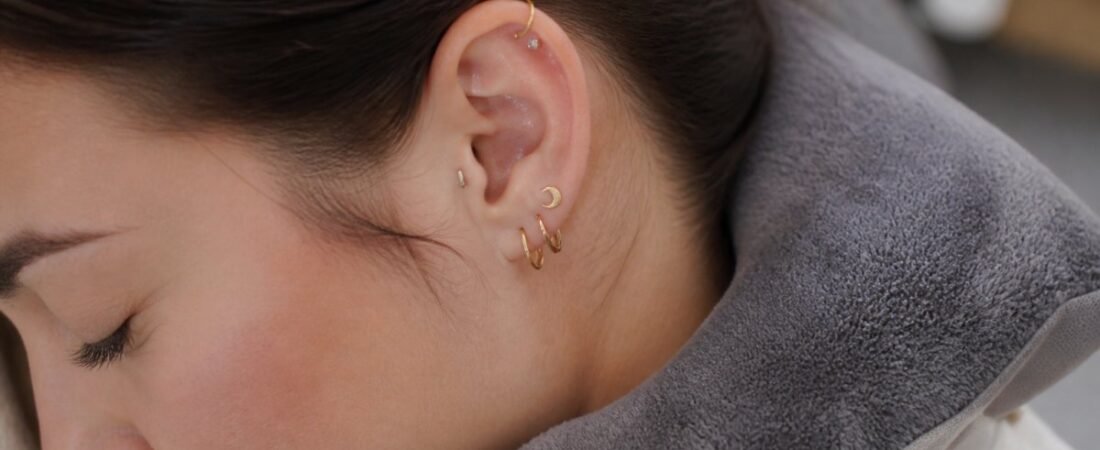
Planning curated ear designs starts with what your ear actually looks like and what you’ll wear daily. At Sandiegopiercingshops, we’ve built these plans since 2002 around your anatomy, routine, and how much healing you can manage at once. Start with three decisions: your anchor piece (usually the lobe or a helix), your daily jewelry (studs and small hoops survive gyms and headphones; dangles don’t), and your pace (one or two piercings heal faster than five).
Bring your own earrings to your consultation if you already own pieces you love. We can map placements around jewelry you’ll actually wear instead of selling you a look that stays in a drawer.
Ear Piercing Placement Guide: Matching Anatomy to Design
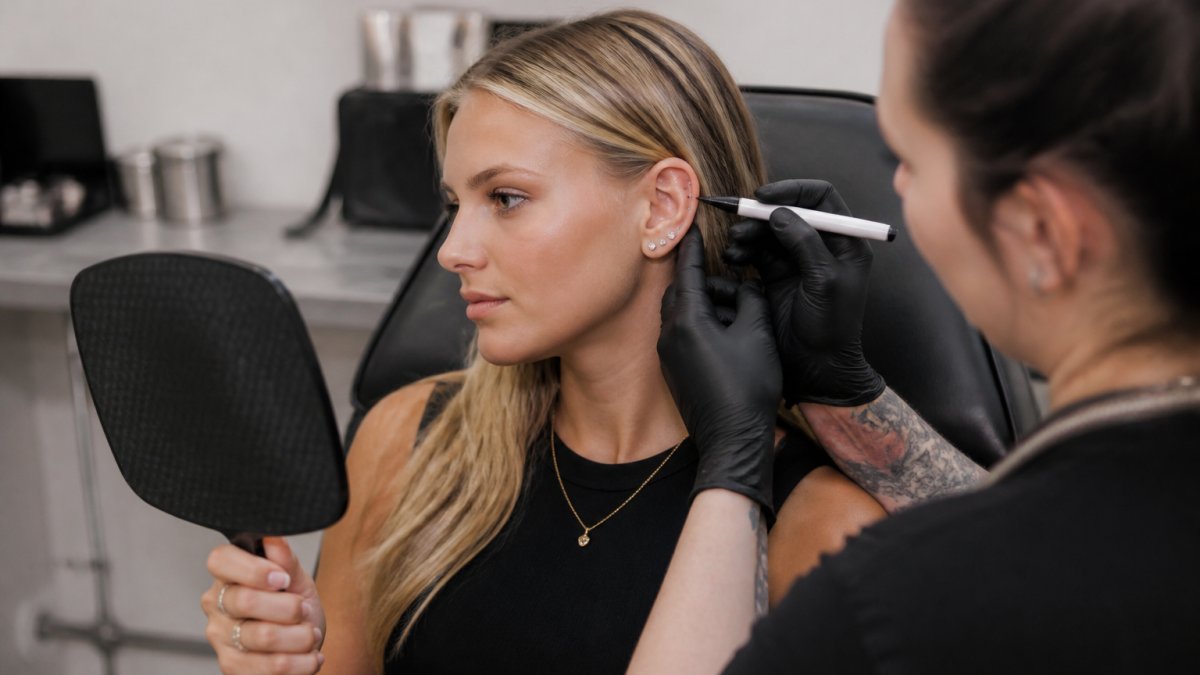
An ear piercing placement guide only works if it starts with your ear, not a trend. A piercer marks candidate points with a pen so you can see the plan in a mirror before anything is pierced.
Common placements: lobe and upper lobe (easiest starting points), helix and forward helix (good for a line of small studs or a single hoop), conch (a strong standalone statement), and tragus, rook, daith, and flat (detail placements that reward a piercer’s eye for your ear shape). If a placement won’t work on your ear, a good piercer says so and offers an alternative.
How to Space Out Ear Piercings and Plan Healing Time
Spacing is where most DIY plans fall apart. Cartilage piercings heal far more slowly than lobes, and stacking too many at once makes cleaning, sleeping, and styling harder.
| Stage | What to Add | Typical Healing Window | Why This Order |
|---|---|---|---|
| 1 | Lobe or single helix | Lobe heals fastest; helix slower | Easiest to clean and sleep around |
| 2 | Second lobe or forward helix | Similar to stage 1 | Builds symmetry without crowding |
| 3 | Conch, tragus, or rook | Longest window | Needs clear space and patience |
Healing times vary by person and placement, so treat any timeline as a range, not a promise. Ask your piercer what to expect for your specific ear and follow their aftercare exactly.
Do not sleep on a freshly pierced ear without protection. Pressure and friction are common causes of irritation bumps, and a bump can set healing back by weeks. Ask about a travel pillow or donut pillow before you leave the studio.
Once the base is healed, layer studs, small hoops, and ear cuffs, and mix metals only if that matches your personal style. Buy the anchor piece first, then add as each stage heals. If you’d rather have the whole plan handled by a professional from the first mark to the final jewelry change, our body piercing service can walk you through placement, pacing, and aftercare in one visit.
Frequently Asked Questions
Can I sleep on a new ear piercing?
Avoid sleeping on a new ear piercing for the first few weeks. Pressure and friction slow healing and can irritate the channel. If you roll onto that side, use a travel pillow with your ear in the hole, or sleep propped slightly upright. For a curated ear design, plan which side you sleep on first and start piercings on the opposite ear. Once the piercing is fully healed, side sleeping is fine.
How long does an ear piercing take to heal?
Ear piercing healing time depends on placement. Earlobe piercings usually heal in 6 to 8 weeks. Cartilage piercings like helix, conch, rook, and daith take 6 to 12 months. Because healing times vary, space out ear piercings so you are not healing more than one or two cartilage piercings at once. A professional piercer can give you a realistic timeline for your specific placements.
How do I plan a curated ear design that looks balanced?
Start with an ear-mapping session where a piercer marks your anatomy and photographs your ear. Pick one focal point, such as a conch or flat, then balance it with smaller studs or hoops on the lobe and helix. Mix sizes and shapes, but repeat one metal or texture for cohesion. Space piercings so jewelry does not overlap, and stage the plan over several months so each piercing heals before the next.
Planning a curated ear is really a plan for patience. If you want a placement map built around your actual anatomy, with jewelry chosen for your daily routine and a staged healing schedule you can follow, call or text Sandiegopiercingshops at (858) 222-0071. We will walk you through the plan before a single mark is made.