
Table of Contents
- Ear Piercing Placement Guide: Mapping Your Curated Ear
- Curated Ear Piercing Ideas That Work With Your Lifestyle
- Ear Piercing Healing Time and Aftercare Realities
- Frequently Asked Questions
Last Updated: October 14, 2026
Ear Piercing Placement Guide: Mapping Your Curated Ear
A curated ear is a group of piercings arranged so the whole ear looks intentional. At Sandiegopiercingshops, we have fitted curated ear designs since 2002, and the first step is never jewelry. It is anatomy.
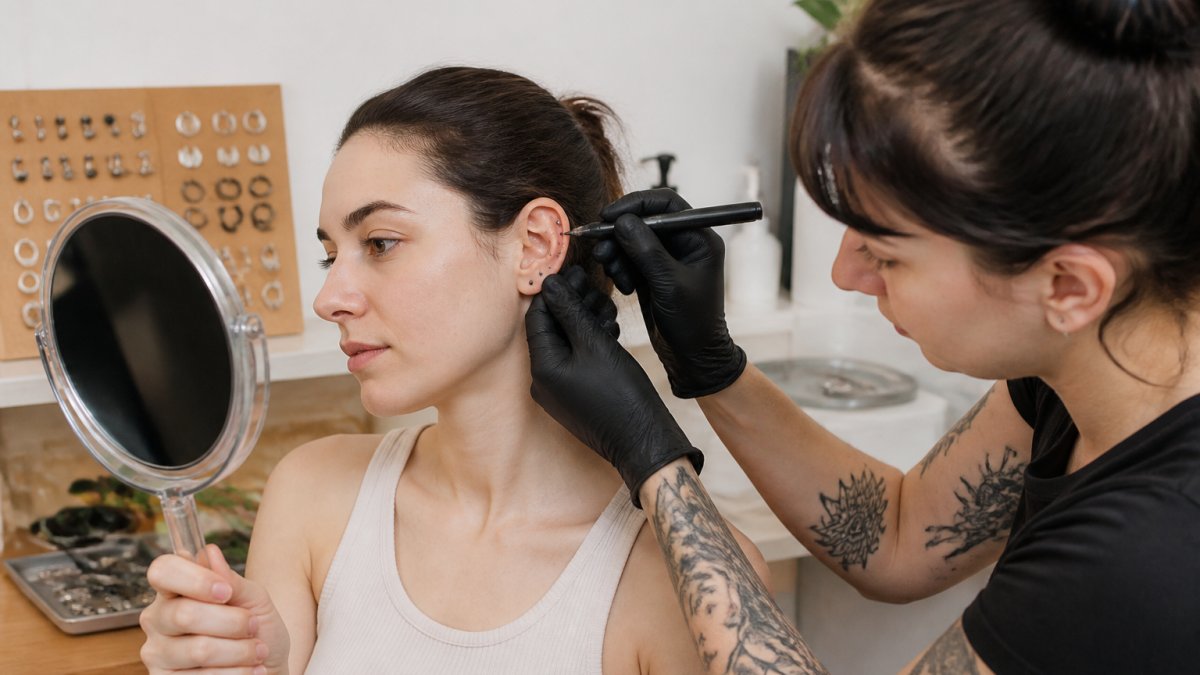
Most people walk in with a photo of someone else’s ear, but your ear has its own ridges, folds, and curves, so a good piercer maps yours first.
To plan: note your ear’s natural folds in a mirror, decide how many piercings you want visible at once, and leave room for future piercings. Spacing now saves you from a cramped, uneven look later.
Bring photos of ears that look similar to yours, not just ears you like. A piercer can match a design to your shape far faster when the reference ear actually resembles yours.
Curated Ear Piercing Ideas That Work With Your Lifestyle
The best curated ear piercing ideas are the ones you can actually live with. A full stack of hoops looks great in a photo, but not when you wear over-ear headphones eight hours a day or sleep on that side every night.
Start with how you use your ears: daily headphones mean keeping the upper ear simple, side sleepers should plan the busiest piercings on the ear they do not sleep on, and hair tied up suits a forward helix and lobe combo. Mixing studs, hoops, and small labret-style pieces gives a stack depth, and repeating one metal color keeps the look cohesive.
Design around your daily habits first. A piercing that fits your life heals better because you stop bumping and tugging it.
Ear Piercing Healing Time and Aftercare Realities
Healing time depends on where the piercing sits, not on how tough you are. Lobes heal fastest; cartilage takes longer because that area gets less blood flow.
So how long does it take to heal? A lobe piercing often settles in a few weeks, while cartilage can take several months, and it stays fragile the whole time, even when it looks fine on the outside.
Aftercare comes down to a few rules: clean gently with saline solution as directed, do not twist or pick at the jewelry, avoid sleeping directly on it, and come back if you see spreading redness, swelling, or pus.
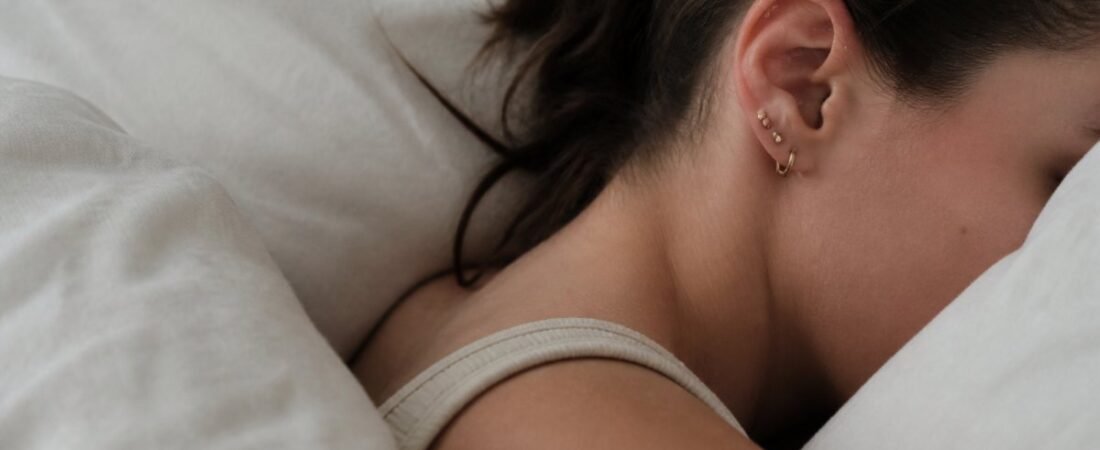
Can you sleep on a new ear piercing? Ideally, no. Pressure and friction are two of the most common reasons a piercing gets angry. If you must, use a travel pillow with your ear in the hole so nothing presses on it.
A piercing plan only works if the healing does, so we walk every client through aftercare before they leave and use implant-grade jewelry that is kinder to sensitive skin. If you want a curated ear built around your anatomy and daily routine, call or text Sandiegopiercingshops at (858) 222-0071.
Frequently Asked Questions
Can I sleep on a new ear piercing?
You should avoid sleeping on a new ear piercing for at least the first few weeks. Pressure against a pillow can irritate the piercing, cause swelling, and slow healing. Try sleeping on your opposite side or use a travel pillow with your ear in the hole so nothing presses on it. If you roll over in your sleep, a clean cotton T-shirt over your pillowcase can reduce friction. Most piercers suggest waiting until the piercing is fully healed before regular side-sleeping resumes.
How long does an ear piercing take to heal?
Healing time depends on placement. Earlobe piercings typically heal in 6 to 8 weeks. Cartilage piercings like helix, daith, or conch can take 6 to 12 months or longer. Factors like jewelry material, aftercare, and your own immune response affect the timeline. Implant-grade titanium or niobium jewelry and consistent cleaning with sterile saline solution support faster healing. If you are planning a curated ear stack, sequence piercings so healing ones are not crowded by new ones.
How do I plan a curated ear design that fits my ear shape?
Start by looking at your ear anatomy: the curve of your helix, the depth of your concha, and the thickness of your lobe all affect which piercings will sit well. A professional piercer can mark placement dots with you in the mirror before any needle touches skin. Bring inspiration photos, but expect adjustments based on your unique shape. A good plan sequences piercings over months, starting with the ones that need the longest healing time so your final look comes together without overcrowding.