

Table of Contents
- Needle vs Gun Piercing for Children: Which Is Safer?
- Ear Piercing Aftercare Instructions for Children
- Can I Sleep on a New Ear Piercing?
- How Long Does It Take for Ear Piercings to Heal?
- Choosing the Right Jewelry and Metal
- Preparing Your Child for the Experience
- Frequently Asked Questions
Last Updated: October 7, 2026
Needle vs Gun Piercing for Children: Which Is Safer?
A hollow piercing needle is safer than a gun. A needle makes a clean cut; a gun forces a blunt stud through the earlobe, damaging more tissue.
A piercing gun also cannot be fully cleaned in an autoclave the way professional tools can. That raises the risk of cross-contamination between clients. The CDC guidance on sterilization and disinfection in healthcare settings explains why heat-based sterilization matters for any tool that breaks the skin.
Look for a licensed piercer using a single-use, sterile hollow needle, jewelry opened in front of you from a sealed package, implant-grade titanium or surgical steel, and a clean, dedicated piercing room.
Does it hurt more with a gun? Often, yes, the gun uses force, while a skilled piercer using a needle completes the piercing in one quick motion.
The biggest mistake we see is choosing a gun because it seems faster or cheaper. The trade-off is more tissue damage, higher infection risk, and jewelry that is harder to clean during healing.
Ear Piercing Aftercare Instructions for Children
Good ear piercing aftercare for children comes down to three things: clean hands, a saline wash, and leaving the piercing alone.
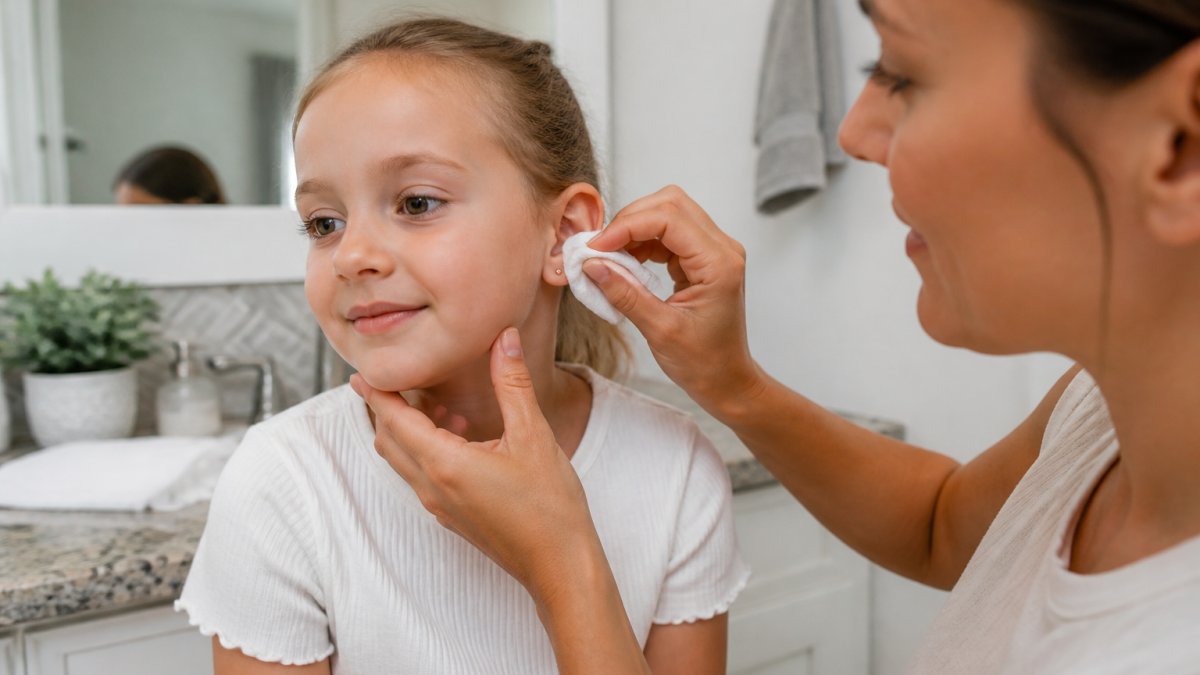
The routine: wash your hands, spray the front and back with sterile saline twice a day for the first few weeks, pat dry, do not twist the jewelry, and keep harsh soaps, alcohol, and hydrogen peroxide away.
Skip home-mixed salt water, it is hard to get the ratio right and is not sterile. A premade saline wash is safer.
Signs of infection to watch for include redness that spreads, swelling that gets worse after day three, warmth, pus, or a fever. If you see these, call your pediatrician. A American Academy of Pediatrics resource on skin infections is a good starting point for parents.
Also keep hair pulled back, use a clean pillowcase, avoid pools and hot tubs until healed, and leave the starter jewelry in until healing is complete.
Can I Sleep on a New Ear Piercing?
You should not sleep on a new ear piercing if you can avoid it. Pressure and friction cause irritation, and sleeping on that side pushes the jewelry into healing tissue for hours.
Sleep on your back or the opposite side, use a travel pillow with your ear in the hole, and if you must lie on that side, keep it brief.
A flat back stud is far more comfortable for sleeping than a butterfly back, it sits flush and does not poke or catch on hair.
Many adults sleep on a new piercing the first night and wake up swollen and sore. It is not infected, just angry.
If you roll onto the piercing in your sleep, do not panic. Clean it, leave it alone, and try the travel pillow trick the next night. Consistency matters more than one bad night.
How Long Does It Take for Ear Piercings to Heal?
Earlobe piercings usually heal in about six to eight weeks for children; cartilage piercings take several months.
Healing is not a straight line, some days it looks great, others red and crusty. That is normal.
What slows healing: touching or twisting the jewelry, sleeping on that side, cheap nickel jewelry, swimming too soon, and harsh cleaning products.
If you are unsure whether something is normal healing or a problem, ask a professional piercer or your pediatrician. If you would rather have it checked and handled by someone experienced with children’s ears, professional body piercing services can walk you through the healing process and swap jewelry safely once things settle down.
Choosing the Right Jewelry and Metal
The right starter jewelry is implant-grade titanium or surgical steel, hypoallergenic and made to sit in the body long-term.
The wrong jewelry is often the real cause of irritation. Nickel allergy is common, and many cheap earrings contain nickel. If your child’s ears get red, itchy, or weepy, the metal may be the problem.
Ask your piercer what metal they use before the piercing happens.
Preparing Your Child for the Experience
Preparation makes a huge difference for nervous kids. Talk about it a few days ahead and explain what will happen in simple steps.
Let them pick the jewelry color, bring a comfort item, keep the visit calm and unhurried, and praise them afterward no matter how it went.
For kids with sensory sensitivities, tell the piercer ahead of time, a quieter room, slower pace, and a heads-up before each step help.
Frequently Asked Questions
What is the best age for a child to get an ear piercing?
Most professional piercers suggest waiting until a child can understand aftercare and consent to the procedure, often around age 7 or older. Younger children may not tolerate the cleaning routine or avoid touching the piercing, which raises infection risk. Some pediatricians will pierce infants, but the child cannot participate in healing care. The right age depends on your child’s maturity, not a fixed number. A professional piercer can help you decide based on your child’s readiness and ear anatomy.
Why is a needle safer than a piercing gun for children?
A hollow piercing needle creates a clean cut and removes a tiny plug of tissue, which allows the jewelry to sit properly and heal faster. Piercing guns use blunt force trauma to push a stud through the earlobe, causing tissue damage and increasing the risk of infection and keloid formation. Guns also cannot be fully sterilized in an autoclave, so cross-contamination is a real concern. A professional piercer using a sterile, single-use needle is the safer choice for a child’s ear piercing.
How can I tell if my child’s ear piercing is infected?
Watch for redness that spreads, swelling that gets worse after the first few days, warmth to the touch, yellow or green discharge, or pain that increases instead of fading. A small amount of clear fluid and mild soreness is normal during healing. If you see pus, streaks, or your child develops a fever, call your pediatrician. Do not remove the jewelry yourself, because that can trap infection inside. A professional piercer can also assess the piercing and advise whether to see a doctor.
Piercing a child’s ears should feel calm, clean, and safe from start to finish. At Sandiegopiercingshops, we have been piercing since 2002, and we plan every piercing around your child’s anatomy and comfort. We use sterile, single-use needles, stock implant-grade jewelry, and walk families through clear aftercare before they leave. Call or text (858) 222-0071 to book a visit and get your child’s piercing done right the first time.