
Table of Contents
- Why Professional Piercings Cost More Than You Expect
- Implant Grade Titanium Jewelry Benefits and Other Safe Metals
- How to Identify a Reputable Piercing Studio
- Piercing Aftercare and Healing Expectations
- What the Price Is Really Buying
- Frequently Asked Questions
Last Updated: October 2, 2026
Why Professional Piercings Cost More Than You Expect
A professional piercing costs more because you pay for a sterile single-use needle, implant-grade jewelry, and a piercer who knows your anatomy. The question we hear most is “can I sleep on it tonight?”
Professional piercings are a medical-adjacent procedure, not a fashion accessory applied with a gun.
| What You Pay For | Cheap Piercing | Professional Piercing |
|---|---|---|
| Needle | Reusable gun, wiped down | Sealed single-use needle, opened in front of you |
| Jewelry | Mystery metal, often nickel | Implant-grade titanium or 14k/18k gold |
| Training | A few hours of instruction | Years of apprenticeship and anatomy study |
| Aftercare | A printed card | Follow-up guidance and problem-solving |
| If it goes wrong | You pay a doctor | Studio helps you fix it |
The most expensive piercing is the cheap one that gets infected. A single round of antibiotics, a doctor visit, and a scar revision can cost far more than doing it right the first time, and the scar is permanent.
Implant Grade Titanium Jewelry Benefits and Other Safe Metals
Implant-grade titanium is the standard for new piercings: biocompatible, nickel-free, and light enough that a fresh piercing heals without weight dragging on the tissue.
- Implant-grade titanium: lightweight, corrosion-resistant, meets ASTM standards.
- Niobium: good for metal allergies; anodized without plating.
- 14k and 18k gold: fine for healed piercings only if solid, not plated.
- Surgical steel: can contain nickel, so a poor choice for a fresh piercing.
If your daughter reacts to earrings easily, the metal is almost always the culprit. Nickel is the most common contact allergen in body jewelry, and it hides inside “hypoallergenic” labels that mean nothing legally. The FDA guidance on nickel in jewelry explains why “hypoallergenic” is a marketing term rather than a safety standard.
Ask to see the jewelry in its sealed, labeled packaging before it goes in. Real implant-grade titanium comes with a mill certificate and a lot number. If the piercer cannot tell you the grade and the manufacturer, it is not implant-grade.
How to Identify a Reputable Piercing Studio
A reputable piercing studio opens sealed, single-use equipment in front of you, runs an autoclave with logged cycles, and answers sterilization questions without getting defensive. If any of those three are missing, walk out.
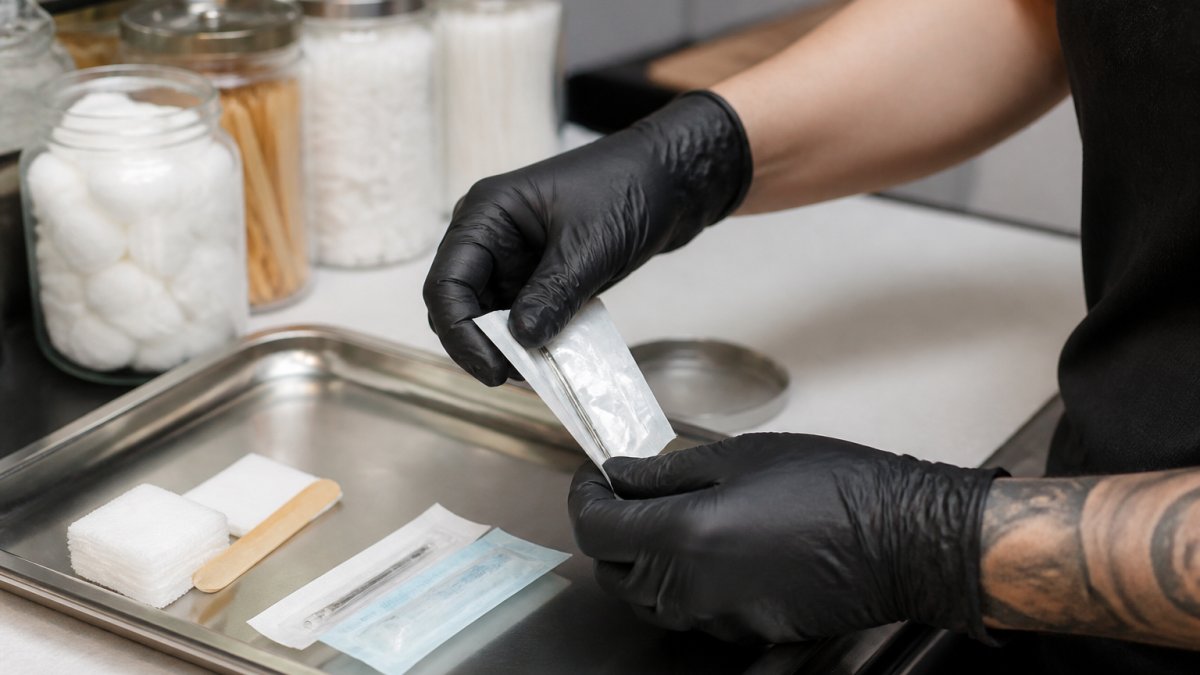
A piercer who studies your ear shape first will tell you when a placement will not work, when a cartilage fold is too thin, or when you need a longer bar for swelling. This is also where body piercing experience shows: a studio that does this daily can spot a problem placement before the needle ever comes out, which is exactly what you are paying for.
The single best test of a studio is whether the piercer is willing to talk you out of a placement. Anyone who says yes to everything is selling you jewelry, not a safe piercing.
Piercing Aftercare and Healing Expectations
Healing time depends on where the piercing sits, not how tough you are.
Can I sleep on a new ear piercing?
Not on the pierced side for the first several weeks.
How long does it take to heal?
Lobes: 6 to 8 weeks. Cartilage: 6 to 12 months. Navel: 6 to 12 months. Dermals: highly variable and often temporary.
Should I use salt water or leave it alone?
Both, in a specific way. Clean with a sterile saline wound wash, then leave it alone. Do not rotate the jewelry, do not use alcohol or hydrogen peroxide, and do not touch it with unwashed hands. The CDC hand hygiene guidance is worth reading, because most piercing infections trace back to hands rather than to the piercing itself.
What about infection and keloids?
True infection signs are spreading redness, heat, throbbing pain, and discharge that smells wrong.
Why do some people reject piercings?
Rejection happens when the body pushes the jewelry toward the surface.
Never remove jewelry from a suspected infection on your own. If the hole closes over the infection, you can trap it under the skin and turn a manageable problem into an abscess.
What the Price Is Really Buying
The gap between a cheap piercing and a professional one comes down to overhead you never see: autoclave maintenance and spore testing, single-use supplies, an inventory of implant-grade metals, and years of apprenticeship.
That is why the service fee and the jewelry price are listed separately at a real studio.
If you are planning a curated ear with four or five piercings, sequencing matters as much as placement.
Deciding where to get pierced is a decision about who you trust with your body.
Frequently Asked Questions
Why is professional body piercing more expensive than mall kiosks?
Mall kiosks often use piercing guns, which cannot be fully sterilized and can crush tissue instead of making a clean cut. Professional piercings cost more because the studio uses single-use needles, an autoclave for sterilization, implant-grade jewelry, and a trained piercer. Those costs protect you from infection, rejection, and long-term complications that can be far more expensive to treat.
What is the difference between a piercing fee and the cost of jewelry?
The service fee covers the piercer’s time, expertise, sterile setup, and disposable tools. Jewelry is priced separately because implant-grade titanium, 14k or 18k gold, and niobium cost more than cheap alloys. A low total often means the jewelry is not biocompatible, which raises your risk of allergy and rejection. Ask for an itemized breakdown so you know what you are paying for.
How do professional piercers ensure a sterile environment?
Reputable studios follow protocols that include autoclave sterilization of reusable tools, single-use needles, disposable gloves, and surface barriers changed between clients. They also track sterilization cycles and keep jewelry in sealed sterile packaging until the moment of piercing. You can ask to see the autoclave and the spore test results, and a professional piercer will show you without hesitation.