
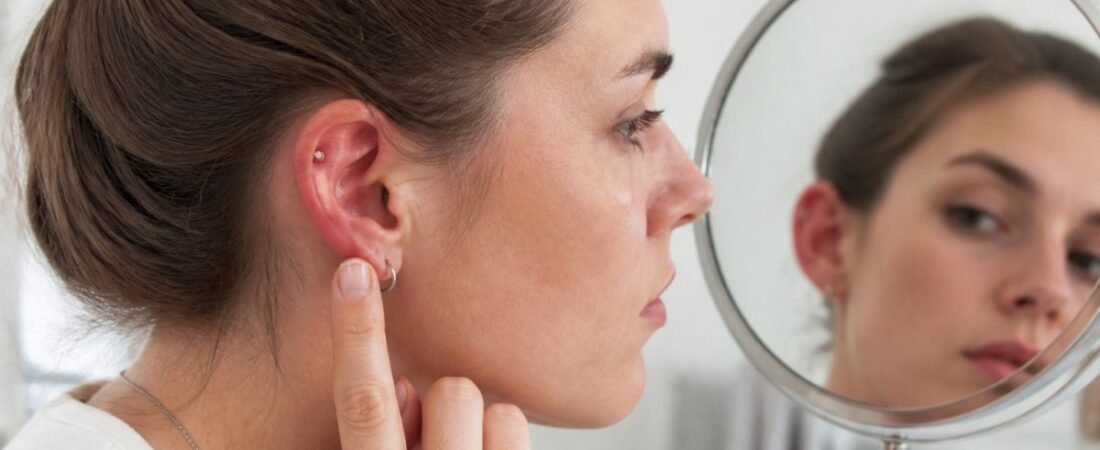
Last Updated: October 29, 2026
Quick Summary
Piercing rejection is when the body slowly pushes the jewelry toward the surface, usually showing as migration, thinning skin over the bar and a widening hole. Irritation tends to stay put, with a raised bump and soreness that settles as the site heals. If the piercing looks like it is moving outward, get it checked by a professional rather than waiting it out.
- Rejection often shows the jewelry migrating toward the skin’s surface over time.
- Irritation usually stays in place and settles as the piercing heals.
- Thinning skin over the bar is a sign that points toward rejection.
- Do not wait out signs of migration; book a professional look instead.
Table of Contents
- Can You Sleep on a New Ear Piercing Without Making It Worse?
- How Long Does a Piercing Take to Heal, and What Is Normal Along the Way?
- Piercing Irritation Bump or Rejection: How to Tell the Difference
- Frequently Asked Questions
Can You Sleep on a New Ear Piercing Without Making It Worse?
Sleeping on a new piercing is the question people ask most, and the short answer is to avoid it for the first few weeks. Pressure on fresh tissue can snag the jewelry, irritate the site and slow healing.
Use a clean pillow case and sleep on your back if you can. A travel pillow with a hole for the ear can help. If you do snag it overnight, don’t pull the jewelry out. Clean the area and call us for advice. If it happens, what to do if a piercing gets snagged explains the steps to take right away. If you have a new piercing, you can call Sandiegopiercingshops at (858) 222-0071 to ask how it’s settling.
How Long Does a Piercing Take to Heal, and What Is Normal Along the Way?
Healing times vary by piercing location and from person to person. Tenderness, mild redness and a clear or whitish discharge are common early on.
Watch for changes over time. You can find San Diego piercing safety, aftercare and same-day visit options if you need a check soon. Mild swelling that eases is normal. Increasing pain, heat or spreading redness is not, so book a check with Sandiegopiercingshops at (858) 222-0071 if you’re unsure.
Healing timelines differ by piercing and by person, but these early signs are common and usually harmless. A full day-by-day aftercare guide shows how to care for a new piercing to support faster healing.
| Sign | What it usually means | When to call |
|---|---|---|
| Tenderness | Normal early healing | If it grows worse over time |
| Mild redness | Normal early healing | If it spreads |
| Clear or whitish discharge | Normal early on | If it changes in colour or smell |
| Mild swelling that eases | Normal | If it keeps increasing |
| Increasing pain | Not normal | Book a check |
| Heat | Not normal | Book a check |
| Spreading redness | Not normal | Book a check |
Piercing Irritation Bump or Rejection: How to Tell the Difference
Rejection usually shows up as the jewelry migrating toward the surface, thinning skin over the bar and a visible hole that widens. Irritation tends to stay put, with a raised bump, localized soreness and tissue that settles as the site heals.
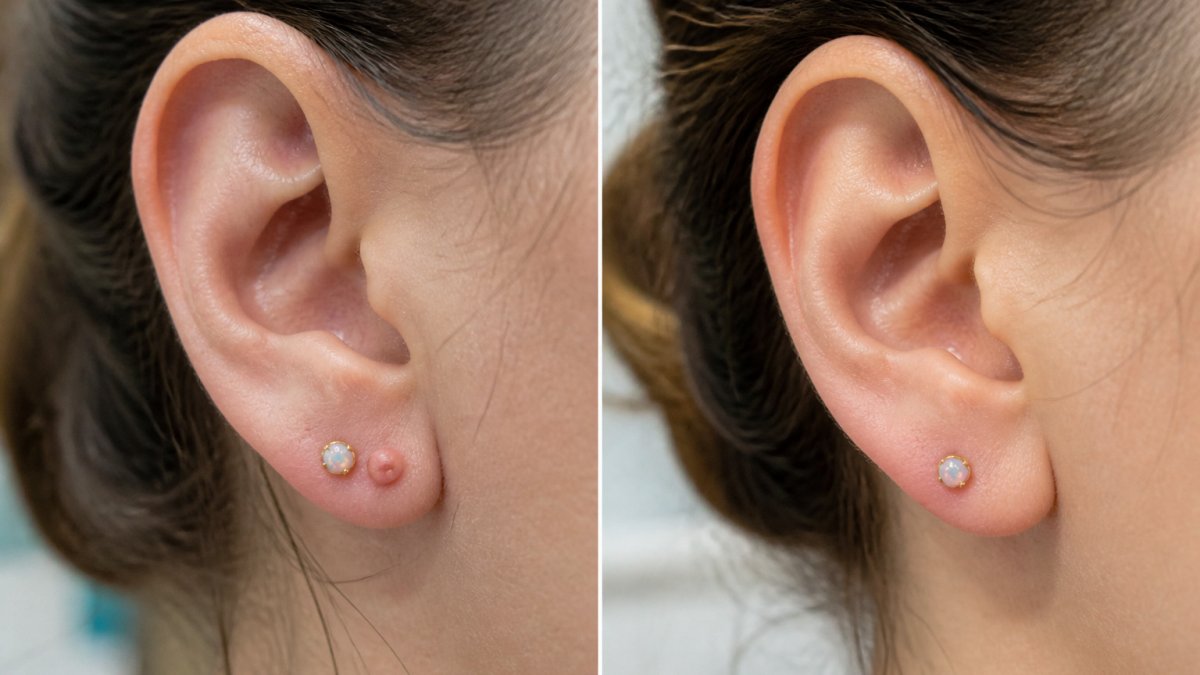
A common mistake is treating piercing rejection like irritation and waiting it out. If the piercing looks like it is moving outward, bring it in for a professional look. You can read why dermal anchors reject and what to watch for to understand the signs. Our studio in Pacific Beach can help you judge which one you’re dealing with. Our piercing studio safety checklist lists what to ask to judge whether a piercer met professional standards.
Frequently Asked Questions
Can I sleep on a new ear piercing?
It is best to avoid sleeping directly on a new ear piercing, especially during the first few weeks. Pressure and friction can shift the jewelry, irritate the tissue and slow healing. Use a clean travel pillow with a hole cut out, or sleep on your back, and keep your hair and bedding away from the area. If you are unsure, ask your piercer for guidance on your specific placement.
How long does a piercing take to heal?
Healing time depends on the piercing location and varies from person to person. Navel and septum piercings also vary widely from person to person. Healing is a process, so some tenderness and mild swelling in the early weeks is common. Keep your piercer’s aftercare routine consistent until the piercing is fully healed.
When should I contact a professional piercer about a piercing?
Contact your piercer if a bump persists or grows after several weeks, if the jewelry seems to be migrating toward the skin surface, or if the piercing looks thinner or more visible than before. Pain that gets worse rather than better, or any unusual discharge, also warrants a visit. Your piercer can check the placement, the jewelry size and your aftercare, and advise whether a change is needed. Call or text (858) 222-0071 to speak with our team.
