
Table of Contents
- Piercing Studio Safety Standards Checklist: What to Look For
- Piercing Studio Hygiene Checklist for a Clean Visit
- Questions to Ask a Piercer Before Getting Pierced
- How Do You Verify Sterilizer Performance?
- What Are the Real Red Flags in a Piercing Studio?
- What Should a Studio’s Aftercare Guidance Cover?
- How Do You Check a Studio’s Compliance and Records?
- What About Ventilation, Layout, and the Physical Space?
- Frequently Asked Questions
Last Updated: October 5, 2026
Piercing Studio Safety Standards Checklist: What to Look For
Can I sleep on a new ear piercing? How long does it take to heal? Will it get infected?
Most people judge a studio by how it looks, which is the least useful signal available. What separates studios is process, something you can inspect.
Asking questions does not make you paranoid, it makes you an informed client. A good piercer welcomes it; a bad one gets defensive, and that reaction tells you everything.
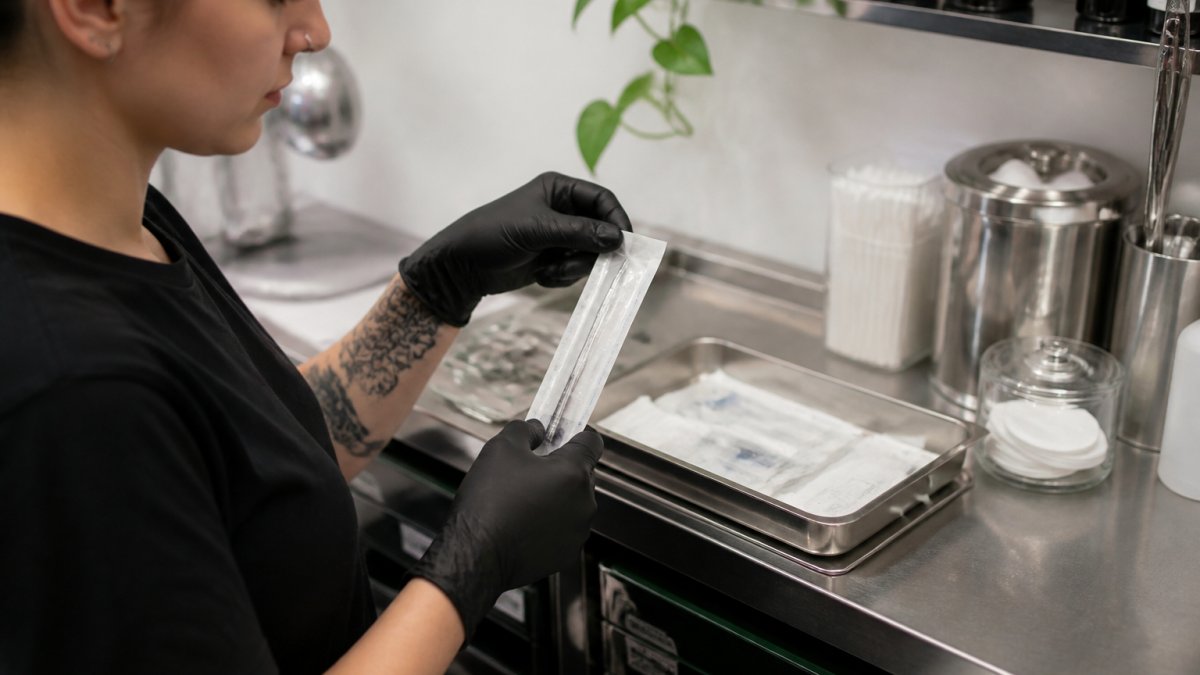
The single most reliable safety signal in any studio is whether the piercer opens a sealed, sterile needle in front of you. If the needle is already out, already unwrapped, or comes from a drawer rather than a sterile pouch, stop the appointment.
Piercing Studio Hygiene Checklist for a Clean Visit
A clean studio follows visible, repeatable hygiene steps every time, not just when an inspector is due.
- Handwashing before gloves. Soap and water first, then fresh sterile gloves.
- Single-use needles in sealed sterile packaging. Opened in front of you, disposed of immediately after.
- Autoclave sterilization for reusable tools. Forceps and tapers go in an autoclave, never a wipe-down with alcohol.
- Sterile packaging with indicators. Color-change indicators confirm the cycle ran.
- Disposable supplies and barriers. Fresh barrier film, single-use cups, gauze, and gloves.
- Sharps disposal. Used needles go straight into a puncture-resistant sharps container.
- Workstation cleaning between clients. Surfaces disinfected, barriers replaced, tray reset.
- Recordkeeping. Consent forms, health screening, and sterilization logs kept on file.
The two items people never check, sterilization monitoring and ventilation, matter most.
The most common mistake clients make is assuming gloves equal sterility. A piercer who touches a phone, a drawer handle, or their own hair while wearing gloves has contaminated them. If the gloves touch anything other than sterile equipment and your skin, ask for a fresh pair.
Questions to Ask a Piercer Before Getting Pierced
Ask these before you book. A piercer who answers directly, without irritation, is worth your trust.
- How do you sterilize reusable tools, and can I see your autoclave logs?
- Do you use single-use needles, and will you open the package in front of me?
- What jewelry material do you use for a fresh piercing?
A sterilizer that is not monitored is one you cannot trust. Studios should run biological indicators (spore tests) on a schedule and keep the results.
Second, the bloodborne pathogen question. In the United States, workplace exposure to blood and other potentially infectious materials is governed by the OSHA Bloodborne Pathogens standard, which requires employers to have an exposure control plan and provide training to workers with reasonably anticipated exposure.
What jewelry should a fresh piercing use?
Fresh piercings should use implant-grade material such as titanium or niobium, which is biocompatible and resists corrosion. Cheap mystery-metal jewelry is a common cause of irritation, allergic reaction, and delayed healing. If a studio cannot name the exact material and grade, that is your answer.
How can I tell if a studio is actually following its own protocols?
Watch whether the routine is identical for the person ahead of you and the person behind you. Protocols followed only when someone is watching are not protocols, they are performance.
How Do You Verify Sterilizer Performance?
You verify a sterilizer three ways: mechanical monitoring (the readout confirms the right temperature, pressure, and time), chemical indicators (packaging changes color to show exposure), and biological monitoring (live spores confirm the cycle actually killed microorganisms, the only one that proves sterility rather than suggesting it).
A studio that only checks the gauge is doing the minimum; one that runs spore tests on a schedule and keeps the results is doing the job. Ask to see the log, the reaction is more informative than the log itself.
What Are the Real Red Flags in a Piercing Studio?
Red flags are mostly procedural, not visual. Any one of these is a reason to leave, and you owe no explanation.
- Needles or jewelry removed from packaging before you arrive
- Reusable tools wiped rather than autoclaved
- Piercing guns for cartilage or any tissue other than a lobe
Guns cannot be fully sterilized between clients the way an autoclave can, and the blunt-force trauma they cause to cartilage is a well-known contributor to scarring and difficult healing. A studio that reaches for a gun on cartilage has told you what it values.
If you are unsure whether a studio is right for you, ask one question and listen carefully: “Can I see where you keep your autoclave logs?” Studios that monitor their sterilizer will produce them without hesitation. Studios that do not will offer an excuse.
What Should a Studio’s Aftercare Guidance Cover?
Aftercare guidance should be specific, written, and consistent with current infection-control practice.
A reasonable protocol covers sterile saline cleaning, keeping hands off, avoiding pools, hot tubs, and lakes during healing, and not rotating or twisting jewelry.
Can you sleep on a new ear piercing? Generally no, not without irritating it, a travel pillow with your ear in the hole is the standard workaround.
How Do You Check a Studio’s Compliance and Records?
Compliance is local. Body piercing in the United States is regulated at the state and often county or city level, and requirements vary widely, some jurisdictions license studios and inspect on a schedule, others have far lighter oversight.
Check with your state or county health department to see whether the studio holds a current permit and whether inspection records are public.
Consent forms, health screening, sterilization logs, and training documentation are the paper trail that separates a professional operation from a person with a needle. If records do not exist, the protocols probably do not either.
CDC guidance on infection control in body art settings
What About Ventilation, Layout, and the Physical Space?
Ventilation and layout are the safety factors almost nobody mentions. A piercing area should be separated from high-traffic zones, with disinfectable surfaces and enough airflow to clear aerosols.
Is there a defined piercing station, or a chair in the middle of a retail floor? Can the piercer reach a sink without leaving the area? Are clean supplies stored separately from waste?
Frequently Asked Questions
How can I tell if a piercing studio is safe?
Look for a clean, uncluttered space, handwashing before gloving, sealed single-use needles opened in front of you, and an autoclave for any reusable tools. Ask how they sterilize equipment and whether they track results. A safe studio answers clearly and never rushes you. If anything feels off, trust your gut and leave.
What are warning signs that a piercing studio is unsafe?
Major red flags include piercing guns, needles taken from unsealed packaging, no gloves, dirty counters, and a piercer who avoids your questions. Also watch for reused jewelry, unclear sterilization practices, and pressure to decide fast. Any one of these is a reason to walk away and find a studio that follows proper safety standards.
What jewelry is safe for a new piercing?
Choose implant-grade materials like titanium or niobium. These reduce irritation and healing problems. Avoid cheap metals, nickel-heavy alloys, and anything labeled as fashion jewelry. Ask your piercer what material they use and why. If they cannot explain it, that is a sign to look elsewhere.