Table of Contents
- How to Identify Sterile Piercing Studios: The Real Checklist
- How to Clean a New Piercing (and Spot Infection vs Normal Healing)
- How Long Does a Piercing Take to Heal, and Can I Sleep on a New Ear Piercing?
- Frequently Asked Questions
Last Updated: September 28, 2026
How to Identify Sterile Piercing Studios: The Real Checklist
Know how to identify sterile piercing studios before anyone touches you, a careless shop shows up months later as an infection or scar. Here’s the walkthrough, plus the two questions everyone asks: how to clean a new piercing, and how long does a piercing take to heal.
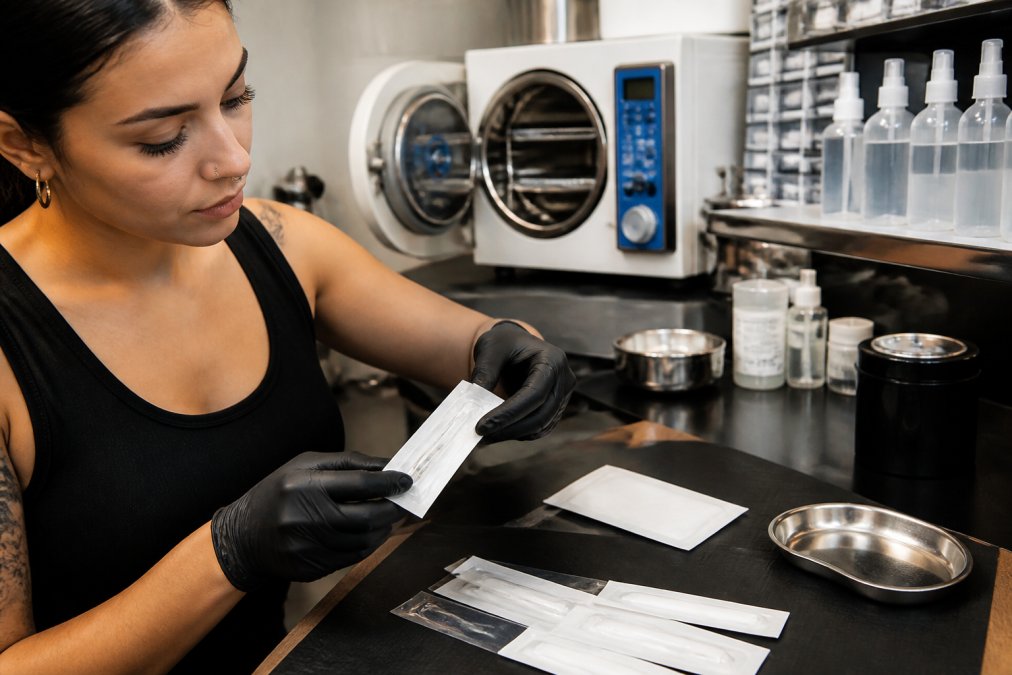
The 8-point studio safety audit
If a shop fails two or more of these, leave.
- Autoclave on site, in view. Ask to see it.
- Sealed, dated packaging with indicator strips.
- Single-use needles only, watch them open a fresh one.
- No piercing gun. Guns can’t be fully sterilized.
- Implant-grade jewelry. Titanium, surgical steel, or nickel-free.
- Gloves changed between steps.
- Sharps container and biohazard bin. Labeled, sealed.
- Sterilization logs with batch numbers.
What the autoclave is actually doing
An autoclave uses pressurized steam to kill pathogens, including bloodborne ones, but only if loaded correctly and tested regularly. Spore tests confirm it reached sterilizing conditions; ask how often they run one.
A front-loading sterilizer that’s packed too full won’t sterilize the middle of the load. If a shop can’t show you a spore test log, you have no way to know the machine is working at all.
The smell test and other sensory cues
A clean studio smells like disinfectant and clean air, not stale smoke, mildew, or heavy air freshener. Look for a sterile field with fresh barriers and surfaces wiped between clients; sharing space with a smoke shop is a cross-contamination risk.
Questions to ask before you sit down
You’re allowed to interview your piercer. Good ones expect it.
- “Can I see the autoclave and sterilization logs?”
- “Are the needles single-use, and will you open one in front of me?”
- “What’s your aftercare protocol, and what signs mean I should call you?”
Ask to see the jewelry still in its sealed pouch with the batch number visible. A piercer who pulls pre-opened jewelry from a drawer is skipping a step you can’t afford.
Regulatory verification and jewelry safety
Most states require studios to register with a health department or meet a local body modification code, and you can often look up a shop’s standing before you visit. The CDC guidance on body piercing safety is a good starting point. Implant-grade metals are tested for biocompatibility; cheap metal can leach nickel and cause irritation that looks like an infection.
How to Clean a New Piercing (and Spot Infection vs Normal Healing)
Clean a new piercing twice a day with a sterile saline solution and nothing else. No alcohol, no hydrogen peroxide, no twisting the jewelry.
The simple daily routine
- Wash your hands.
- Spray or soak with sterile saline for about 30 seconds.
- Pat dry with a clean paper towel.
- Don’t touch it until the next cleaning.
Skip homemade salt water, too much salt dries the skin and slows healing.
Infection vs normal healing: how to tell
Normal healing: mild redness and swelling for a few days, clear or slightly white fluid that crusts, tenderness when bumped. Infection: spreading redness or heat, thick yellow or green pus, worsening pain, fever or chills.
A little crust and a dull ache are normal. Spreading redness, heat, and pus are not. When in doubt, contact your piercer first and a doctor if symptoms escalate.
How Long Does a Piercing Take to Heal, and Can I Sleep on a New Ear Piercing?
Earlobe piercings usually heal in about 6 to 8 weeks; cartilage takes several months because it has less blood flow. Can you sleep on a new ear piercing? Ideally, no, pressure and friction cause irritation bumps and slow healing. If you must sleep on that side, use a travel or donut pillow so your ear rests in the hole.
Healing timelines at a glance
| Piercing type | Typical healing time | Sleep on it? |
|---|---|---|
| Earlobe | 6-8 weeks | After healing only |
| Cartilage (helix, conch) | 4-12 months | Use a donut pillow |
| Nostril | 2-4 months | Avoid face-down sleep |
| Navel | 6-12 months | Avoid pressure |
Practical tips that actually help
- Don’t rotate or play with the jewelry. Every twist reopens the wound.
- Keep hairspray, lotion, and makeup away from the site.
- Change your pillowcase often.
- Avoid pools, hot tubs, and lakes until healed.
Sleeping flat on a fresh cartilage piercing is one of the most common causes of irritation bumps that people mistake for keloids. The fix is usually a pillow change, not a new piercing.
Want a piercing done right the first time, with implant-grade jewelry and a piercer who walks you through every step? Call or text (858) 222-0071 to book a visit or ask about our body piercing services.
Frequently Asked Questions
How do I know if a piercing needle is single-use?
Ask to see the needle removed from its sealed, sterile pouch in front of you. A reputable piercer opens the package at the start of your appointment, shows you the sterile needle, and disposes of it in a sharps container immediately after. If the needle is already out, unwrapped, or sitting on a tray when you arrive, walk out. Single-use needles are a core part of aseptic technique and cannot be reused safely.
What questions should I ask a piercer about their sterilization process?
Ask how they sterilize tools, when the autoclave was last spore tested, and whether they log batch numbers. A good piercer will explain their autoclave cycle, show you indicator strips, and confirm that jewelry is implant-grade titanium or surgical steel. They should also mention OSHA bloodborne pathogen training. If any answer sounds vague or defensive, that is a red flag for a sterile piercing studio.
How can I tell if a piercing is infected or just healing normally?
Normal healing brings some redness, mild swelling, and clear or white lymph fluid. Infection signs include spreading redness, hot skin, yellow or green pus, throbbing pain, and fever. If you notice those, contact a healthcare provider. For how to clean a new piercing, use sterile saline spray twice daily and avoid touching it. Knowing the difference helps you avoid panic and unnecessary removal.
A safe piercing comes down to one thing: a studio that treats sterilization as non-negotiable, not optional. If you’re tired of guessing whether a shop follows real safety protocols, Sandiegopiercingshops has been doing this since 2002. We open every needle in front of you, stock implant-grade jewelry, and give you clear aftercare guidance so healing stays boring. Get started with Sandiegopiercingshops and pierce with confidence.