Last Updated: November 16, 2026
Quick Summary
High quality jewelry for piercings is typically made from implant-grade titanium, which is widely regarded as a stable, lightweight material for new piercings. Surgical steel and 14k gold are common alternatives, while cheap plated metals can flake or contain nickel that may irritate sensitive ears.
- Check the product listing for the exact metal, since vague terms like stainless or surgical grade are not enough.
- Ask your studio what jewelry they stock and why, and expect a clear explanation from a reputable piercer.
- Jewelry that is too short can trap a piercing, while jewelry that is too long can snag on hair or clothing.
- Lobe piercings often take several weeks to heal, while cartilage piercings can take a few months or longer.
- Keep your original jewelry in until the piercing has fully healed and your piercer confirms it is ready to change.
Table of Contents
- Ear Piercing Jewelry Materials: Which Ones Hold Up
- Ear Piercing Jewelry Sizing: Getting the Fit Right
- Ear Piercing Healing Time and When to Change Your Jewelry
- Frequently Asked Questions
Ear Piercing Jewelry Materials: Which Ones Hold Up
Choosing high quality jewelry for piercings starts with the metal touching your skin. Implant-grade titanium is widely regarded as a stable, lightweight material for new piercings. Why implant-grade titanium works best explains the reasoning behind that recommendation. Surgical steel and 14k gold are common alternatives, while cheap plated metals can flake or contain nickel, which may irritate sensitive ears.
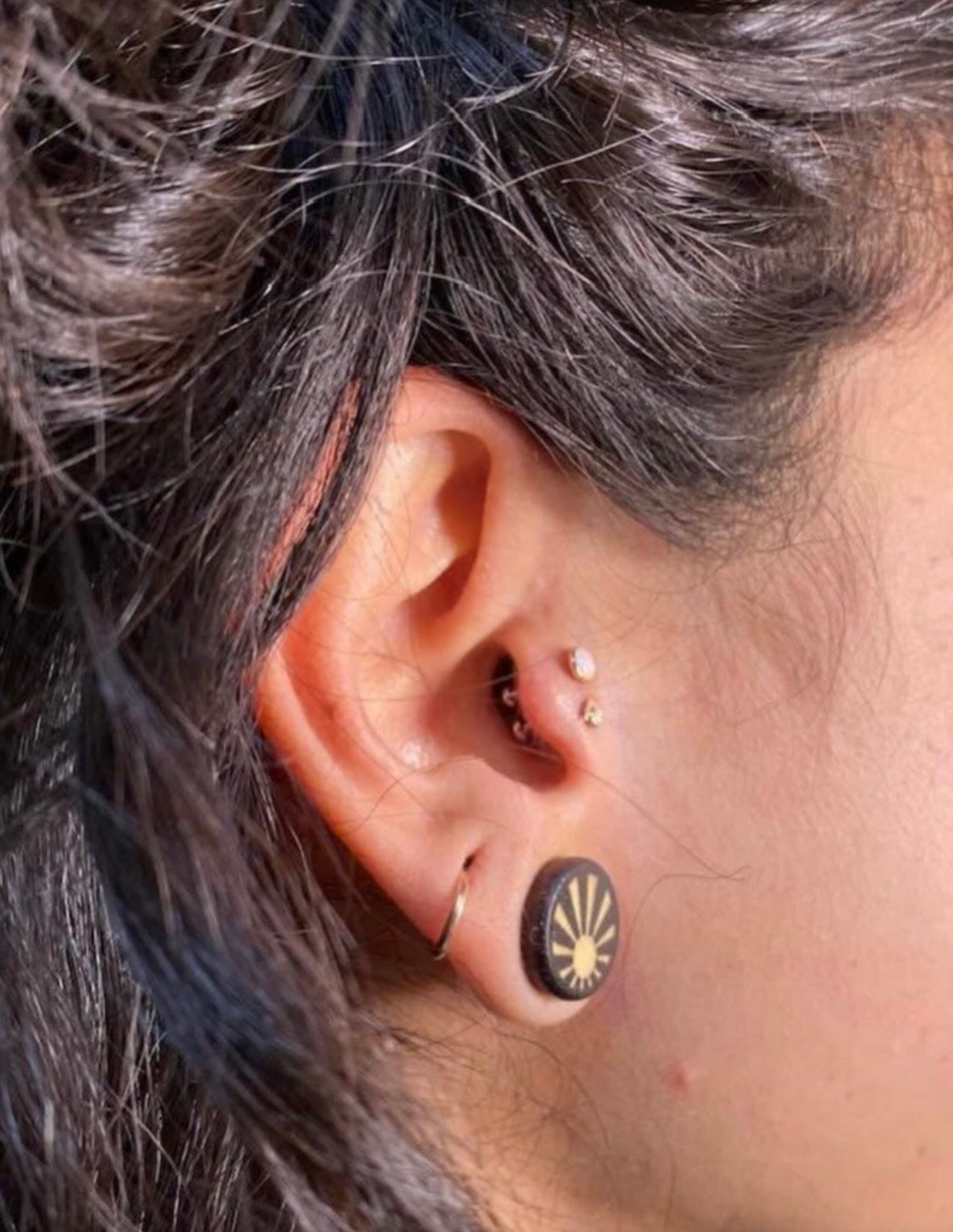
Before you buy, check the product listing for the exact metal. Vague terms like “stainless” or “surgical grade” are not enough. Ask the studio what they stock and why. A reputable piercer will explain the choice without hesitation. If you are considering a new piercing rather than swapping jewelry, you can ask a studio like ours about body piercing and which materials suit that placement.
Ear Piercing Jewelry Sizing: Getting the Fit Right
Jewelry that is too short can trap the piercing and cause swelling. Jewelry that is too long can snag on hair or clothing. The right length leaves just enough room for the swelling that comes with a fresh piercing and then sits snugly once it settles.
Sizing depends on the piercing location and the thickness of the tissue, so an in-person fitting is generally more reliable than guessing from a photo. Planning a curated ear design walks through placement and jewelry sizing across multiple piercings.
Ear Piercing Healing Time and When to Change Your Jewelry
Lobe piercings often take several weeks to heal, while cartilage piercings can take a few months or longer. Ask your piercer whether you can sleep on the piercing and when you can swim, since both depend on the placement. Ten common questions about new ear piercings answers the most frequent ones directly. Keep your original jewelry in until the piercing has fully healed, then change it only when your piercer confirms it is ready. Why professional piercings cost more explains what the safety and jewelry quality behind that cost involves.
Healing times vary by placement, so here is how the timelines in this section compare.
| Piercing type | Typical healing time | Key guidance |
|---|---|---|
| Lobe | Several weeks | Ask your piercer about sleeping and swimming |
| Cartilage | A few months or longer | Ask your piercer about sleeping and swimming |
| Any new piercing | Until fully healed | Keep original jewelry in until your piercer confirms |
Frequently Asked Questions
Can I sleep on a new ear piercing?
It is best to avoid sleeping directly on a new piercing while it heals. Pressure and friction from a pillow can irritate the tissue, shift the jewelry, and slow healing. If you are a side sleeper, try a travel pillow with a hole cut out, or sleep on your back for the first few weeks. Keep your hair and bedding clean, and check with your piercer for guidance specific to your placement.
How long does an ear piercing take to heal?
Earlobe piercings often take several weeks to heal on the outside, though the inside tissue can take longer. Cartilage piercings, such as helix or upper ear piercings, often need several months or more. Healing time depends on placement, individual body chemistry, and how well the piercing is cared for. Keep your jewelry in during healing and avoid changing it before the piercing has settled.
When can I change my ear piercing jewelry?
Wait until the piercing has fully healed before switching to a different style, since changing jewelry too early can cause irritation or closure. Earlobes are often ready for a change after several weeks, while cartilage needs longer. When you do switch, choose high quality jewelry in the correct size, and have a professional piercer check the fit if you are unsure. Sandiegopiercingshops can help you plan your next step.
