
Table of Contents
- How to Choose Piercing Jewelry for New vs. Healed Piercings
- Implant-Grade Titanium Piercing Jewelry vs. Surgical Steel
- Piercing Jewelry Size and Fit: Gauge, Length, and Diameter
- Frequently Asked Questions
Last Updated: October 10, 2026
How to Choose Piercing Jewelry for New vs. Healed Piercings
When you choose piercing jewelry after getting pierced, you’re making one of the most important decisions for your healing. The wrong choice can lead to irritation, infection, or slow healing. At Sandiegopiercingshops, we help clients select jewelry that works with their anatomy and healing stage.
New piercings and healed piercings have completely different needs. A piece that’s perfect for a healed ear might cause serious problems in a fresh piercing. Here’s what you need to know.
New piercings need:
- Implant-grade materials (titanium or solid gold)
- Proper sizing to allow for swelling
- Secure closures that won’t fall out
- Smooth surfaces without rough edges
Healed piercings can wear:
- A wider range of materials
- Tighter-fitting jewelry
- More decorative styles
- Different closure types
The biggest mistake people make is using cheap plated jewelry on new piercings. The coating wears away, exposing base metals that cause irritation and allergic reactions. Your fresh piercing is an open wound. It needs biocompatible materials that won’t trigger inflammation.
If you’re unsure whether your piercing is healed, ask a professional piercer. Most ear piercings take 6-12 weeks to heal, but cartilage piercings take longer. Never guess on timing, using the wrong jewelry too early can restart the healing process.
Implant-Grade Titanium Piercing Jewelry vs. Surgical Steel
When you hear “implant-grade,” that’s not marketing speak. It’s a real material standard that matters for your health.
Implant-grade titanium is specifically designed for medical use. It contains less than 0.03% nickel and no harmful additives. Your body won’t reject it, and it won’t cause allergic reactions. This is the gold standard for new piercings.
Surgical steel sounds professional, but it’s misleading. “Surgical steel” isn’t regulated. It can contain nickel, which causes irritation in sensitive ears. Some surgical steel is fine. Most isn’t worth the risk on a fresh piercing.
The difference comes down to nickel content. Titanium has virtually none. Surgical steel often has 8-12% nickel. Even small amounts can trigger inflammation in a healing piercing.
| Material | Nickel Content | Best For |
|---|---|---|
| Implant-grade titanium | <0.03% | New piercings |
| Solid gold (14k+) | 0% | New & healed |
| Surgical steel | 8-12% | Healed piercings only |
| Gold-plated | Variable | Not recommended |
Gold-plated and gold-filled jewelry looks nice but fails on new piercings. The plating wears away within weeks, exposing base metal underneath. Once that happens, irritation starts fast.
Never use nickel-containing jewelry on a new piercing, even if you’ve worn it before without problems. A fresh piercing is hypersensitive. What your ear tolerated for years might cause infection now. Wait until healing is complete.
Solid gold (14k or higher) works beautifully for new piercings. It’s hypoallergenic, durable, and won’t cause reactions. Titanium gives you the same safety at a lower price point.
Piercing Jewelry Size and Fit: Gauge, Length, and Diameter
Getting the size right matters more than most people realize. Too small and the jewelry cuts off circulation. Too large and it moves around, irritating the piercing channel.
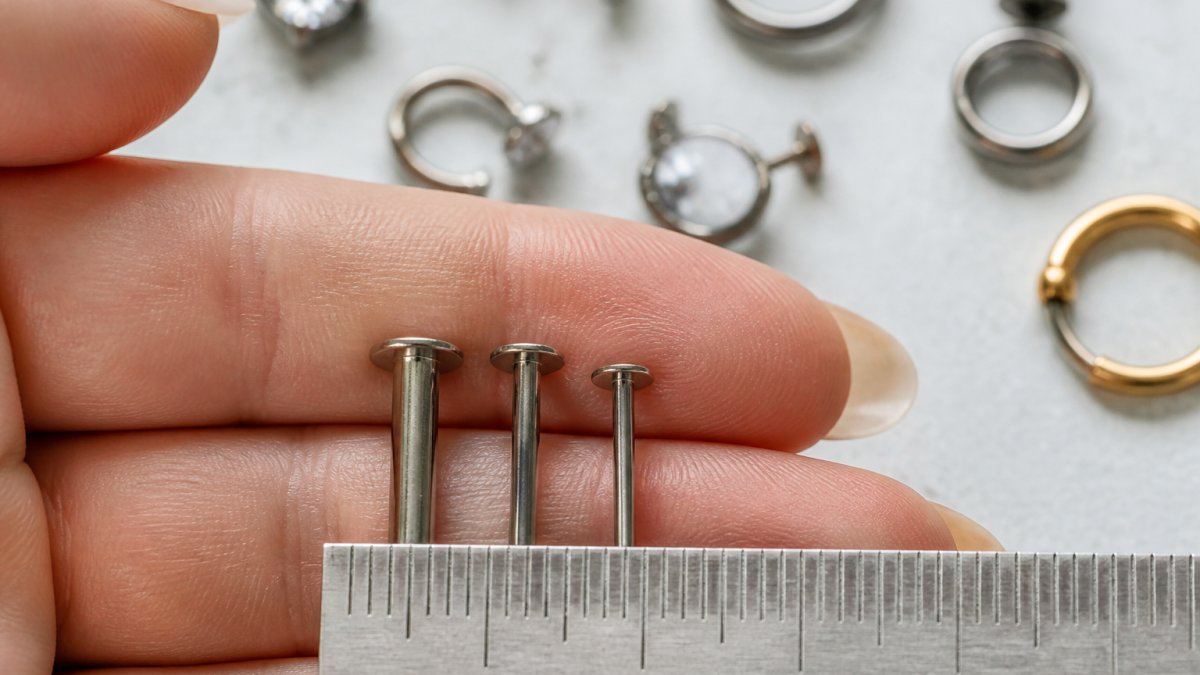
Gauge is the thickness of the post. Most ear piercings start at 18g (gauge) or 16g. Cartilage piercings are often 16g. Thicker gauges (14g, 12g) are less common for ears but popular for other piercings.
Post length is how long the bar is. For a new piercing, you need extra length to accommodate swelling. Most fresh piercings need 6-8mm posts. Once healed, you can drop down to 5-6mm. Too short and the backing presses into your skin. Too long and it moves around.
Diameter matters for hoops and rings. A hoop that’s too tight restricts blood flow. One that’s too loose catches on hair and clothing. The fit should be snug but not tight.
Common sizing mistakes:
- Using jewelry meant for healed piercings on new ones (too short)
- Buying hoops without measuring your ear (too loose or tight)
- Assuming all 16g posts fit the same (length varies by brand)
- Keeping the original jewelry too long (causes swelling to persist)
When you get a body piercing at a professional studio like Sandiegopiercingshops, we size your jewelry to your anatomy. Everyone’s ear is different. What works for your friend might not work for you.
The right fit prevents irritation, speeds healing, and lets you change jewelry without pain. Measure before you buy, and when in doubt, ask a piercer to verify the size.
Choosing piercing jewelry comes down to three things: material safety, proper sizing, and understanding your healing stage. Implant-grade titanium or solid gold protects your new piercing. The right gauge and length prevent irritation. And knowing whether your piercing is new or healed determines what you can safely wear.
If you’re unsure about any of these factors, reach out to a professional piercer. At Sandiegopiercingshops, we stock a wide selection of implant-grade jewelry and provide personalized guidance on what will work best for your specific anatomy and healing timeline. Call or text (858) 222-0071 to discuss your piercing needs.
Frequently Asked Questions
Can I sleep on a new ear piercing?
No, avoid sleeping on a new piercing for the first 4-6 weeks. Pressure from your pillow can cause irritation, swelling, and complications. Sleep on your back or the opposite side until healing is well underway. Once healed, sleeping position becomes less critical, but be mindful if you experience discomfort.
What’s the difference between implant-grade titanium and surgical steel for piercings?
Implant-grade titanium (ASTM F136) is hypoallergenic and biocompatible, making it ideal for new or sensitive piercings. Surgical steel contains nickel, which can trigger irritation in sensitive skin. Titanium is the safer choice for fresh piercings; surgical steel works for healed piercings if you don’t have nickel sensitivity.
How long should I wait before changing my piercing jewelry?
Wait at least 6-8 weeks for earlobe piercings before changing jewelry, and 12+ weeks for cartilage piercings. The healing timeline varies by location and individual. Changing too early risks infection and irritation. A professional piercer can assess when your piercing is stable enough for a jewelry change.