Table of Contents
- Why Implant Grade Titanium Matters for Fresh Piercings
- ASTM F-136 Titanium Standards: What They Mean for Your Jewelry
- Nickel Allergy and Body Jewelry: Why Material Choice Matters
- Titanium vs Surgical Steel: Which Heals Better?
- Strength, Durability, and Daily Wear
- How Long Does a Titanium Piercing Take to Heal?
- When to See a Professional
- Frequently Asked Questions
Last Updated: October 9, 2026
Why Implant Grade Titanium Matters for Fresh Piercings
Can you sleep on a new ear piercing? The answer depends less on your pillow than on what’s in your ear. At Sandiegopiercingshops, we’ve fitted jewelry since 2002, and the metal is the biggest difference between a piercing that settles and one that never does.
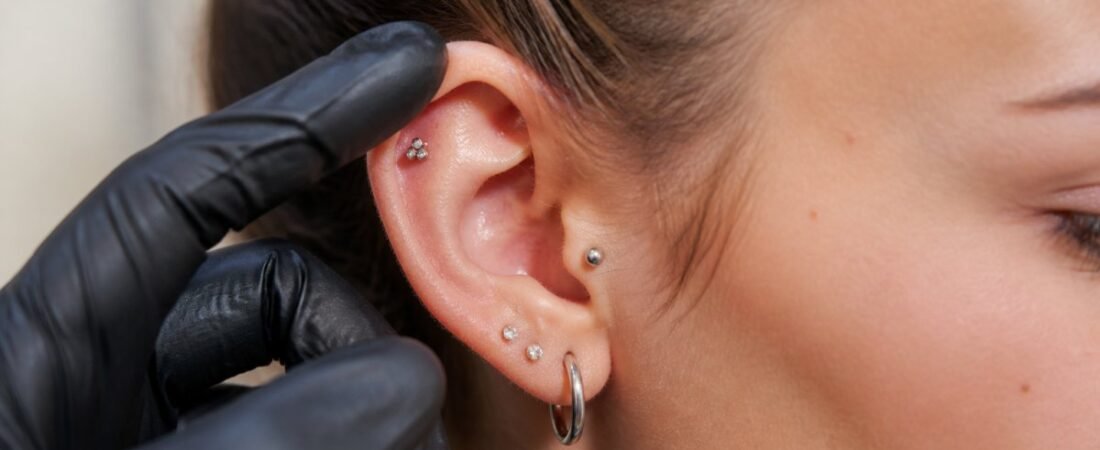
Implant grade titanium is a certified class of titanium made to sit inside the human body, not a marketing word for “nice titanium.” It resists corrosion, contains almost no nickel, and stays strong at a weight you forget you’re wearing.
Most guides call titanium “hypoallergenic” and stop there, as if every marketplace earring were the same. It isn’t. The grade, certification, and finish all matter.
ASTM F-136 Titanium Standards: What They Mean for Your Jewelry
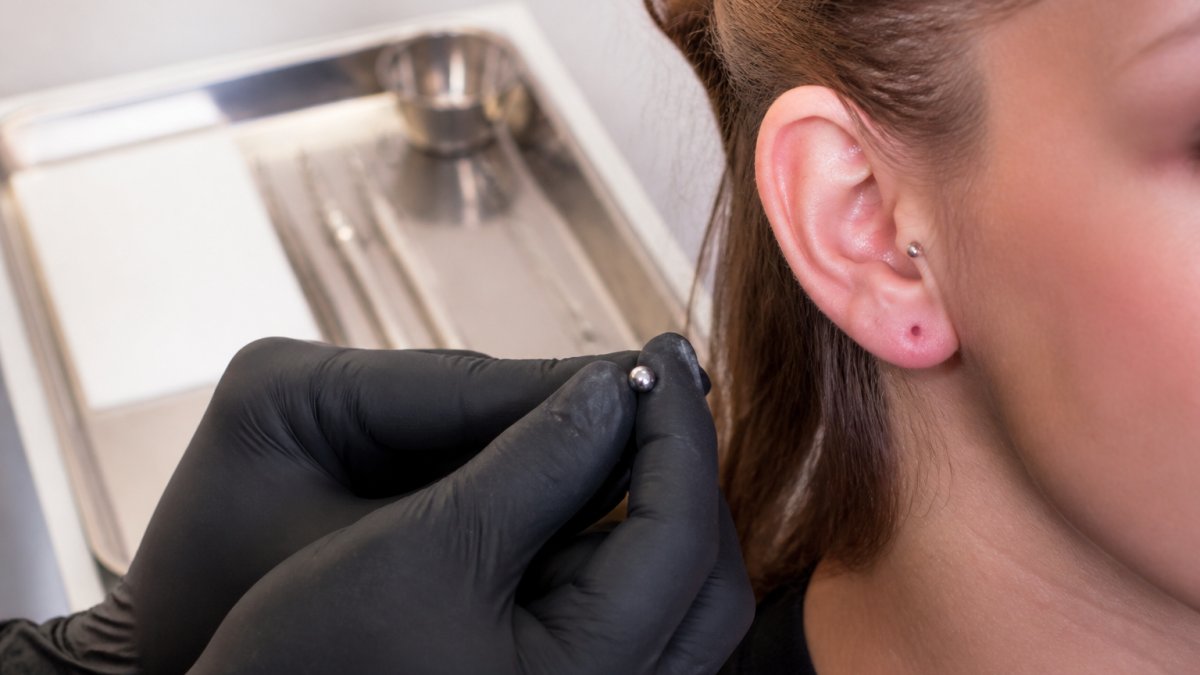
ASTM F-136 separates jewelry you can heal in from jewelry you can only visit. It covers wrought titanium alloy for surgical implants, the same material family used in medical devices inside the body.
ASTM F-136 is titanium alloy with aluminum and vanadium, the implant workhorse; ASTM F-138 is unalloyed, commercially pure titanium, softer and more flexible. Both resist corrosion through a natural oxide layer.
How do you verify the grade before you buy?
Ask for the mill certificate or supplier certification. If a seller can’t name the standard, treat the “implant grade” label as decoration.
Nickel Allergy and Body Jewelry: Why Material Choice Matters
Nickel is the most common cause of metal sensitivity and the reason cheap earrings turn ears red. Surgical steel usually contains nickel, and even “nickel-free” claims can mislead. Implant grade titanium sidesteps this because certified grades are effectively nickel-free at reaction-triggering levels.
That matters most for sensitive skin and fresh piercings, where the skin barrier is broken. A reaction on healed skin is annoying; on a healing piercing it can stall the process entirely.
If you’ve reacted to earrings before, tell your piercer. We match jewelry to your history, not a display case.
Titanium vs Surgical Steel: Which Heals Better?
Titanium usually wins for fresh piercings: it’s lighter so it tugs less, resists corrosion, and is the safer bet with any nickel sensitivity. Surgical steel is durable and affordable, but its nickel content and weight matter more during healing than after.
| Factor | Implant Grade Titanium | Surgical Steel |
|---|---|---|
| Nickel content | Effectively none in certified grades | Commonly contains nickel |
| Weight | Lightweight, less tugging | Heavier |
| Corrosion resistance | High | Moderate |
| Best for | Fresh piercings, sensitive skin | Healed piercings, budget |
| Certification | ASTM F-136 / F-138 | Varies by maker |
Strength, Durability, and Daily Wear
Titanium holds its shape through daily wear, which is why it works for cartilage studs and curved barbells, it won’t bend like softer metals and doesn’t tarnish. Lightweight matters more than people expect: a heavy piece pulls, and pulling means irritation.
How Long Does a Titanium Piercing Take to Heal?
Healing time depends on location, not just metal. Earlobes settle faster than cartilage, which can take many months. Titanium doesn’t shorten the biology, but it removes one common reason healing stalls.
A good material doesn’t mean you can skip aftercare. Clean gently, don’t rotate or fiddle with the jewelry, and keep harsh products away. If redness, swelling, or pain worsens, see a professional.
Can I sleep on a new ear piercing?
Try not to, at least for the first stretch of healing. Pressure restricts airflow and irritates the site, and most “mystery” irritation comes from sleeping on the wrong side. A travel pillow with your ear in the hole is the easiest workaround.
When to See a Professional
Increasing pain, spreading redness, warmth, pus, or a growing bump are all reasons to get checked rather than self-treat. Keloids and infections are far easier to manage early. If you’d rather have someone experienced take a look, our body piercing team can check the piercing, swap in implant grade jewelry, and tell you whether it’s healing on track or needs a different approach.
Frequently Asked Questions
Can I sleep on a new ear piercing?
You should avoid sleeping on a new ear piercing for at least the first few weeks. Pressure and friction can irritate the piercing, slow healing, and increase swelling. If you roll onto that side at night, try a travel pillow with your ear in the hole, or sleep on the opposite side. Implant grade titanium helps because it is lightweight and less likely to cause additional irritation when you accidentally bump it.
How long does a titanium piercing take to heal compared to steel?
Healing time depends on the piercing location, your aftercare, and your body. Earlobe piercings typically heal in 6 to 8 weeks, while cartilage can take 6 to 12 months. Titanium does not speed up healing on its own, but it reduces the risk of allergic reactions and irritation that can delay healing. Steel containing nickel may cause redness or bumps that extend healing time for sensitive individuals.
Does implant grade titanium contain nickel?
ASTM F-136 implant grade titanium contains trace amounts of nickel, but it is bound within the alloy structure and released at extremely low levels. This is why it is considered safe for most people with nickel sensitivity. Commercially pure titanium and niobium are nickel-free alternatives. If you have a confirmed nickel allergy, tell your piercer so they can select the safest option for you.
How can I verify my jewelry is real implant grade titanium?
Ask your piercer for the mill certificate or supplier documentation that shows the ASTM grade. Reputable studios keep this on file. You can also look for jewelry that is clearly labeled as ASTM F-136 or ASTM F-138. Avoid unbranded jewelry from online marketplaces, as labels like ‘titanium’ without a grade specification do not guarantee implant-grade quality or biocompatibility.
A fresh piercing is a small wound, and the metal you put in it decides whether healing is calm or constant. If you want jewelry you don’t have to think about, come see us at Sandiegopiercingshops. We’ve been fitting piercings in Pacific Beach since 2002, we take walk-ins, and we’ll walk you through anatomy, aftercare, and the right piece for your ear. Call or text (858) 222-0071 to get started.