

Table of Contents
- How to Clean a New Piercing Without Causing Irritation
- Can You Sleep on a New Ear Piercing?
- Ear Piercing Healing Time and What to Expect
- Frequently Asked Questions
Last Updated: October 11, 2026
How to Clean a New Piercing Without Causing Irritation
The most common mistake in sensitive piercings aftercare is over-cleaning or using harsh products, which trigger swelling, irritation, and infection. Correct cleaning is the foundation of good healing.
Use sterile saline solution twice daily with a clean cotton swab on both sides of the piercing, gently removing any crust or discharge. Always keep your hands clean before touching the area.
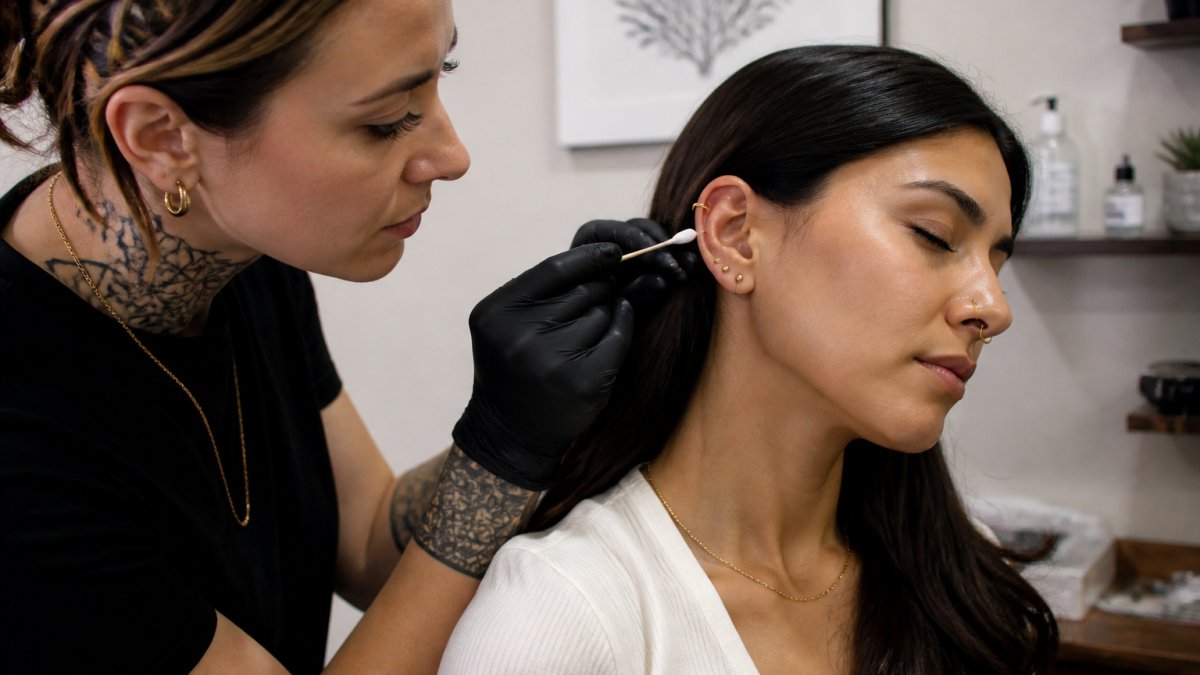
Avoid rubbing alcohol, hydrogen peroxide, and antibacterial soaps, they strip healthy skin and delay healing. For sensitive piercings aftercare, saline is gentler and more effective. Stop immediately if any product causes redness, burning, or swelling.
Never rotate the jewelry during the first two weeks. Movement irritates the healing tissue and introduces bacteria. Let the jewelry sit still while the piercing establishes itself.
Can You Sleep on a New Ear Piercing?
Sleeping on a fresh piercing increases swelling and slows healing, avoid it for the first week if possible.
If you must sleep on that side, use a travel pillow with a center hole to rest your ear through, eliminating pressure on the piercing.
Sleep on your opposite side for the first 7-10 days, or use an extra pillow to prop yourself at an angle.
Ear Piercing Healing Time and What to Expect
Earlobe piercings typically heal in 6-8 weeks (the American Academy of Dermatology). Cartilage piercings (upper ear, helix) take 3-6 months. The timeline depends on your body, the jewelry material, and how well you follow aftercare.
What happens during healing:
- Days 1-3: Swelling, redness, and mild pain are normal
- Week 1-2: Discharge may appear (clear, yellow, or light pink)
- Week 3-8: Swelling decreases, discharge slows, the piercing feels less tender
- After 8 weeks: The channel firms up, but full maturation takes longer
Don’t remove jewelry before the healing window closes. Doing so risks the hole closing partially or completely. For sensitive piercings aftercare, consistency matters more than perfection. Stick to saline rinses, keep hands clean, and avoid unnecessary touching. If you’re unsure about your piercing’s healing progress or have concerns about the jewelry material, professional body piercing services can assess your setup and recommend adjustments.
If you notice increasing redness, warmth, pus, or a foul smell after the first week, contact a professional. These can signal an infection or allergic reaction to the jewelry material.
| Healing Stage | Timeline | What to Watch For |
|---|---|---|
| Initial inflammation | Days 1-3 | Swelling, redness, pain |
| Active healing | Weeks 1-4 | Discharge, tenderness |
| Maturation | Weeks 5-8+ | Gradual reduction in symptoms |
Frequently Asked Questions
How often should you clean a new piercing?
Clean your sensitive piercing twice daily with sterile saline solution. Once in the morning and once before bed works well for most people. Avoid over-cleaning, as this can irritate healing tissue. If you notice increased swelling or discharge, stick to twice daily rather than adding extra cleanings.
How long does it take for an ear piercing to heal completely?
Earlobe piercings typically heal within 6 to 8 weeks, while cartilage piercings (upper ear) take 3 to 12 months or longer. Sensitive skin may require additional time. Even after initial healing, the piercing channel continues to strengthen for several months. Keep jewelry in place throughout the healing period and follow aftercare steps to avoid setbacks.
What should you do if a piercing is sore or swollen?
Mild swelling and soreness are normal in the first few days. Apply a warm compress for 5 to 10 minutes to reduce swelling, and avoid touching the piercing. If swelling persists beyond a week, worsens suddenly, or is accompanied by discharge, redness, or warmth, contact a professional piercer. They can assess whether you have an irritation or infection and recommend next steps.
Getting a piercing is an exciting step. Taking care of it properly ensures you enjoy it for years. If you’re planning your first piercing or need expert guidance on sensitive piercings aftercare, Sandiegopiercingshops offers professional piercing services with clear aftercare support. Our team prioritizes your comfort and healing from start to finish. Call or text (858) 222-0071 to schedule a consultation.