Last Updated: October 26, 2026
Quick Summary
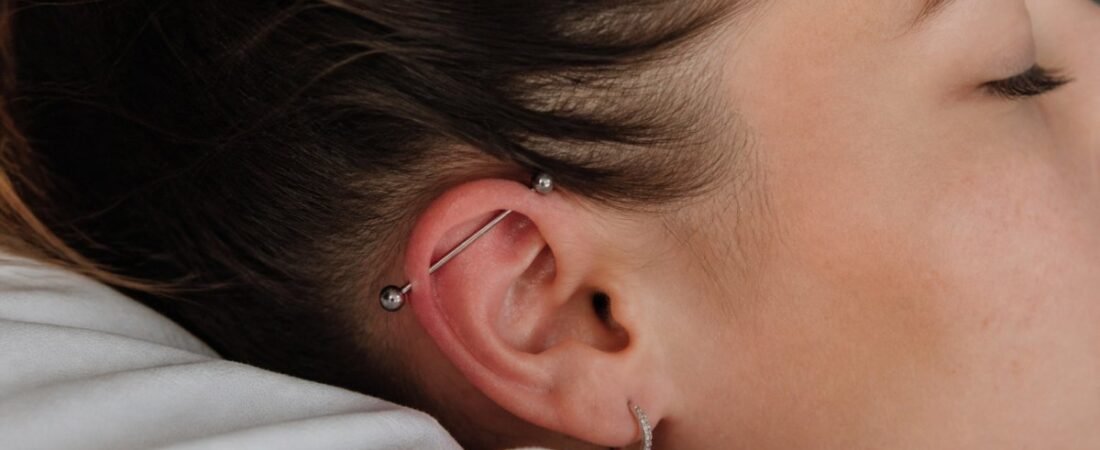
Industrial piercing jewelry consists of a straight barbell connecting two ear cartilage piercings, and the right choice uses implant-grade titanium, fits your specific anatomy, and stays secure through healing to prevent irritation and complications.
- Straight barbells are the standard industrial piercing jewelry style with one unbroken line through both holes
- Implant-grade titanium is hypoallergenic and the best material choice for fresh piercings and sensitive skin
- Professional piercing guidance on bar length and gauge prevents complications by accounting for your ear structure and cartilage thickness
- Decorative ends like spikes and gemstones can be swapped after healing is complete
- Quality jewelry from the start prevents weeks of discomfort and speeds up the healing process
Table of Contents
- What Makes the Right Industrial Piercing Jewelry
- Industrial Piercing Bar Length and Gauge for Your Anatomy
- Industrial Piercing Jewelry Material and Metal Sensitivity
- Frequently Asked Questions
What Makes the Right Industrial Piercing Jewelry
An industrial piercing connects two ear cartilage piercings with one straight barbell, so your jewelry choice affects comfort, healing speed, and long-term health. How to Choose Piercing Jewelry: A Practical Guide walks you through selecting the right barbell for your needs. The right industrial piercing jewelry fits your anatomy, uses skin-friendly materials, and stays secure through healing, rushing it leads to irritation and poor fit. Our body piercing service is available for clients considering an industrial piercing.
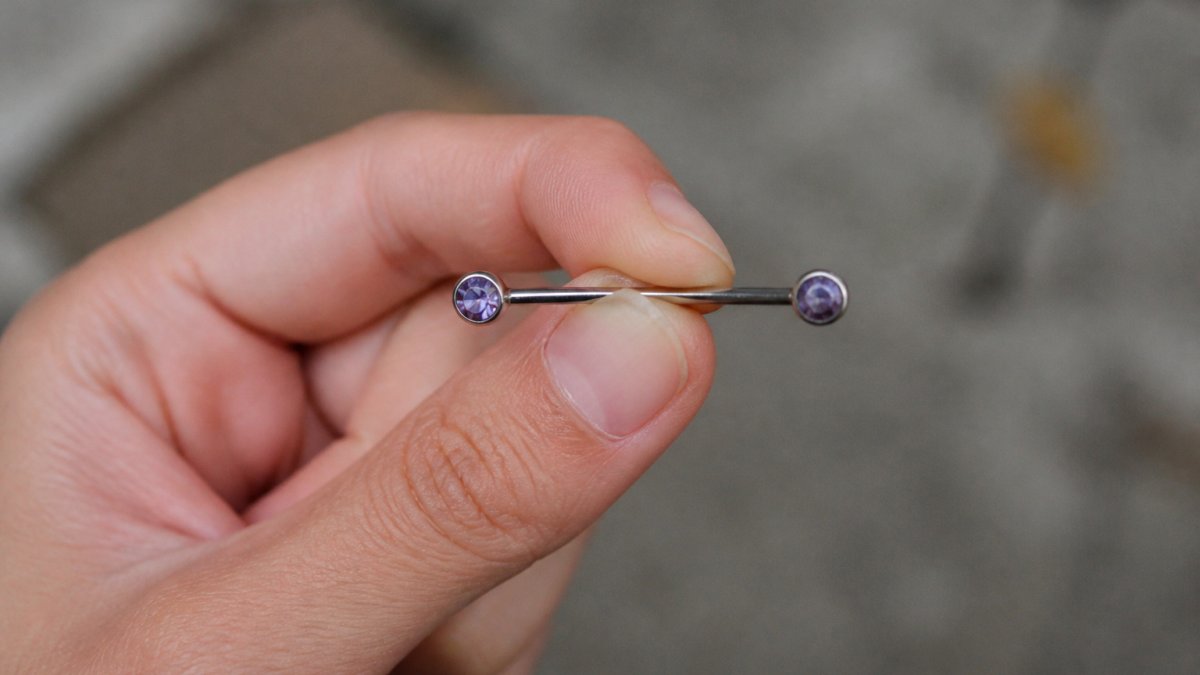
Straight barbells are standard: one unbroken line through both holes, stable and easy to clean. Decorative ends (spikes, gemstones, minimal designs) can be swapped after healing.
Industrial Piercing Bar Length and Gauge for Your Anatomy
Gauge is barbell thickness.
Professional piercing guidance on anatomy-specific sizing emphasizes that custom measurements prevent complications, since a professional piercer evaluates your ear structure, the angle between your holes, cartilage thickness, and how your ear curves. See how to choose piercing placement based on ear anatomy. The right bar length keeps pressure even across both piercings.
Industrial Piercing Jewelry Material and Metal Sensitivity
Material choice is non-negotiable for sensitive skin, the wrong metal causes irritation, swelling, and slow healing. Implant-grade titanium is the gold standard for fresh piercings: hypoallergenic, lightweight, and corrosion-resistant, and most people with metal sensitivity tolerate it well. FDA guidance on biocompatible materials for body jewelry recognizes titanium as a safe choice for healing piercings.
Learn more about safe materials for sensitive skin piercings. The American Academy of Dermatology on metal allergies and body jewelry notes that material choice significantly impacts healing outcomes. Invest in quality jewelry from the start: it prevents weeks of discomfort and speeds healing.
Frequently Asked Questions
Can you sleep on a new industrial piercing?
No, sleeping on a new industrial piercing puts pressure on the pierced holes and can delay healing or cause irritation. Sleep on your opposite side or use a travel pillow to keep the piercing elevated and protected during the first few weeks. Once fully healed, pressure becomes less of a concern, but many people continue to avoid it out of habit.
How long does an industrial piercing take to heal?
Most industrial piercings take 6 to 9 months to heal fully, though some take up to a year. The exact timeline depends on your aftercare, the jewelry material, your anatomy, and your body’s healing response. During this time, keep the barbell in place and follow your piercer’s cleaning protocol. Avoid changing jewelry until your piercer confirms full healing.
What material is best for new industrial piercing jewelry?
Implant-grade titanium is the gold standard for new piercings because it resists corrosion, minimizes irritation, and works well for sensitive skin. Surgical steel is also acceptable if it’s high-quality, though some people react to nickel traces in lower-grade steel. Avoid plated jewelry, acrylic, and lower-grade metals during healing. Once healed, you have more flexibility with materials like gold or other options.
Getting industrial piercing jewelry right means matching material to your skin, sizing to your anatomy, and choosing a style you’ll actually want to wear. Professional piercers handle this during your appointment, but understanding these factors helps you make confident decisions. Contact us to discuss your ear anatomy and find jewelry that works for your specific piercing plan.
