Last Updated: November 4, 2026
Quick Summary
The best jewelry for new piercings is implant-grade titanium with a flat back, since it is nickel-free, light, and less likely to catch on hair or clothing. Look for the ASTM F136 label and have a piercer do your first jewelry change only after healing is fully over.
- Lobe piercings usually heal in 6 to 8 weeks, while cartilage often takes 6 to 12 months.
- Don’t sleep on a new ear piercing; use the opposite side or a travel pillow with your ear in the hole.
- Choose a flat back labret with a threadless or internally threaded post in implant-grade titanium or 14k solid gold.
- Pick a simple top with no dangles and a snug fit that still leaves room for swelling.
- Watch for redness, swelling, and crust that keeps coming back, and let a piercer swap the jewelry the first time.
Table of Contents
- Why Implant-Grade Titanium for Piercings Is the Safest Starter Metal
- Healing Time for Ear Piercings and When to Change Jewelry
- Why Flat Back Earrings for New Piercings Beat Hoops and Butterfly Backs
- Frequently Asked Questions
Why Implant-Grade Titanium for Piercings Is the Safest Starter Metal
Implant-grade titanium is a popular choice for new piercings because it is nickel-free and light.
- Nickel-free. Nickel is the most common cause of metal reactions.
- Light. A heavy earring pulls on a healing hole.
- Corrosion-resistant. Sweat, soap, and water don’t break it down.
- Strong. Thin posts stay straight.
Look for the ASTM F136 label, which means the titanium is made for medical implants. To see why professional piercings cost more, read our breakdown of safety and jewelry. If a shop can’t tell you the grade, ask.
You can read more on why implant grade titanium matters for piercings and see a full breakdown of which metals are safe and which to avoid.
Healing Time for Ear Piercings and When to Change Jewelry
Lobe piercings usually heal in 6 to 8 weeks; cartilage often takes 6 to 12 months.
Can you sleep on a new ear piercing? Not comfortably, and not on that side. Sleep on the opposite side or use a travel pillow with your ear in the hole, pressure commonly causes irritation.
When can you change jewelry? Wait until healing is fully over and the site feels calm, then have a piercer swap it the first time. Watch for redness, swelling, and crust that keeps coming back.
Planning a full ear design? See how multiple piercings are styled together over time.
Here are the healing timelines and aftercare facts to keep in mind for a new piercing.
| Fact | Detail |
|---|---|
| Lobe piercing healing time | 6 to 8 weeks |
| Cartilage piercing healing time | 6 to 12 months |
| Sleeping on a new ear piercing | Not comfortably, and not on that side |
| Sleep alternative | Opposite side or travel pillow with ear in the hole |
| When to change jewelry | After healing is fully over and site feels calm |
| First jewelry change | Have a piercer swap it |
| Signs to watch | Redness, swelling, and crust that keeps coming back |
Why Flat Back Earrings for New Piercings Beat Hoops and Butterfly Backs
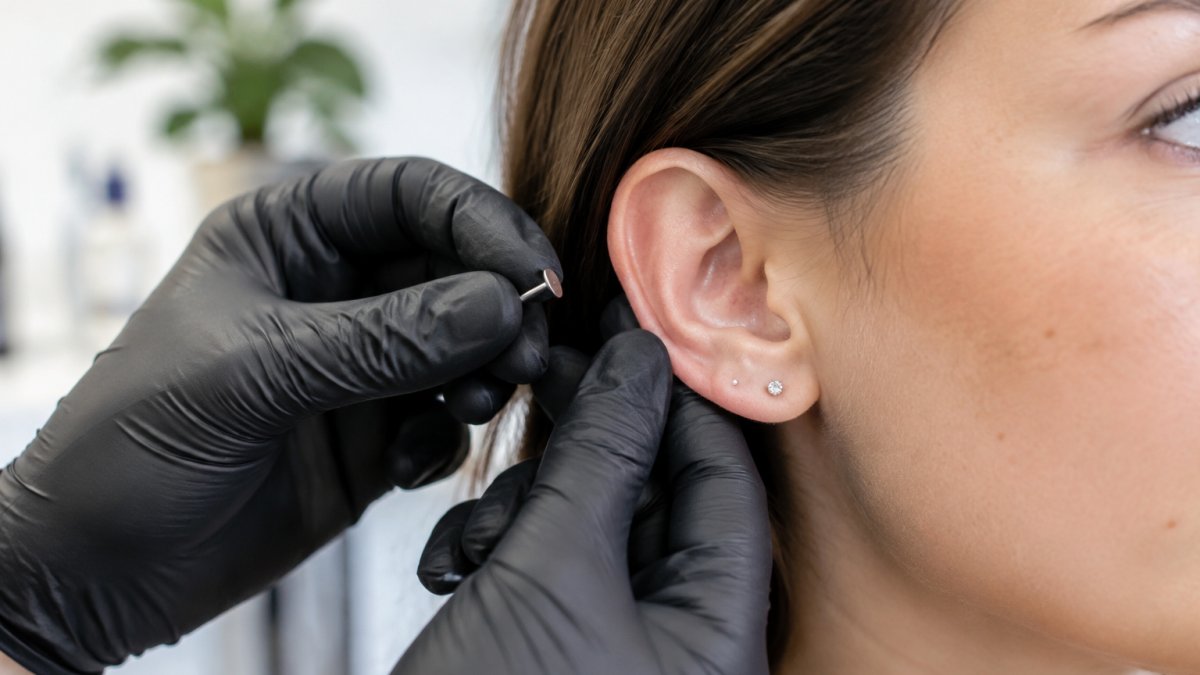
Flat back earrings are a common choice for new piercings because the flat disc sits behind the lobe and is less likely to catch on hair or clothing.
- Flat back labret with a threadless or internally threaded post
- Implant-grade titanium or 14k solid gold
- A snug fit with room for swelling
- A simple top with no dangles to snag
Browse our piercing jewelry selection to see flat backs in person. If you’re not sure where to start, our body piercing service can walk you through aftercare.
Frequently Asked Questions
Can I sleep on a new ear piercing?
Try not to for the first few weeks. Pressure from a pillow can shift the jewelry, cause irritation bumps, and slow healing. If you roll onto that side, a travel neck pillow with the ear in the hole keeps weight off the piercing.
How long does it take for a new ear piercing to heal?
Lobes usually heal in 6 to 8 weeks. Cartilage piercings take much longer, often 6 to 12 months, because cartilage has less blood flow. Healing time for ear piercings varies by placement and aftercare, so leave the starter jewelry in for the full period your piercer gives you, even if it feels fine sooner.
Is implant-grade titanium really better than surgical steel?
For a fresh piercing, yes. Implant-grade titanium is a common choice for new piercings. Ask your piercer about the metal grade before you buy.
Nervous about your first piercing? We walk you through every step, from picking the right metal to aftercare you can actually follow. Sandiegopiercingshops offers walk-ins, anatomy-based placement, and a large selection of implant-grade jewelry. Call or text (858) 222-0071 to plan your visit.
