Last Updated: November 12, 2026
Quick Summary
Implant-grade titanium is the standard for new piercings because it is nickel-free in practice, corrosion-resistant, and light. It is generally understood to meet the ASTM F136 standard for surgical implants, and its low allergy risk makes it a common choice for sensitive skin.
- Implant-grade titanium is nickel-free in practice, corrosion-resistant, and light.
- Your piercer should be able to point to the ASTM F136 standard for wrought titanium alloy.
- 316L surgical steel contains nickel, which some people are sensitive to.
- A metal allergy can appear at any age, even after years of wearing cheap earrings.
- Do not sleep on a new ear piercing; pressure can shift the angle and cause irritation bumps.
Table of Contents
- Why Implant-Grade Titanium Is the Standard for New Piercings
- ASTM F136 Implant-Grade Titanium and How to Verify It
- Implant-Grade Titanium vs Surgical Steel: Which Heals Better
- Frequently Asked Questions
Why Implant-Grade Titanium Is the Standard for New Piercings
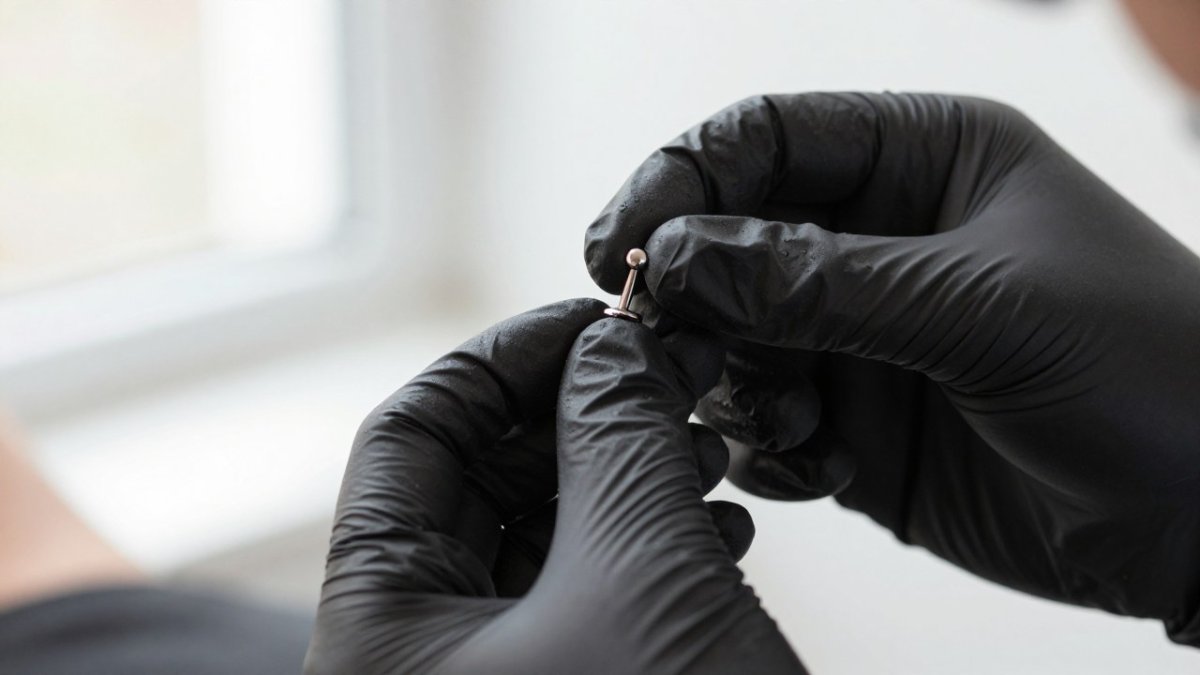
Implant-grade titanium is what most professional piercers reach for on a fresh piercing: nickel-free in practice, corrosion-resistant, and light. At Sandiegopiercingshops, we have been providing expert body piercing services since 2002.
For the deeper metallurgy, see our guide on why implant grade titanium matters for piercings. Booking a conch? Book a conch piercing done with implant-grade jewelry.
ASTM F136 Implant-Grade Titanium and How to Verify It
ASTM International’s F136 standard for wrought titanium alloy is the document your piercer should be able to point to. Our studio safety standards checklist gives you the exact questions to ask, and our guide to the signs of a professional piercing studio covers what a clean setup looks like.
Implant-Grade Titanium vs Surgical Steel: Which Heals Better
Implant-grade titanium is often chosen for new piercings, and 316L surgical steel contains nickel, which some people are sensitive to.
| Feature | Implant-Grade Titanium | Surgical Steel (316L) |
|---|---|---|
| Nickel content | Trace levels | Contains nickel |
| Best for | Fresh piercings, sensitive skin | Healed piercings, budget buyers |
| Allergy risk | Low | Higher |
A metal allergy can appear at any age, even if you have worn cheap earrings for years without issue. Weighing materials for a tragus? See tragus piercing options that use quality jewelry from the start.
A new piercing is a small commitment with a long healing window, and the jewelry you choose on day one shapes how those months go. At Sandiegopiercingshops, we stock implant-grade titanium, walk you through aftercare step by step, and help you plan a curated ear that suits your anatomy. Call or text (858) 222-0071 to book a consultation and get started with jewelry that works with your body, not against it.
Frequently Asked Questions
Is implant-grade titanium good for healing piercings?
Yes. Implant-grade titanium is a common choice for new piercings, as it is lightweight and corrosion-resistant. A fresh piercing is an open wound, so the metal touching it matters.
How can you tell if piercing jewelry is implant-grade titanium?
Ask for the mill certificate or a receipt that names the standard, specifically ASTM F136. Look for a clear grade on the packaging or receipt, and do not hesitate to ask your piercer what material the jewelry is made of.
Can you sleep on a new ear piercing?
Try not to for the first few weeks. Pressure and friction from a pillow can irritate a healing piercing and slow it down. Sleep on the opposite side to keep pressure off the piercing. If you roll onto it in your sleep, clean the piercing as usual and avoid touching it during the day.
